Mutual respect, mutual trust, mutual understanding, mutual accommodation and mutual sensitivity to each other’s core interests constitute the bedrock of strong and lasting friendships between sovereign independent nations. It takes long, patient, persistent and painstaking endeavours to stitch together close, reliable and mutually beneficial friendship and nurture it in the long run. But it can be destroyed in no time if mutual trust, mutual accommodation and mutual sensitivity dry up for whatever reasons.
Though Bill Clinton imposed the severest of sanctions on India after her nuclear tests on May 15, 1998, by the time he visited India in March 2000, becoming the first US President to do so after a gap of 21 years, most of those sanctions had been lifted. Ever since, India-US relations have expanded exponentially irrespective of the governments in Washington and New Delhi, reflecting a bipartisan support on both sides for warmer and closer relationship. Till recently, India-US relations seemed to enjoy arguably the finest phase “overcoming hesitation of history” as evident from the burgeoning trade, defence and security cooperation, iCET and numerous missions covering every possible area from agriculture to outer space.
Two countries have worked together in the Indo-Pacific, Quad and I2U2 to address regional and global issues. One US President hailed it as the “most defining relationship of 21st century”; several Congressmen and Senators have been openly urging stronger ties with India. While the US declared India a major defence partner and accorded T-1 status, India has signed several foundational communication agreements such as GSOMIA, LEMOA, COMCASA and BECA. India got invited to G-7 summits; two countries became Global Comprehensive Strategic partners; American nod was crucial for India to achieve the unanimous resolution at the G-20 Summit held in Delhi in September 2023.
The announcement of additional 25% tariff on India from 27 August by the US President for importing Russian oil has been termed by India as “unjustified and unreasonable”. India has exposed the hypocrisy and double standards of the US and the European countries; they have been happily doing business with Russia in spite of US sanctions. In 2024, the EU had a bilateral trade with Russia of 67.5 billion euro and in 2023 trade in services of 17.2 billion euro. EU purchased from Russia not only energy but also fertiliser, mining products, chemicals, iron and steel, machinery and transport equipment. Surprisingly, the US was herself importing Russian uranium, hexafluoride, palladium, fertiliser and chemicals.
China insists “it is legitimate and lawful for China to conduct normal economic, trade and energy cooperation with all countries including Russia …” India, which imported 37% Russian oil was threatened with sanctions though the US had actively encouraged India to buy Russian crude to stabilise international prices. Former US Ambassador to India, Eric Garcetti told the media that India didn’t violate US sanctions. The Indian government asserts that ensuring predictable and affordable energy to India’s consumers is its duty. India is outraged by the rude and bullying tone of Trump’s references to India as the “tariff king” and her economy as “dead economy” and accusing her of funding the Russian operations in Ukraine, especially as none has treated Donald Trump with higher honour and greater warmth than PM Modi.
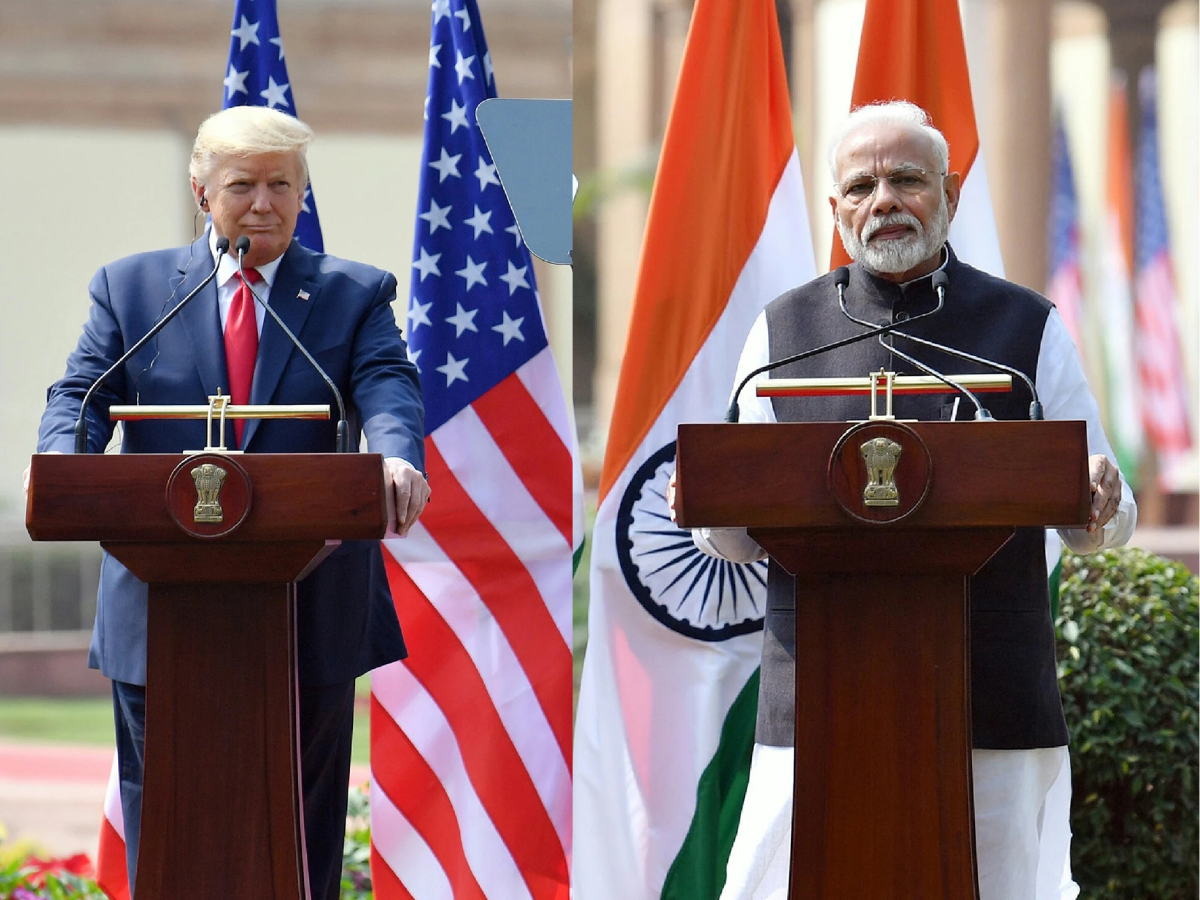
At Howdy Modi (September 22, 2019, NRG stadium Houston) at the tumultuous reception for Modi, Trump was welcomed by 55,000 strong Indian Americans. Again, on February 24, 2020 Modi organised a reception, Namaste Trump, at Sardar Patel Stadium in Ahmedabad by 125,000 people for Donald and Melania Trump, followed by a romance filled stroll in the gardens of Taj Mahal in Agra. During his campaign, Trump was seen showing his picture with Modi to woo Indian American voters. But that was Donald Trump 1.
According to the editor in chief of Foreign Policy magazine, Ravi Agrawal, Donald Trump 2.0 is a totally different persona; his own man driven by his ambition to make MAGA a success story and mindful of the legacy of his presidency. But, Ravi feels, Trump’s sanctions against India make no strategic sense. India-US relationship nurtured by successive US Presidents and Indian PMs must not be viewed through the narrow prism of trade. So why did Trump turn against India? Is bullying, raising the ante, exerting maximum pressure and then climbing down and striking a deal largely on his terms his characteristic tactics? He has succeeded in signing deals with the EU, UK, Japan and South Korea following this play book.
Trump had invited Modi at the White House rather early in his second inning with the hope that India would sign a deal; to Trump’s displeasure, it hasn’t happened in spite of five rounds of negotiations between the US and Indian delegations. When the American team is scheduled to arrive for the sixth round, he threatened additional tariffs even before the talks have begun, Trump is pressuring India to make concessions. But keeping in mind the domestic political consequences, Modi has firmly announced that India will not agree with any deal which adversely affects Indian farmers, dairy industry and fisheries.
Trump must have got the message and not liked it. Interestingly, former MOS (Finance) Jayant Sinha is optimistic that a deal could be signed at the next round. Maybe, if both sides utilise the window of two weeks to hammer out a mutually acceptable compromise. If it doesn’t happen, Shashi Tharoor thinks it will be perfectly fine for India to impose 50% tariffs on American exports as reciprocal measure. Trump hates to look bad. He is reportedly sore that though he repeated roughly 29 times that he had brokered a ceasefire between India and Pakistan using trade as a leverage, both these claims were bluntly rebutted in Parliament by the Indian External Affairs Minister.
Trump might have taken it as unmistakable snub by India. One wonders, if without accepting his claim of brokering a ceasefire, India could have conceded that at the peak of the conflict, while conveying messages between India and Pakistan, Secretary of State Rubio might have advised Pakistan not to escalate the conflict; that would have been in line with the role played by the US at the time of the Kargil conflict and the release of the Indian pilot Abhinandan after the Balakot surgical strike. But Trump should also be sensitive to India’s sentiments.
When Pakistan is viewed globally as the epicentre of terror, his claims that he loves Pakistan and hosting General Asim Munir at the White House so soon after the terrorist attack at Pahalgam was seen in India like adding salt to injury. Deal or no deal, India must spur her efforts to finalise TFAs with various countries, give a further push to “make in India” efforts, diversify her sources of supplies and explore new markets. We have weathered US sanctions earlier; India’s growth story is domestic consumption driven so the negative impact will be limited. India must remain calm and firm and not give in to Trump’s bullying. Coordinating with fellow members of BRICS that are also sanctioned by Trump and taking a united stand against punitive tariffs not supported by the WTO regime isn’t a bad idea.
A week is a long time in international affairs. Who knows, Trump, when he meets Putin in Alaska on 15 August, he might push him towards a ceasefire in Ukraine, and sign a deal with China. That will certainly cool political temperatures, slow down disruption and let countries breathe easy. But it’s never over until it’s over.
Surendra Kumar is a former Indian ambassador.
