
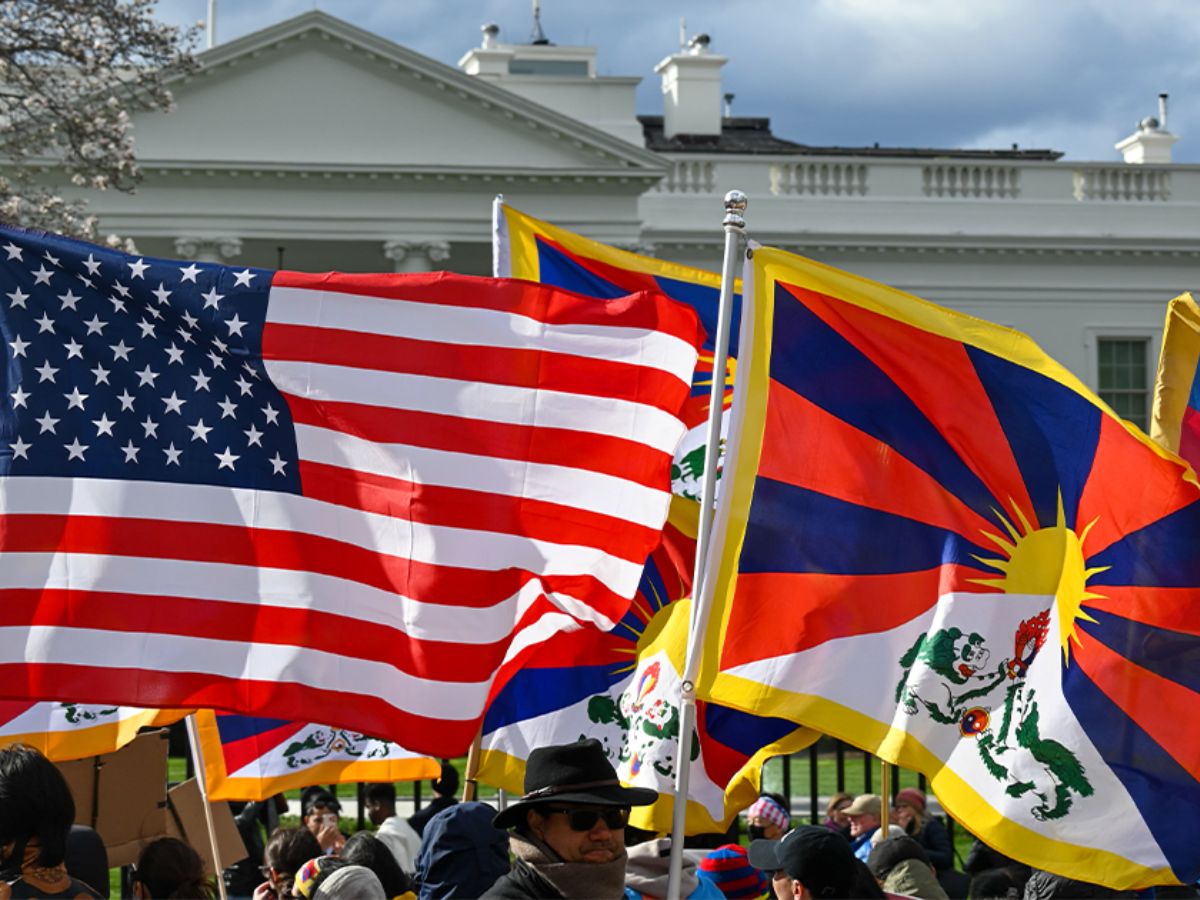
For decades, Tibet has lived in the diplomatic shadows—acknowledged but rarely prioritized, invoked but seldom defended with sustained policy attention. That is why two recent developments from Washington carry weight far beyond their bureaucratic form: the appointment of a new Special Coordinator for Tibetan Issues and the reinstatement of Tibetan-language broadcasting at Radio Free Asia (RFA) and Voice of America (VOA). Individually, each step is modest. Together, they signal a recalibration of U.S. policy that matters profoundly for Tibetans both inside Tibet and across the global diaspora.
Beijing has spent years pressuring governments to treat Tibet as a closed subject—an “internal matter” beyond legitimate international concern. The role of the Special Coordinator, created by the U.S. Congress in 2000, has long been a thorn in that narrative. When the position sat vacant or underutilized, Beijing interpreted it as a sign that Tibet could be managed through silence. Reappointing a Special Coordinator reverses that drift. It restores a dedicated diplomatic channel focused on preserving Tibetan cultural and religious identity. Supporting dialogue between Beijing and Tibetan representatives. This is not symbolic. It is institutional. It embeds Tibet back into the machinery of U.S. foreign policy at a time when China is accelerating assimilationist policies, from boarding schools to intrusive surveillance of monasteries.
The reinstatement of RFA and VOA Tibetan-language programming is equally consequential. In an era when Beijing has perfected the architecture of information control—firewalls, censorship algorithms, digital surveillance—independent Tibetan-language news is not merely a media service. It is a lifeline. For Tibetans inside Tibet, these broadcasts provide uncensored information about global events and Tibetan issues. For Tibetans in exile, they offer a platform to speak to their homeland. A shared informational space that bridges the diaspora and those inside Tibet. A counterweight to Beijing’s narrative dominance.
These moves also reflect a broader geopolitical reality: Tibet is no longer viewed solely through the lens of human rights, but as part of the strategic map of the Indo-Pacific. Three dynamics are driving this shift: China’s internal repression has external consequences. Policies in Tibet—mass surveillance, militarization of borders, demographic engineering—are now understood as part of China’s wider authoritarian toolkit. The India–China rivalry has elevated Tibet’s strategic relevance. The Himalayan frontier, once peripheral, is now a central theatre of competition. Tibet’s status shapes the stability of Asia’s most dangerous border. The U.S. is recalibrating its approach to authoritarian influence. Supporting linguistic, cultural, and informational resilience in vulnerable communities is increasingly seen as a national security interest.
For Tibetans inside Tibet, these developments offer something rare: recognition. Not in the abstract, but in the form of concrete policy tools that can amplify their voices and document their struggles. For Tibetans in exile, they restore a sense of political visibility. Diaspora communities have long feared that Tibet was slipping from the world’s agenda, overshadowed by crises elsewhere. Washington’s renewed engagement signals that Tibet remains a legitimate international concern—and that its people have not been forgotten. But none of these steps will, on their own, alter the reality inside Tibet. But they matter because they rebuild the scaffolding of international attention that Beijing has worked so hard to dismantle. They create channels for information, diplomacy, and accountability. They remind the world that Tibet is not a closed chapter. Most importantly, they affirm a simple truth: Tibetans deserve to be heard—in their own language, through their own stories, and on the world stage.
-
Khedroob Thondup, a geopolitical analyst, is the nephew of the Dalai Lama.




