The Chinese argue that if Venezuela and Iran are sequentially defeated and brought under US influence, Washington may replicate this model elsewhere. Potential targets could include Cuba, Brazil, Peru, Serbia, and North Korea.
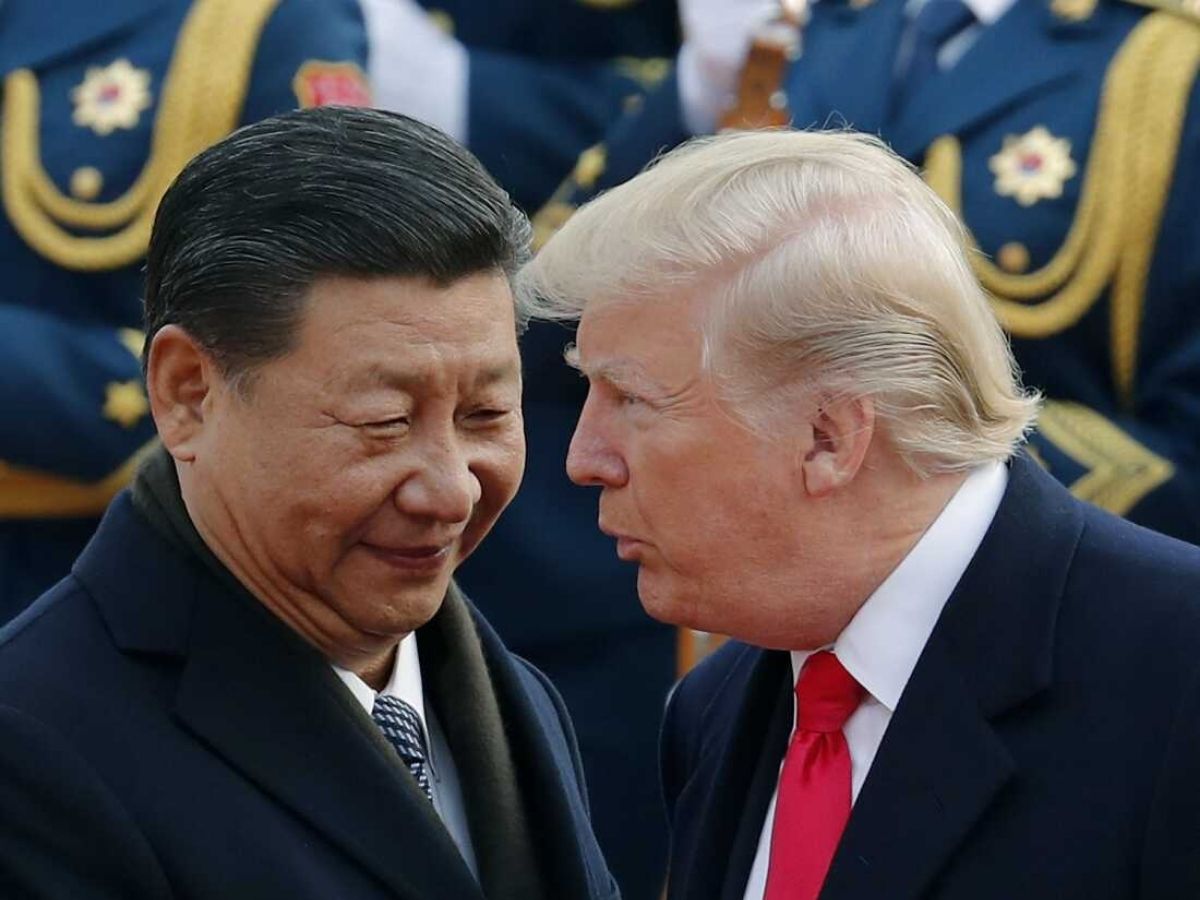
President Donald Trump & President Xi Jinping
The large-scale military strikes launched by the United States and Israel against Iran on February 28, 2026, followed by Iran’s retaliatory attacks on Israel and US military bases across Qatar, Bahrain, Saudi Arabia, the UAE, and Jordan, have triggered one of the most volatile regional crises in recent history. The American intervention, codenamed Operation Epic Fury, represents an extensive campaign against Iranian military infrastructure and naval capabilities. On March 4, 2026, US Defence Secretary Pete Hegseth announced that American forces had struck more than 2,000 targets and destroyed over 20 Iranian naval vessels.
China strongly condemned the attack and the killing of Iran’s Supreme Leader, Ali Khamenei stating that the actions “seriously violated Iran’s sovereignty and security, trampled on the purposes and principles of the UN Charter and the basic norms governing international relations.” Chinese Foreign Minister Wang Yi similarly denounced the strikes, accusing the United States and Israel of assassinating Iran’s leader and reiterating China’s commitment to safeguarding Iran’s sovereignty and security.
The assassination of Ali Khamenei occurred less than two months after the US military captured Venezuela’s President Nicolás Maduro, another government closely aligned with China. Taken together, these two operations represent a dramatic projection of American power against regimes that Beijing has cultivated as part of its broader global strategy. The implications for China are potentially profound, affecting its energy security, geopolitical positioning, and long-term strategic calculations.
One, China’s engagement with countries such as Venezuela and Iran forms a critical component of its strategy to offset the global balance of power that traditionally favours the United States. Energy cooperation has been central to this relationship.
As I have argued in an article earlier in January 2026, nearly 90% of Venezuela’s oil exports flow to Asia, with China accounting for the majority share—more than 600,000 barrels per day, representing the bulk of Venezuelan production. Iran occupies an equally significant position in China’s energy security architecture. According to a Reuters report citing 2025 data from analytics firm Kpler, China purchased over 80% of Iran’s shipped oil, averaging 1.38 million barrels per day, which constituted approximately 13.4% of China’s total seaborne oil imports of 10.27 million barrels per day.
Beyond energy trade, China’s economic entrenchment in Iran is institutionalized through the Iran-China 25-Year Comprehensive Cooperation Agreement, signed in 2021. The agreement envisages Chinese investments of approximately $400 billion over 25 years in exchange for long-term access to heavily discounted Iranian oil. Reports suggest that China plans to invest $280 billion in Iran’s oil, gas, and petrochemical sectors, alongside $120 billion in transportation and manufacturing infrastructure.
China’s partnership with Iran also extends to strategic infrastructure development. Under the cooperation framework, China has been assigned key roles in developing Iran’s airports and aviation navigation systems, constructing a “pilgrimage railway” linking Pakistan to Iraq and Syria through Iran, expanding the Makran coastline along the Oman Sea, and developing the Jask coastal region in Hormozgan province. The agreement further includes provisions for building Iran’s 5G telecommunications network. Faramarz Davar, writing for Iran Wire, argued that through the 25-year cooperation program, “Iran Agrees to be China's Client State for the Next 25 Years.” China has also been suspected of aiding Iran’s missile and drone capabilities, though Beijing denies supplying CM-302 anti-ship missiles.
Two, a major concern among Chinese analysts is that a successful US-Israeli regime change operation in Iran could significantly reshape the geopolitical balance in favour of Washington. Li Guangman warns that “the balance of power in the Middle East will be lost, and the petrodollar system and US global hegemony will continue to be sustained.” Similarly, Lu Yongyan, writing for Kunlun Policy Net, argues that the war could “exert pressure against emerging ‘de-dollarization’ trends in the region and temporarily reinforcing the foundations of the petrodollar system.” From this perspective, preventing a decisive American victory in Iran becomes a strategic imperative for Beijing.
Li Guangman further argues that if Venezuela and Iran are sequentially defeated and brought under US influence, Washington may replicate this model elsewhere. According to Li, the United States could “launch military strikes against all countries that oppose or resist US hegemony, and may even carry out kidnappings or decapitation operations against national leaders.” Potential targets could include Cuba, Brazil, Peru, Serbia, and North Korea—states with varying degrees of strategic engagement with China.
Such developments would significantly undermine China’s overseas interests and could jeopardize its energy security and trade routes, especially the “Belt and Road Initiative” where Iran occupies a pivotal geostrategic position linking Central Asia, the Middle East, and Europe. In Li’s assessment, once Washington removes the geopolitical “obstacles” surrounding China, its strategic focus could eventually shift directly toward Beijing itself.
Three, the decapitation of Iran’s senior leadership has also been interpreted as “a blatant affront to all sovereign states in the world, including China,” Given the stakes involved, Li Guangman proposes that China should actively support Iran through multiple channels, including satellite intelligence sharing, financial support mechanisms, expanded energy cooperation, and even barter-based arms transfers involving advanced weapons systems such as hypersonic missiles and drones. The strategic objective, in Li’s view, would be to draw the United States into a prolonged and costly conflict.
Four, the rapid destruction of significant components of Iran’s air defence system and military infrastructure during the initial phase of the conflict could also damage the international reputation of Chinese military technology. Reports suggesting that Iran’s systems were compromised through vulnerabilities linked to Chinese-built 5G networks and surveillance devices have intensified scrutiny.
If these claims prove credible, they could undermine confidence in Chinese defence as well as telecom exports. Critics note that similar concerns had already emerged during earlier conflicts, including the India-Pakistan confrontation and the Venezuelan crisis. A perception that Chinese systems are vulnerable or ineffective could negatively affect Beijing’s expanding arms export market.
Five, despite these risks, some analysts believe that the conflict could ultimately benefit China strategically. Guo Baosheng of the Elliott School of International Affairs at George Washington University argues that although Beijing may face short-term losses, prolonged American military engagement in Iran could weaken US strategic capacity elsewhere. Lu Yongyan similarly contends that despite the scale of the strikes, “Iran’s core military capabilities remain largely intact. Deeply buried nuclear facilities, highly mobile missile launchers, a vast stockpile of drones, and the grassroots organizational structure of the Islamic Revolutionary Guard Corps have not been critically damaged.”
If the conflict escalates, the United States could be forced to deploy substantial military resources to the region. Lu estimates that “as many as three carrier strike groups and roughly 40% of US regional military assets could be tied down in the Middle East, forcing reductions in strategic resources allocated to the Asia-Pacific and Europe, thereby structurally weakening global deterrence.”
Historical precedent reinforces this argument. The Iraq War provided China with a decade of strategic opportunity during which it experienced rapid economic and geopolitical ascent. However, China’s current circumstances differ significantly. Internal challenges, including leadership purges within the People’s Liberation Army and intensifying strategic competition with the United States have narrowed Beijing’s room for manoeuvre.
Nonetheless, if the Iranian regime survives the conflict, the geopolitical dynamics could shift once again. According to Lu, the war could lead to the “full activation of the so-called ‘Axis of Resistance,’ stretching from the Red Sea to the Mediterranean and the Persian Gulf, producing instability across multiple fronts and forcing the United States into the role of indefinitely underwriting the security of Israel and its Gulf allies.” In this scenario, while the United States may achieve tactical victories, it could ultimately lose the broader geopolitical contest.
Six, another potential consequence of regime change in Iran would be the consolidation of a strategic alignment among the United States, India, and Israel, according to China’s South Asia watchers. In this scenario, India would likely emerge as a major beneficiary. Enhanced cooperation with Israel in areas such as defence technology, intelligence, and counterterrorism could strengthen India’s strategic capabilities while reinforcing its role as a key pillar of Washington’s Indo-Pacific strategy.
India’s long-standing investment in the port of Chabahar could also gain new strategic significance. The port could evolve from a regional logistics hub into a major node of great-power competition, potentially counterbalancing the China-Pakistan Economic Corridor and the development of Gwadar port. At the same time, the India-Middle East-Europe Economic Corridor could further strengthen India’s connectivity to Central Asia and Europe.
Smaller regional states, including Bangladesh, Sri Lanka, and Nepal may find their diplomatic autonomy increasingly constrained under these conditions. They could be compelled to navigate a complex balancing act among China, the United States, and India while becoming more dependent on external actors for economic development and security.
Finally, a word on President Donald Trump’s China visit. The White House has announced that the meeting will take place from March 31 to April 2, however, China has not yet confirmed the details, with a Foreign Ministry spokesperson saying that the two sides are in communication. Voices such as Li Guangman have argued that China should firmly refuse any request by Trump to visit China after launching the war against Iran. When China’s ally Iran is being decimated by the US, how can China shake hands with him and proclaim friendship between the two countries? How can China allow a war instigator whose hands are stained with the blood of innocent civilians to walk on China’s red carpet?
Overall, the US-Israel war against Iran has introduced profound uncertainty into the international system, according to the Chinese analysts. While the immediate military balance appears to favour Washington and its allies, the long-term strategic consequences remain highly contested. For China, the conflict presents both serious risks, particularly in terms of energy security and geopolitical influence, and potential opportunities arising from the possibility of prolonged American entanglement in the Middle East.
* B.R. Deepak is Professor, Center of Chinese and Southeast Asian Studies, Jawaharlal Nehru University, New Delhi.
