When one party reserves the right to impose tariffs at will, for reasons unrelated to trade, the agreement loses its insurance function.
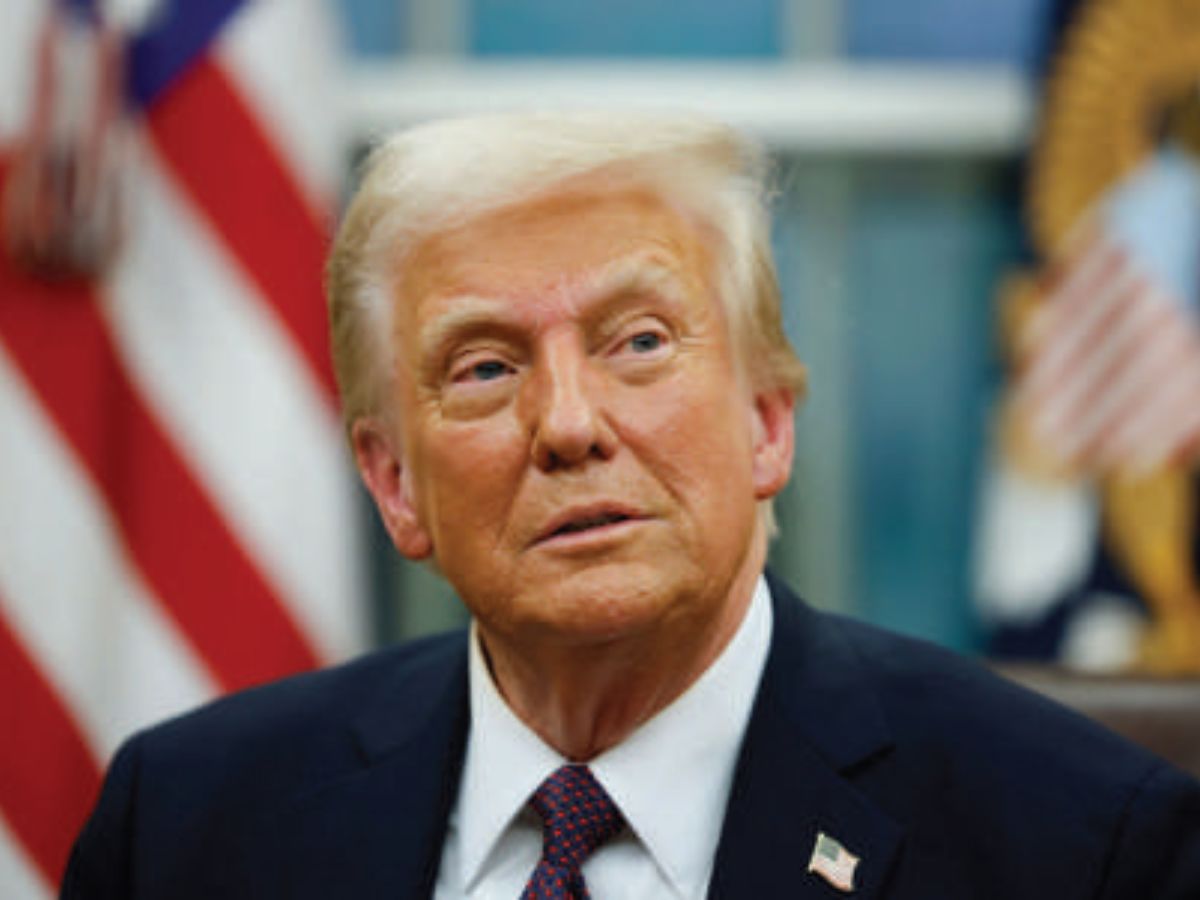
The US is inducing a regime shift from cooperative trade governance to deterrence-based trade policy.
The foundational purpose of trade agreements is not tariff liberalisation per se, but intertemporal commitment. In standard models of international trade policy, governments face a time-inconsistency problem. Ex ante, they prefer low tariffs to attract investment, embed supply chains, and reap efficiency gains. Ex post, once factors are sunk, domestic political incentives tilt towards protection. Trade agreements exist to bind governments against this temptation, lowering policy uncertainty and risk premia even when enforcement is imperfect. The Greenland episode suggests that, under Donald Trump’s presidency, this commitment function has collapsed. What is at stake is not a single dispute or even a particular tariff rate, but the loss of contractual content in trade agreements themselves.
The threatened tariffs on eight European allies are neither rule-based nor remedial. They are explicitly open-ended, discretionary, and conditional on a nontrade political outcome, i.e., the transfer of sovereign territory. Tariffs are to be imposed until compliance is achieved, not until economic injury is remedied. This marks a sharp departure from the logic of WTO-era trade policy and places the episode closer to the literature on economic coercion and sanctions than to trade remedy law.
This matters because trade agreements presuppose issue separability. Concessions in trade are exchanged for concessions in trade; deviations are punished symmetrically within the same domain. Once tariffs are deployed to extract compliance on unrelated issues (territorial sovereignty, alliance behaviour, military deployments) the agreement ceases to function as a self-contained contract. Instead, it becomes a generalised bargaining instrument, vulnerable to exploitation across domains.
The EU-US agreement concluded last summer illustrates the consequences. The deal was already asymmetrical. US tariffs on European goods were capped at 15%, while the EU committed to zero tariffs on many US exports. The implicit compensation was predictability. Firms could price investment decisions knowing the tariff ceiling; governments could treat the deal as an anchor for expectations. Trump’s new tariff threats destroy that anchor. Additional duties are expected to be layered on top of existing caps, ratification has been suspended, and implementation frozen. The agreement’s expected value has been driven toward zero, not because its terms are violated, but because they no longer constrain future policy.
Contract theory helps clarify why this outcome is structurally inevitable under discretionary tariff authority. Trade agreements are incomplete contracts. They cannot specify every contingency, and they rely on institutional constraints, reputational concerns, and reciprocal retaliation to remain credible. Trump’s tariff strategy removes each of these supports. Executive discretion allows instantaneous repricing of market access; counterparties face slow, politically costly responses; and the trigger for tariff escalation is unbounded. The result is a one-sided option contract, in which the United States retains the right (but not the obligation) to honour the agreement.
Legal uncertainty exacerbates this asymmetry. The administration’s reliance on emergency economic powers, now under review by the US Supreme Court, introduces a layer of jurisdictional indeterminacy. The enforceability of tariff commitments depends not on treaty law, but on judicial interpretation of executive authority. For trading partners, this generates not merely risk, but Knightian uncertainty, the distribution of future tariff outcomes cannot be inferred from past behaviour. Under such conditions, firms rationally discount the value of preferential access, and governments cannot credibly trade concessions today for stability tomorrow.
Nor does domestic political opposition in the United States restore credibility. Bipartisan criticism, congressional resolutions, and business lobbying may influence the long-run political equilibrium, but they do not bind executive action in the short run. Domestic veto players cease to function as commitment devices when authority is sufficiently centralised. For foreign governments, US domestic politics becomes another source of volatility rather than a stabilising constraint.
The strategic spillovers are also significant. The US is inducing a regime shift from cooperative trade governance to deterrencebased trade policy. Once tariffs are framed as instruments of political coercion, retaliation becomes a function of sovereignty and credibility rather than efficiency. This logic is familiar from the sanctions literature, when coercion replaces reciprocity, overdeterrence becomes rational, escalation risks rise, and negotiated restraint erodes.
The key implication is straightforward but farreaching. A trade agreement derives value only insofar as it constrains future policy choices. When one party reserves the right to impose tariffs at will, for reasons unrelated to trade, the agreement loses its insurance function. It no longer reduces uncertainty, anchors expectations, or lowers the cost of capital. At best, it offers temporary transactional calm, contingent on political alignment across multiple, unrelated domains..
For America’s partners, the rational response is not to negotiate marginally better tariff schedules, but to treat US market access as structurally unstable, a geopolitical variable rather than a contractual right. Once that shift occurs, the traditional welfare-theoretic case for deep trade agreements collapses. What remains is not trade cooperation in the classical sense, but managed exposure.
Should India rush into a trade deal with the US? Probably not. Trump tariffs have not hit India as hard as feared, with exports increasingly diverted to other markets. India is already pursuing more predictable FTAs (including with the EU), while the US Supreme Court may yet strike down Trump’s tariffs under emergency powers. In this context, rushing into a deal with an administration that retains discretionary tariff authority offers little certainty. Waiting is the safer strategy.
Aditya Sinha writes on geopolitical and macroeconomic issues.
