
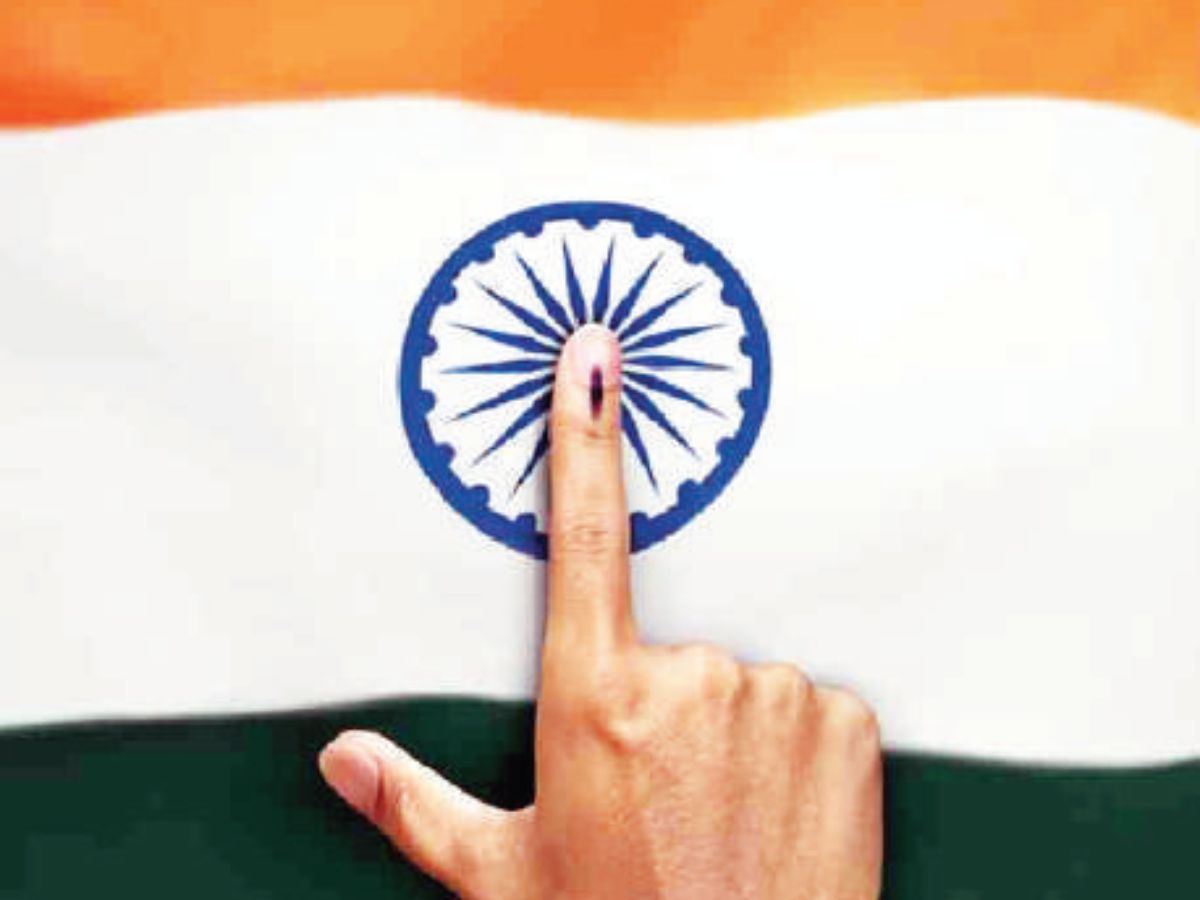
From digital delivery to participatory depth, India’s civilisational democracy is reshaping the grammar of governance and socio-economic equity. The world must invest in its success.
As a diplomat since 1974, I have felt proud representing the world’s largest democracy—a role model for other developing countries in Asia, Africa and Latin America. India kept faith against heavy odds—external and internal—often without being given due credit or support as a systemic exemplar and strategic democratic asset by the so-called established Western democratic liberal order. Against their better judgement and intrinsic interest.
This scepticism was in part a colonial throwback, rooted in misplaced assessments that the India Democracy project was flawed and unlikely to survive—let alone thrive—given its many fault lines of religion, caste, language, and socio-economic stratification. Instead of deep, strategic investments in the world’s most authentic democracy, unprecedented in size, scope and the audacity of its imagination, their approach remained narrow, short-sighted and transactional. They often favoured undemocratic autocracies and military dictatorships masquerading as democracies in India’s neighbourhood and beyond.
It was Prime Minister Narendra Modi who reminded us that our freedom in 1947 did not import democracy as an exotic plant—it re-rooted it in Indian soil. Particularly in the last decade, we have burnished our civilisational habits to reflect the largest democracy as also the most youth rich, vibrant, diversely united but also the oldest—Swayambhu, or self-manifested one. Its renaissance spans every domain—political, economic, social and technological—drawing from our deepest spiritual, humanistic and philosophical wellsprings, showcased during our G20 Presidency in 2023.
Long before the modern Constitution, democratic ethos flowed through our civilisational veins. From the Rig Vedic sabhas and samitis to the republican mahajanapadas like the Licchavis and Shakyas, India has practised consultative governance for millennia. The Buddhist Sanghas followed codes of quorum, debate, and consensus. The Chola inscriptions at Uttiramerur etched rules for public office and community decision-making—centuries before Magna Carta. Our ancient political texts, from the Mahabharata to the Arthashastra, reflect an ethical statecraft rooted in Dharma—where power was accountable, leadership was duty-bound, and governance served the people. This civilisational substratum gave India an indigenous democratic consciousness—spiritual, plural, decentralised, and long lasting.
Modern democratic thought—from Rousseau’s and J.S. Mill’s liberty, equality, fraternity to Lincoln’s compass of government of the people, by the people, for the people—has influenced India’s constitutional journey. But our own intellectual legacy is equally rich. Kautilya’s Raj Dharma, Ashoka’s edicts on welfare and dialogue, and the lived pluralism and egalitarianism of Mahatma Gandhi and Subramania Bharati fostered an indigenous democratic culture. India’s genius synthesised popular sovereignty with the rule of law, liberty with social justice; resolving conflict through consensus.
The classics caution us, too: Plato warned against demagogues; Aristotle prized the golden mean and the ballast of a strong middle class; Karl Marx cautioned that formal equality can be hollow if material conditions negate agency. India’s answer has been to synthesise—to bind popular sovereignty to the rule of law and rights; to wed liberty with social justice; to make democracy not only a franchise but a way of resolving conflict peacefully and legitimately. To successfully neutralise the centrifugal forces of linguistic and what the West calls sub-nationalism-based separatism while generating centripetal forces to unify and build a sense of one nation.
In this republic of argument and affirmation, every voice—no matter how small—counts. Democracy in India is not a static structure but an evolving, flowing river, fed by perennial waters of dialogue, dissent, and renewal. India offers a model that grounds democratic form in social substance—that tempers individual rights and freedoms with collective upliftment, regional pride with the spirit of the Union.
Our democratic journey distinguished itself with universal suffrage, the longest Constitution, federalism, separation of powers, linguistic reorganisation, panchayati raj, and vibrant multiparty coalitions. Repeated peaceful transfers of power, even after setbacks like the Emergency, demonstrated resilience. Over 640 million Indians voted in 2024 in free and fair elections out of an electorate of 900 million—a democratic feat without parallel in human history.
The granularity of India’s governance—through aspirational districts, digital dashboards, and decentralised delivery—reflects democratic responsiveness at scale. For the Modi era, democracy is more than voting. It is dignity and capability enhancement. PM Modi’s governance doctrine—from eligibility to entitlement to empowerment—has transformed millions from Laabhpatis to Adhikarpatis.
Over 250 million were lifted out of multidimensional poverty in the last 10 years; millions reached through housing, toilets, health, banking, education, nutrition and digital public infrastructure enabling inclusion, access, and transparency at scale. Welfare programmes cut across caste, religion, gender and geography, democratising opportunity and agency. SDG progress reflects Indian concepts of Sarvodaya and Antyodaya. PM Modi’s clarion call of “Sabka Saath, Vikas, Vishwas aur Prayaas” is democracy lighting the path to a developed India—Viksit Bharat by 2047.
India’s democratic institutions remain the sentinels of constitutionalism. The judiciary is an independent and assertive guardian of rights. The Election Commission retains credibility through the largest electoral exercises on Earth—evoking awe in Western democracies. The armed forces remain above politics, committed to constitutional command. RTI democratises information; the CAG audits and parliamentary committees scrutinise; and investigative agencies have scaled action against economic offences (with the overwhelming majority of cases against non-political actors). All operate under constant public and media scrutiny. The media is feisty and free to express views.
India’s secularism is founded on Sarva Dharma Sambhava—equal respect for all faiths. Schemes like Nai Roshni and PMJVK for minorities complement universal provisioning. Federal coalitions and grassroots empowerment modulate majoritarianism while reinforcing unity.
No democracy can be whole without women’s full participation. India has steadily advanced this, from one-third reservation in panchayats to targeted programmes for economic empowerment. The Women’s Reservation Act (Nari Shakti Vandan Adhiniyam) piloted by PM Modi, ensuring one-third seats for women in Parliament and State Assemblies, is a watershed moment. Women are also leading as economic actors: the majority of Mudra loan beneficiaries are women; millions gained clean energy access through Ujjwala; joint housing titles have increased ownership; and targeted skilling and entrepreneurship schemes have expanded agency. This embeds gender justice into democratic practice.
Perverse judgement and benchmarking of Indian democracy with a neo-imperialist lens—often based on selective global indices and surveys—betray methodological bias. These underweight India’s scale, voter participation, federal diversity, institutional resilience and grassroots leadership. Sweeping labels like “electoral autocracy” fail to capture India’s intrinsic genius for institutional innovation, managing complexity and achieving success. Pew Research shows that over 70% of Indians are satisfied with their democracy—compared to under 30% in some Western countries like the United States.
The rising threat of Foreign Information Manipulation and Interference (FIMI) has further distorted perceptions. Deepfakes, manipulated videos, bot networks and narrative warfare are malevolently deployed to undermine trust. The upheavals in Bangladesh and now Nepal are cautionary tales. But India offers a powerful counter: bytes, open discourse, vibrant debate, and democratic resilience—not boots, censorship, coercion or violence. Securing the integrity of this information ecosystem must become a shared global responsibility—not a toolbox to undermine the precious Indian democracy.
India’s rise as a major democratic power is a stabilising force in a volatile world. While military coups, mobocracies and constitutional breakdowns plague others—India has offered a model of electoral legitimacy and peaceful and transformative governance—a capacity to reconcile scale with inclusion, modernity with tradition, and speed with stability.
The survival and success of India’s democracy is a vital, global public good. It is a prime mover in evolving a multipolar world order as polarisation intensifies across continents, as also in democratising multilateral institutions facing crises of legitimacy. At the UN, IMF, World Bank and WTO, India has championed the voice of the Global South in demanding greater participation in decision-making and leadership in global governance.
A word especially to our youth in India—let us learn not only to count our democratic blessings, but also own them, nurture them, safeguard them while abjuring anarchy at any cost. Build this soft power for reclaiming India’s greatness.
To those political formations who make it their calling to divide, deride, undermine and abuse Indian democratic institutions instead of reinforcing them—beware—for they will be judged harshly in the people’s courts and by history.
To the democracies of the world, a call to forge true strategic partnerships with India—as “natural partners” and as “brothers in the cause of human liberty”, peace and prosperity. When Indian democracy thrives, the democratic ideal itself endures. For, its kernel is timeless. Its institutions are tested. Its achievements are tangible. Its corrections are constant. In the concert of nations, India’s democratic voice resonates not so much as an echo of borrowed ideals, but as a raga of its own making—resilient, rooted, and rising. Imperfect, yes—but ours. And ever more worthy of the people in whose name, by whose consent, and for whose benefit it exists.
Lakshmi Puri is a former Assistant Secretary-General of the United Nations and Deputy Executive Director of UN Women; and a former Ambassador of India.




