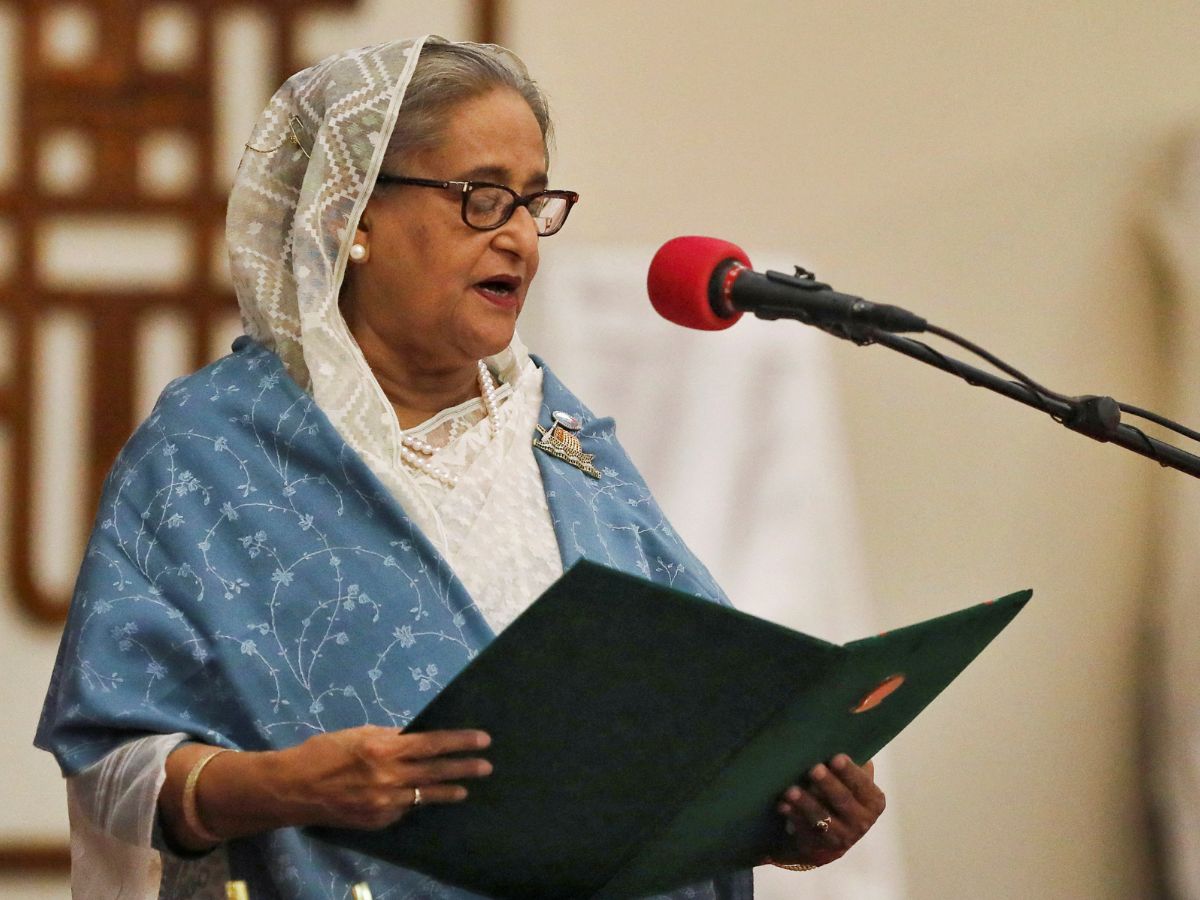
Sheikh Hasina (Image: Reuters)
A few days before the tempest of street demonstrations that forced her to flee to India, Bangladesh Prime Minister Sheikh Hasina Wajed was content, very content, with developments. She had understood how to “manage” elections so that she was always assured of a landslide victory. Each decision of hers led to a copious flow of funds to external records she or her son held. Decisions were auctioned, as it were, and the highest bidder got the decision in her or his favour. Never mind that what was procured was substandard, what counted was the flow of funds to overseas accounts. Surrounded as she was by layer upon layer of fawning sycophants, she was unaware of the anger swelling up in the public against her rule. Finally, the dam broke and the furies of popular discontent were set loose. For a few days she thought the situation would come under control, as it had on so many previous occasions. Not this time. Policemen and soldiers were themselves victims of her misrule, and refused to go against the crowds. After all, their brothers, sisters, even their fathers and their wives were on the streets, just as Craig MacNamara, the son of Defense Secretary Robert MacNamara, joined the protesting crowds against the Vietnam War. The war which Craig’s father was so zealously prosecuting under President Lyndon Baines Johnson. Turning back to Bangladesh, the country had become a cauldron of hate against Sheikh Hasina and her family, even her late father, Bangabandhu Sheikh Mujibur Rahman, long departed from this world. His statues were toppled in the way those of Saddam Hussein were in 2003 Iraq. Unlike the unfortunate Saddam, Sheikh Hasina managed to flee to India, where she is safe from the anger of Bangladeshis.
In the way that elaborate woodwork gets eaten up inside by termites, the governance system of Sheikh Hasina was riddled with the termites of corruption and consequent misgovernance. Such dry rot is concealed from the outside, even while it gets eaten up inside. Not just Sheikh Hasina but those close to her profited as well, and although the press was muzzled, the “samizdat” or word of mouth, carried each tale of corruption to the different and distant corners of Bangladesh. The Prime Minister was as unpopular in reverse as her sycophants proclaimed her glorious deeds, or camouflaged misdeeds. They did not notice that the camouflage was wearing thin, and had indeed been shed completely where the public was concerned. Cocooned as she was by flattery, Sheikh Hasina had little inkling of what was to come. Had she not made her escape, she would have been lynched by the mobs furious at her misrule. What happened to Sheikh Hasina is a cautionary tale to her replacement, who needs to avoid going by the same route as Sheikh Hasina did. In power, brokers will come with tempting offers of cash and other delights. The new Prime Minister needs to not just shoo them away but prosecute them for attempting to make him corrupt. The world is watching the new government, intent on finding out if it is just Hasina Mark II or a genuine makeover. For the sake of the people in Bangladesh, we in India wish our new neighbouring government well, as we do the people of our neighbour, Bangladesh.
