
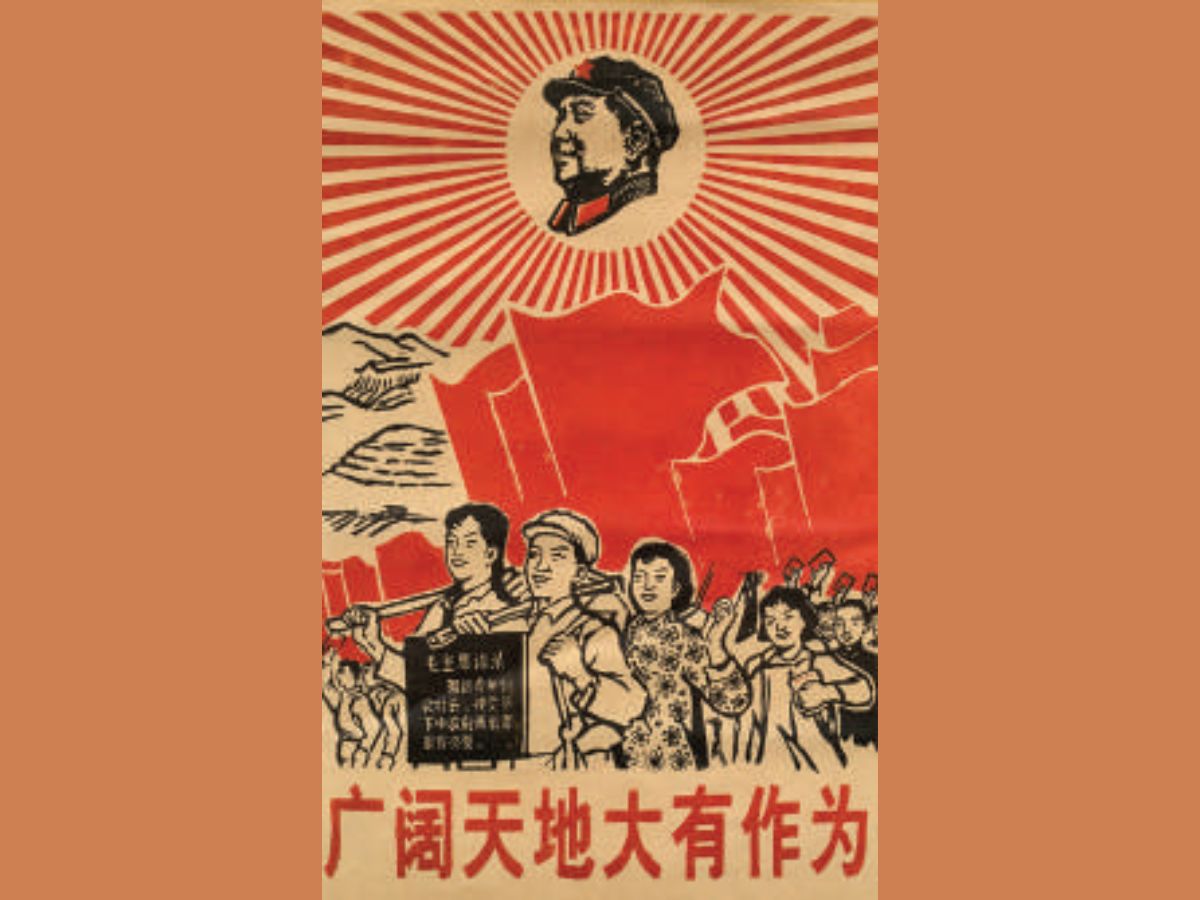
The faults of Mao Zedong, the founder of the People’s Republic of China, are many but on one count he has a splendid score. This is that of equal rights for women, for they “hold up half the sky”, he said. In the Imperial era, as those familiar with the tale of the “Last Emperor”, Aisin Gero Pu Yi, can testify, women were treated as chattel. Their feet were bound at a very young age, and thereby painfully preventing them from growing. The smaller the (once bound) feet, the more respected the woman was. The bigger the feet, the more contempt was foisted on the lady. Not just the Emperor, but noblemen and rich merchants kept a flock of concubines, treating them as they chose. They were supervised by a eunuch who had been castrated at a very young age. The hobby of such eunuchs, apart from eating, was to be cruel towards the concubines, for they were women, unlike the eunuch.
The Kuomintang interregnum between the Imperial and the Communist era, was marked by mismanagement and chaos. While Generalissimo Chiang Kai-Shek was honest, and would happily have stayed in a tent, the family of his spouse Soong Mei-Ling focused on making money. Chiang had a blind spot where the misdeeds of the family of his wife were concerned, and did very little to prevent the impulse of the Soong family to profiteer at the cost of the people. In contrast, the Chinese Communist Party Chairman, Mao Zedong, had no private wealth except a large number of books. Indeed, these covered a little more than half his bed, and on insomniac nights Mao would read them and fall asleep. More and more KMT troops left the military and settled down in civilian occupations. Small wonder that they were no match for the Imperial Japanese Army, and lost.
The vacuum in the leadership was filled by the Communists under Mao. He was tyrannical, he was cruel even towards those closest to him. His longtime Man Friday, Zhou Enlai, got cancer but Mao refused to give him the cures, preferring natural cures instead until, constantly in pain, Zhou was at the door of his demise. At that point, Mao relented and allowed allopathic cures, so that Zhou could continue to work for him. Which, uncomplainingly, Zhou did until the end. Mao expanded the boundaries of China well beyond its traditional borders, adding Manchuria, Inner Mongolia and Tibet, besides bits and pieces of other land, such as Aksai Chin, which is Indian. This is why Mao is still a hero in China, unlike in the Soviet Union, where the crimes of Joseph Stalin were exposed to the public soon after he died of an apparent stroke.
It is unbelievable but true that in democracies such as the US and Britain, women did not have the vote until centuries had passed. The suffragettes in both countries fought for equality. In this connection, Anne Brontë may be mentioned. She is, undeservedly, less well-known than her sisters. Anne Bronte in her writings turned the spotlight mercilessly on the unequal treatment of women in the Victorian era. Anne Bronte demanded equality of status with women, but could not see this in her lifetime. In the US, writers such as Eudora Welty and philosophers such as Gertrude Stein fought as tigresses for women’s rights. A few men joined hands with them, such as the writer F. Scott Fitzgerald, whose bestseller novels celebrated strong women and not the submissive person other novelists portrayed.
In India, the writer Kamala Das said that a woman’s body belonged to her and she could do as she pleased with it. This was scandalous during that period, but her husband Madhava Das stood by her, bearing with a smile or an occasional frown the darts thrown in his direction for not ensuring his wife reverted to a more conventional lifestyle. Across the world strong women have fought for equal rights, even to the extent suggested by Simone de Beauvoir, that “women did not need men”. Her longtime partner Jean-Paul Sartre replied to queries with his usual wry smile. Who can forget Françoise Gilot, who inspired Pablo Picasso to paint in a still more inspired manner?
In ancient texts in India is the story of strong women, who their men adored. The writer Vidyapati wrote of his love: “You are my shelter in the rains, Cool breeze during the summer months You are my warmth when the winter is hard Nothing else I need.” Sadly, Vidyapati finds scant mention in our textbooks, great though he was as a poet, as indeed were so many. How different from Greece, which still venerates the statuesque women of bygone ages. After 2014, India has sought in a much more thorough way to keep the past of Bharat alive. Gone are the ASI edicts that mostly celebrate the graveyards of colonial era British soldiers. Women indeed are the “better half”, and have given not just life but courage and endurance to the men around her. Jai Bharat Mata.




