
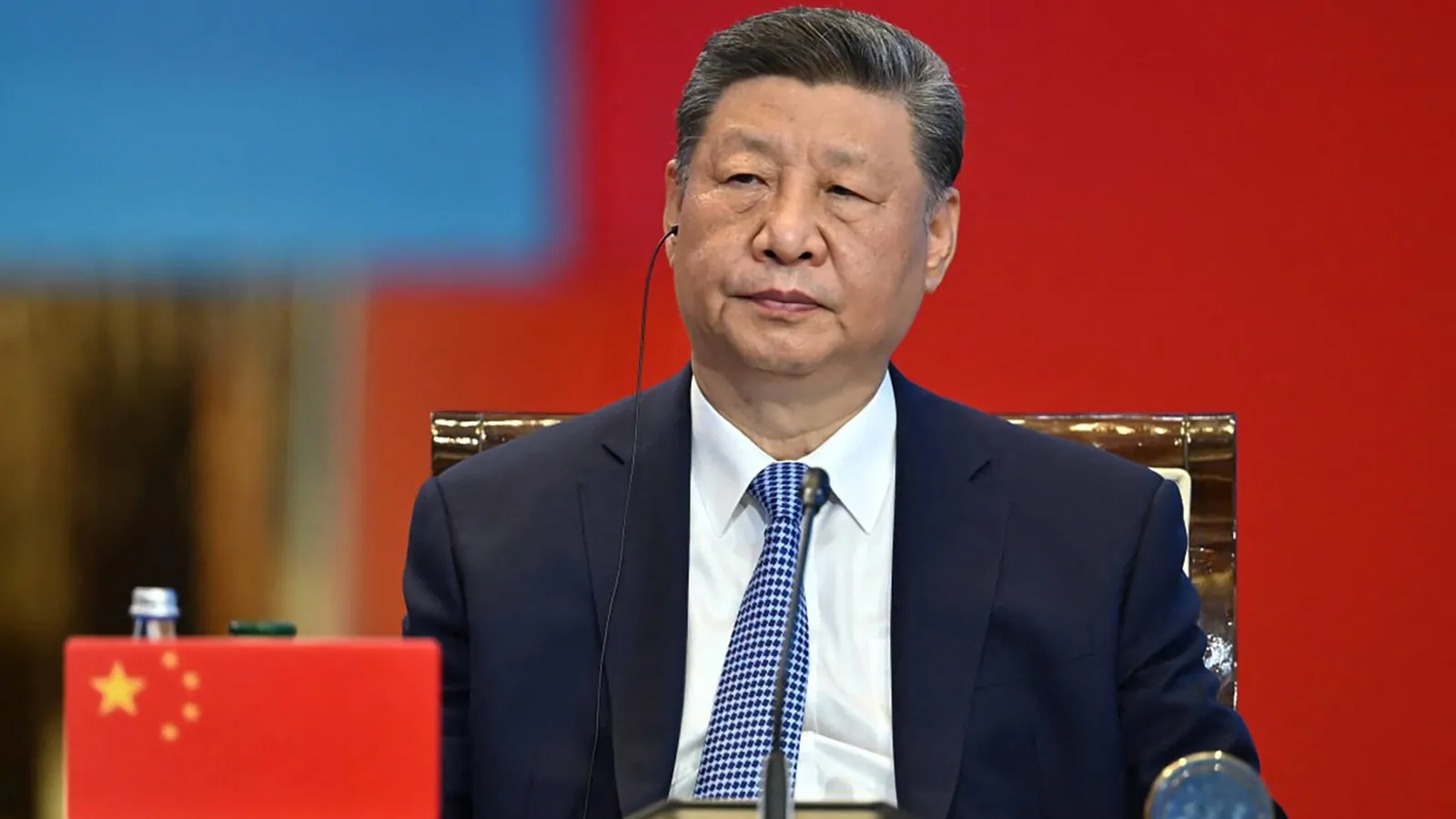
Between Gorbachev and Xi, no greater contrast is possible. One devolved the power of his position as Supremo of the CPSU to a fault, the other has taken over all the key centres of the CCP. Yet, given the differences between the CCP and the CPSU, the destructive impact of Xi on the PRC is likely to be the same as the impact of Gorbachev was on the USSR. While the latter needed just five years, the latter may need fifteen or more years to have a similar impact on the CCP.
Mikhail Sergeyevich Gorbachev was chosen as the General Secretary of the Communist Party of the Soviet Union by the party elders in 1985. They saw him as the apparatchik most suitable to ensure better relations with the West, primarily the US. They did not understand that “better relations” with the US, an implacable existential foe of the Soviet Union the way China now is for the US, implied that the US was secretly delighted by the way in which Gorbachev was weakening the power of the Union of Soviet Socialist Republics (USSR).
Once Glasnost (transparency) was introduced into the hitherto opaque functioning of the Soviet government, the public saw for themselves the rubbish within more, much more, clearly. In contrast, Xi has been so opaque even about issues as obvious as the leakage of the Cov-19 virus from the Wuhan Institute of Virology. Reverting to China, Xi has indeed been transparent, but only about his drive to centralise powers in himself. The last straw for the CCP elders was when he broke with post-Mao tradition and steamrolled his path to an unprecedented third term as CCP General Secretary in March 2023.
It was the final humiliation for the party elders as well as those leaders who had until then braved the excesses of Xi in the belief that he would give way in the same manner as Jiang Zemin and Hu Jintao had. Instead, even powers that traditionally were vested in the provincial leaderships were usurped by the Office of the General Secretary. An example of the solemn commitments given by previous leaders being thrown into the wastebasket by Xi is Hong Kong. The commitment given by the PRC leadership that the special status of Hong Kong would be preserved until 2047 was broken by Xi despite several previous statements by him that it would be honoured.
The word of Mao Zedong was supreme throughout his lifetime, but much of the day for him was spent in reading or in other diversions. He left almost all the day-to-day running of matters relating to the government to his very capable lieutenant Zhou Enlai. In contrast, Xi dislikes any decision being taken without referring the matter to him personally, with the consequence that even his chosen lieutenants have been chafing at the loss of authority in a context where much of the pre-Xi post-Mao prosperity of China hinged on the speed and efficiency with which decisions were taken by the leadership echelons of the provincial and national governments.
They would wish that Xi not press for a fourth term in 2028, but having mounted the tiger for an unlimited number of terms in 2023, were Xi to get off, he would be fatally mauled. A powerless former General Secretary would suffer an even worse fate than his immediate predecessor, Hu Jintao. On 22 October 2022, Hu was dragged out of the 20th National Congress of the CCP in full view of domestic and foreign media who were out in force covering the Congress. Xi is on course to be publicly shamed and humiliated by the new leadership in the manner witnessed during the Mao era. By 2027, desperate to get another term, Xi may decide that a victorious kinetic war is the only option that can secure another term for him, and most likely seek to take Taiwan by force. Inevitably, the US would thereafter intervene to protect Taiwan, as would allies of the US, including in the Indo-Pacific in order to halt the aggression and expansionism of Xi in a manner the world failed to do when Hitler took over the whole of Czechoslovakia in 1938 with the assistance of local quislings.
Deng Xiaoping was Paramount Leader for life of the CCP, but that was not through coercion, but unlike in the case of Xi, that was through moral force and party goodwill. Technically, all that Deng formally had in terms of posts was as the Secretary of the Bridge Association of China, very different from Xi, who has clung on to all the posts he secured one by one since his appointment in 2012 as CCP General Secretary. Xi had been chosen by the “Princeling faction” represented by Jiang over the “Common Man” faction represented by Hu. Very soon, Jiang regretted his choice, for Xi systematically began eliminating key leaders in the Jiang faction before turning his attention to the Hu faction. In the process, he succeeded in uniting several in the two factions in opposition to his continuance beyond his existing term. For decades, the leadership in China succeeded in its task of hollowing out the manufacturing capacity of several countries by flooding them with cheap Chinese exports.
As had been pointed out by the writer long back in the now defunct Far Eastern Economic Review, growth in China hinged on its authoritarian structure of governance. State policy ensured that the costs of production of items were kept artificially low in order to flood competing markets and drive out all other competitors to the products of the PRC. Now such flooding of markets is becoming less and less possible because of the open aggression and expansionism driven by the leadership of Xi. When His Holiness Tenzin Gyatso, XIV Dalai Lama of Tibet, fled to India, Mao responded by saying “Better India than the US”, and until recently he was proved right. Successive governments in New Delhi placed severe restrictions on the freedom of speech and the freedom of functioning of the Dalai Lama, something that would have been politically impossible in the US.
Had Xi the peasant wisdom of Mao, who gave back the territories of India won by the PLA in the border war in 1962, he would have understood that by not insisting on additional territorial claims on India, the shift of New Delhi into the Quad and other steps such as signing several defence agreements with the US could have been avoided. It was the policy of “peace at all costs (to the Soviet Union)” of Gorbachev that led to the collapse of the USSR. It will be the relentless expansionism of China under Xi that is going to cause a kinetic war, defeat in which will lead to the fall of Xi and the return of China to a peacebuilding path in a regime that may nominally be the same but differ in substance from the present. The Chinese are an ancient civilisation with a tradition to be proud of, and deserve better, much better, of their governance system than has been the case under CCP General Secretary Xi Jinping.




