
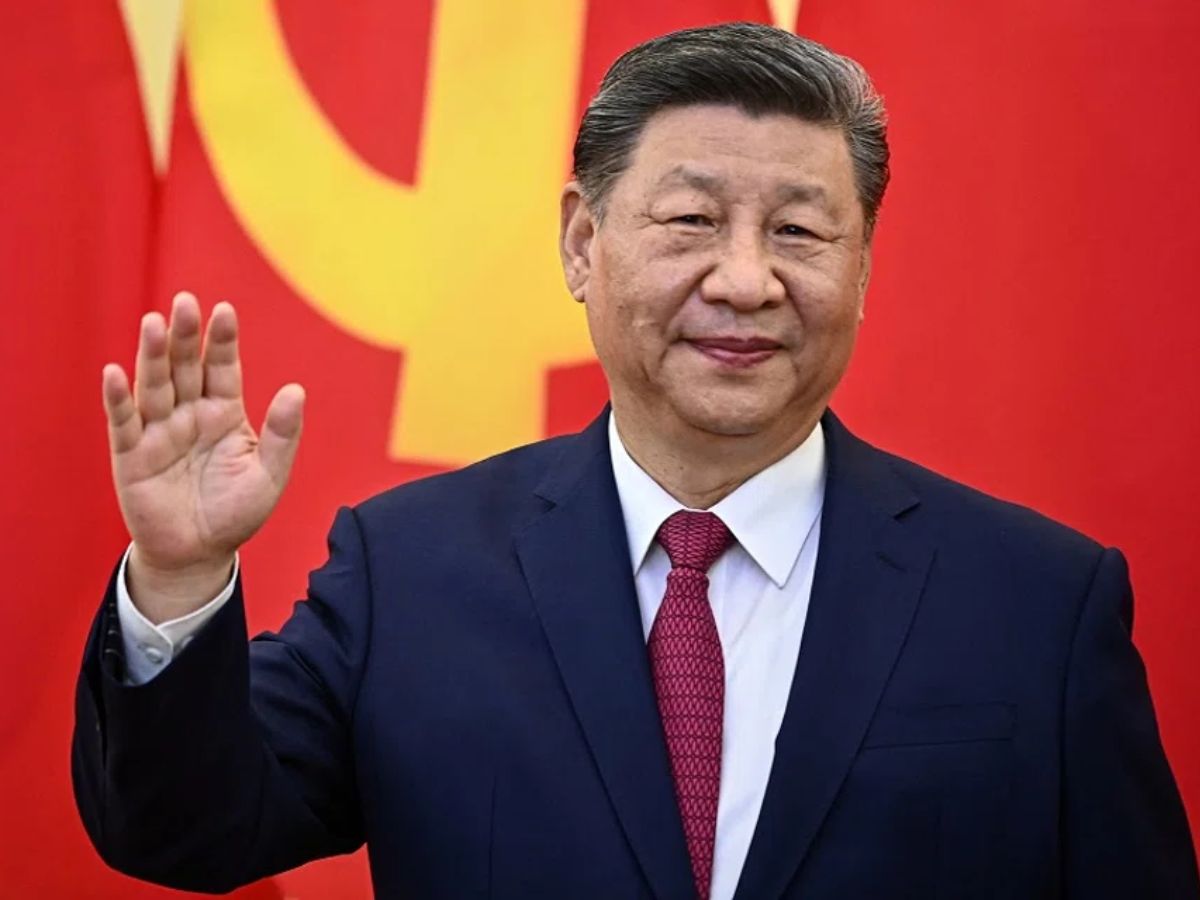
President Xi Jinping’s 2026 New Year message is not merely ceremonial rhetoric; it operates as a strategic political text. Through carefully curated narratives about economic progress, foreign policy vision, Party discipline, and cultural vitality, Xi articulates a self-reinforcing story of national resilience and ideological coherence. Read analytically, the address consolidates the governing logic of “Chinese-style modernization,” emphasizes the global relevance of China’s rise, and signals the continued centrality of the Communist Party as both architect and guardian of China’s developmental path.
One, a major pillar of Xi’s address is the assertion that China’s “economic strength, scientific and technological strength, national defence capabilities, and comprehensive national power have all risen to new levels.” The projection that China’s total economic output will reach 140 trillion yuan ($20 trillion) in 2025 serves as a quantitative anchor for this narrative.
Beyond output metrics, Xi deploys emblematic achievements to illustrate technological and strategic upgrading: advances in large AI models, breakthroughs in domestically developed chips, and the commissioning of the electromagnetic-catapult aircraft carrier Fujian. Projects such as Tianwen-2 and the Yarlung Tsangpo (Yaxia) hydropower initiative underscore the dual emphasis on space exploration and green infrastructure.
These achievements are framed as components of “new-quality productive forces,” a concept that links innovation-driven growth to national security and regime legitimacy. The imagery of humanoid robots demonstrating “kung fu mode” and drones staging “fireworks” performances blends spectacle with symbolism: the modernization project is technologically sophisticated, yet intimately connected to everyday life. Xi intentionally embeds these claims within the lexicon of “High quality development” and “Chinese-style modernization.”
The former stresses efficiency, sustainability, and structural upgrading, while the latter asserts that modernization can occur without adopting Western political models. In this way, economic narratives become ideological instruments for discourse power, validating state-led development, strategic industrial policy, and long-term planning mechanisms such as the Five-Year Plans.
Two, Xi’s articulation of foreign policy pivots around a core proposition: China seeks to build a “Community of shared future for mankind.” This notion has evolved from abstract slogan to organizing doctrine, shaping initiatives such as the Global Development Initiative (GDI), Global Security Initiative (GSI), Global Civilization Initiative (GCI), and more recently, the Global Governance Initiative (GGI). Together, these frameworks present China as a normative provider in global governance, especially for the Global South.
By referencing the Shanghai Cooperation Organization summit, the Global Women’s Summit, and broader multilateral engagement, Xi underscores China’s preference for institution-building and coalition formation rather than alliance politics. Notably, although he avoids explicitly naming the Russia-Ukraine war, his characterization of “conflicts still raging in some regions” allows China to maintain diplomatic ambivalence while continuing to position itself as a responsible peace-broker. Statements that China will “stand on the right side of history” reinforce moral framing without committing to explicit geopolitical alignment.
Domestically sensitive sovereignty issues are treated with firmness. Xi reiterates unwavering support for “One Country, Two Systems” in Hong Kong and Macao, while restating that cross-Strait reunification remains inevitable. The timing is salient, coming on the heels of large-scale live-fire drills surrounding Taiwan. Here, discursive reassurance to the domestic audience coexists with strategic signalling to external forces as well as observers.
Three, a defining feature of Xi’s governance has been the consolidation of Party authority through discipline and anti-corruption drive. In the speech, he highlights renewed commitment to the Eight-Point Regulation promulgated in 2012—targeting bureaucratic excess, formalism, and waste, while reasserting the ethos of “strict governance of the Party.” The anti-corruption campaign, framed as both moral and political necessity, has continued to escalate.
A CGTN report reflects the breadth of enforcement: In 2024 alone, disciplinary and supervisory bodies investigated 596,000 cases of misconduct and corruption, imposed penalties on 462,000 individuals, and transferred 15,000 cases for prosecution. Oversight has increasingly extended to the grassroots: between January and September 2024, authorities opened investigations into 89,000 township-level officials and 77,000 current or former village leaders.
Even more notable, a record 63 senior officials, the so-called “tigers” were investigated for graft in 2025. The anti-corruption drive has shaken the military. As the campaign intensified, Air Force commander Chang Dingqiu and political commissar Guo Puxiao were conspicuously absent from a ceremony to fill leadership vacancies recently. Senior figures such as He Weidong, a Politburo member and vice chairman of the Central Military Commission, and CMC member Miao Hua have been expelled from both the Party and the military.
Xi Jinping underscored the broader political meaning of these efforts, asserting that strict Party governance, credibility-building, anti-corruption, and self-reform have collectively improved Party conduct and broader social ethics. In Xi’s narrative, this campaign is not solely punitive; it is foundational for state capacity and public trust.
Four, the speech also devotes significant attention to cultural rejuvenation. Xi highlights global enthusiasm for icons such as the Monkey King and Nezha, the popularity of Chinese museums and intangible cultural heritage, and the addition of new World Heritage sites. These references frame culture not as heritage nostalgia, but as a dynamic resource underpinning national identity.
“Cultural confidence” serves multiple strategic functions. Domestically, it strengthens cohesion during periods of structural economic adjustment. Internationally, it positions China as a civilizational actor capable of projecting soft power through storytelling, aesthetics, and tourism. The fusion of tradition with digital creativity, illustrated in AI-driven entertainment and cultural reinterpretation, aligns with the modernization narrative: China advances technologically without eroding its historical roots.
Finally, Xi Jinping’s New Year message offers more than seasonal goodwill. It articulates a unified storyline in which economic achievement, global responsibility, disciplined governance, and cultural renaissance mutually reinforce one another. The underlying proposition is clear: China’s rise is orderly, principled, innovative, and historically grounded.
Yet the address also underscores unresolved tensions. Economic transformation remains uneven, technological self-reliance is still contested by global supply-chain realities, and geopolitical balances are delicate. The anti-corruption campaign enhances Party credibility but also reveals institutional vulnerabilities. Meanwhile, cultural confidence coexists with increasing ideological management.
Nevertheless, as a political document, the message succeeds in its core function: it consolidates legitimacy and charts continuity. By embedding development, foreign policy, governance, and culture within the framework of Chinese-style modernization, Xi projects a future in which China’s path is not only viable, but exemplary, and in which the Party remains indispensable architect and guardian of that future.




