The purge is best understood not as an anti-corruption action, nor as evidence of imminent military confrontation, but as a continuation of Xi’s campaign to enforce personal authority, ideological conformity.
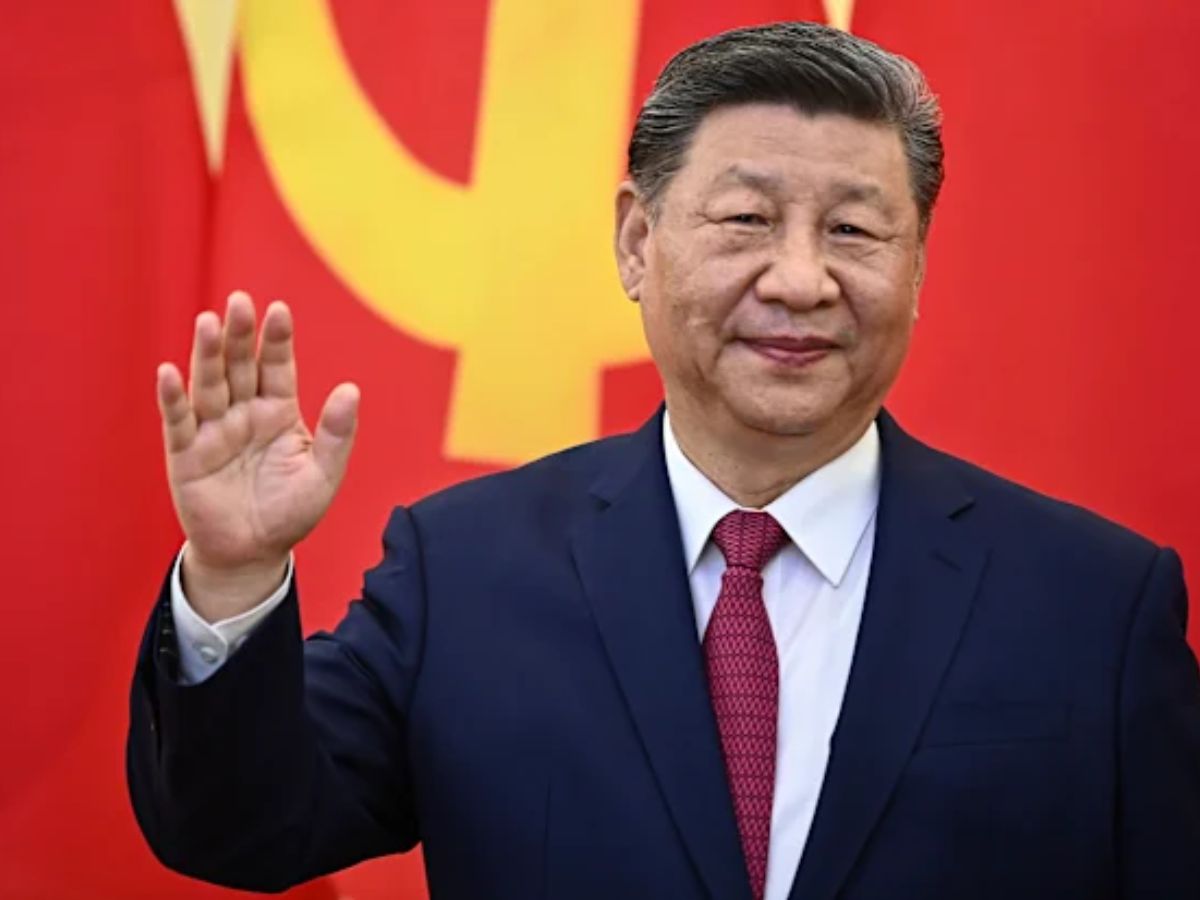
Xi Jinping (Image: X)
The PLA Daily editorial published on 24 January 2026, titled “Resolutely Win the Critical Battle, the Protracted Battle, and the Overall Battle Against Corruption in the Military,” marks one of the most consequential moments in Xi Jinping’s ongoing restructuring of civil-military relations in China. By publicly announcing the investigation of Zhang Youxia and Liu Zhenli, two of the most senior figures in the People’s Liberation Army (PLA), the editorial goes far beyond routine anti-corruption messaging. It functions as a political manifesto that reinforces Xi Jinping’s personal authority, reasserts Party supremacy over the gun, and exposes the deep anxieties surrounding loyalty within the PLA. Given the opacity of the Party’s internal decision-making processes, several plausible interpretations can be advanced.
First and foremost, the purge must be situated within the broader context of unprecedented turbulence in the PLA during Xi Jinping’s “new era.” According to a Caixin Global report in 2025, over the past dozen years nearly 80 generals have been investigated, including 13 full generals, 18 lieutenant generals, and more than 50 major generals. This scale of elite attrition is historically unparalleled in the PLA. Recent removals include former defence ministers Li Shangfu and Wei Fenghe, former Rocket Force commander Li Yuchao, and Central Military Commission (CMC) member and Political Work Department head Miao Hua. These cases demonstrate that even officials once regarded as Xi Jinping’s trusted loyalists are not immune. The recurring pattern reveals a structural problem: “absolute loyalty” is continually asserted but never fully assured.
The article’s second paragraph frames the political issues involving Zhang and Liu through the formulation of “five serious failings,” stating that they: “Seriously betrayed (辜负) the trust and important responsibilities entrusted to them by the Party Central Committee and the Central Military Commission; seriously trampled (践踏) on and undermined the system of responsibility of the CMC chairman; seriously fostered and exacerbated (助长影响) political and corrupt problems that weaken the Party’s absolute leadership over the military and endanger the Party’s governing foundation; seriously damaged (影响) the image and authority of the CMC leadership; and seriously undermined (冲击) the political and ideological foundation for unity and collective endeavour among officers and soldiers across the armed forces.”
This language is revealing. Corruption is treated less as a criminal issue than as a political crime against Xi’s authority. The editorial thus reinforces the ideological architecture of the “Two Affirmations” (两个确立) and the “Two Safeguards” (两个维护), both of which were institutionalized in the Party’s Third Historical Resolution. The “Two Affirmations” refer to, first, affirming Xi Jinping’s status as the core of the Party Central Committee and of the whole Party, and second, affirming the guiding role of Xi Jinping Thought on Socialism with Chinese Characteristics for the New Era. The “Two Safeguards” demand safeguarding Xi’s core status and safeguarding the centralized authority of the Party. Within this framework, loyalty is no longer institutional or constitutional; it is personal, ideological, and absolute. Zhang and Liu, like many purged generals before them, ultimately failed this loyalty test.
Second, speculation emerged about the possible arrest of Zhang Youxia and Liu Zhenli on 20 January 2026, when both were absent from the “Seminar for Provincial and Ministerial Level Leading Cadres on Studying and Implementing the Spirit of the Fourth Plenary Session of the 20th CPC Central Committee,” chaired by Xi Jinping and attended by politburo members and Zhang Shengmin, the CMC vice chairman appointed in October 2025. Xi may have viewed Zhang Youxia and Liu Zhenli as forming a “clique,” however, there is no evidence that Zhang Youxia sought to challenge Xi or usurp power. Although a widely-circulated claim alleges that Zhang failed to stand as Xi departed during the closing ceremony of the Two Sessions in 2025. The episode should be treated with caution, but such narratives do reflect elite speculation about instability at the apex of CPC-PLA relations and help explain the unusually harsh political framing of the purge.
Third, Zhang-Liu coup-related interpretation is weakened by the institutional realities of Xi Jinping’s control over the security apparatus. Xi exercises direct authority over the Central Guard Bureau (CGB), which is responsible for the personal protection of top Party and military leaders including the retirees. During the Fourth Plenary Session late last year, Xi reportedly replaced all security personnel surrounding Zhang Youxia. Moreover, Zhou Hongxu, director of the CGB and concurrently Xi Jinping’s political secretary, plays a pivotal role in ensuring the physical security of the Party’s top leadership. Alongside him stands Cai Qi, director of the General Office of the CPC Central Committee. Cai Qi is one of Xi’s most trusted lieutenants, with a relationship that dates back many years and far exceeds Xi’s trust in most other senior officials. Together with Wang Xiaohong and the Ministry of Public Security’s Special Service Bureau, this trio forms a formidable security alliance. Their combined control over information, personnel, and protection renders any coup attempt within the Party or PLA extraordinarily unlikely.
Fourth, the purge of Zhang Youxia and Liu Zhenli leaves only Zhang Shengmin accompanying Xi Jinping within the seven-member CMC. Zhang Shengmin, unlike his predecessors, lacks combat experience and has spent most of his career within the PLA’s political and disciplinary systems. Since becoming secretary of the CMC Discipline Inspection Commission after the 19th Party Congress in 2017, Zhang Shengmin has been one of the chief executors of military anti-corruption campaigns. However, even Zhang Shengmin’s position may not be secure. In an extreme scenario, Xi Jinping could further hollow out or even fundamentally restructure the CMC system, or position his loyalists, however, it will take a long time before the remnants of Zhang-Liu loyalists are cleansed from the PLA.
Fifth, external reporting has added layers of speculation. A Wall Street Journal report alleging that Zhang Youxia was charged with leaking nuclear secrets appears exaggerated. It is true that Zhang Youxia was in contact with US civil-military officials as part of the “military to military dialogue,” however, to conclude that he traded nuclear secrets for bribe would be premature to conclude. Similar rumours proliferated during the purge of former foreign minister Qin Gang, only to fade without substantiation. Such narratives often serve more to dramatize internal power struggles than to reflect verified sources.
Therefore, the real issue is not corruption but the absence of “absolute loyalty”; corruption charges merely serve as a euphemism for disloyalty. Otherwise, when Li Shangfu was investigated and punished for corruption that had largely taken place during his tenure at the General Armaments Department, it would be difficult to explain why his predecessor, Zhang Youxia, escaped unscathed at that time. Remember Liu Shaoqi, the then President of China was also slapped charges such as “renegade, traitor and scab” during the Cultural Revolution only to be exonerated during the Fifth Plenary Session of the 11th Party Central Committee in 1980.
Finally, the reunification of Taiwan has increasingly been incorporated as part and parcel of the great rejuvenation of the Chinese nation. With such massive unrelenting purges in the PLA, a year before the 21st Party Congress and the PLA centenary, which also happens to be the deadline for achieving the modernisation goal of the PLA, the prevailing institutional distrust and elite volatility makes the launching of a war against Taiwan strategically unrealistic. Xi Jinping’s overriding priority would be internal stabilization—consolidating control over the Party, the military, and the security apparatus, rather than undertaking high-risk external adventures. However, after securing the fourth term, the possibility of taking Taiwan militarily increases manifold.
In summation, the purge of Zhang Youxia and Liu Zhenli is best understood not as an isolated anti-corruption action, nor as evidence of imminent military confrontation, but as a continuation of Xi Jinping’s relentless campaign to enforce personal authority and ideological conformity within the PLA. The PLA Daily editorial lays bare the central paradox of Xi’s rule: the more power he accumulates, the more he fears disloyalty. Viewed through this prism, a prospective loyalty contest between Cai Qi and Wang Xiaohong merits close observation. Regardless of the direction it takes, the likely outcome is a recurrent cycle of purges that consolidates Xi Jinping’s immediate control while simultaneously exposing deep structural vulnerabilities within China’s civil-military order.
* B.R. Deepak is Professor, Center of Chinese and Southeast Asian Studies, Jawaharlal Nehru University, New Delhi.
