The Blood Moon 2026, a total lunar eclipse on March 3, will be partially visible in India during moonrise.
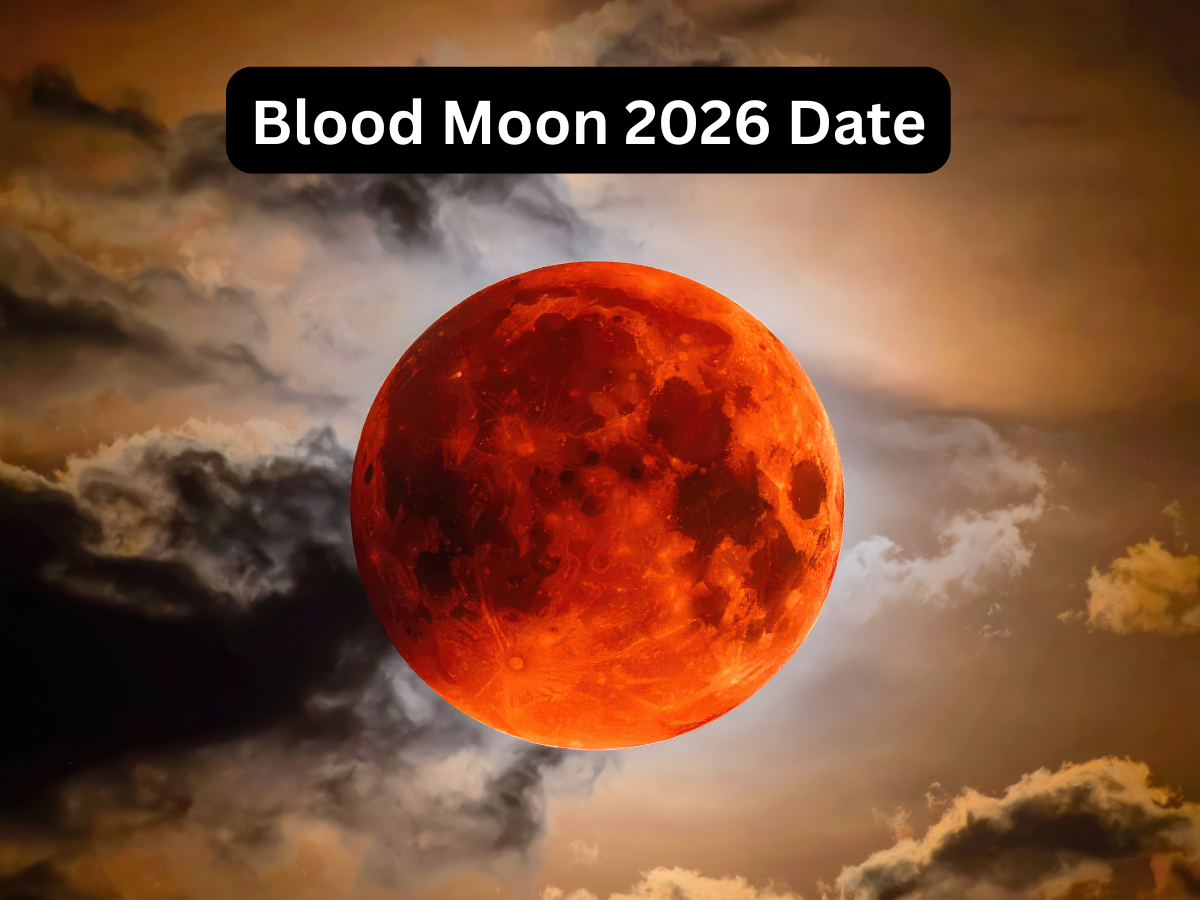
Blood Moon 2026 on March 3 will appear during a total lunar eclipse, partially visible in India at moonrise.
Blood Moon 2026: On March 3, 2026, a complete lunar eclipse will occur, causing the Moon to look red as a result of Earth's shadow. The Earth's location between the Sun and the Moon prevents sunlight from reaching the Moon, giving it a red tint due to Earth's atmospheric conditions. When the moon climbs over the horizon, India will be able to see the eclipse.
The total lunar eclipse will reach its maximum point of visibility across the world at 11:34 UTC, which corresponds to 5:04 PM IST. The Moon will rise in India at 6:26 PM IST, which will occur after the eclipse has entered its advanced stages. The eclipse will reach its highest point of visibility in India between 6:33 PM and 6:40 PM IST, and the eclipse will conclude at 6:46 PM IST.
Indian observers will witness the final partial eclipse phases immediately after the moon rises in the eastern sky. States with clear horizons and minimal obstructions will provide better viewing conditions, but India will miss the opportunity to see the complete totality. The weather conditions will determine which areas will have the best visibility.
The eclipse will be visible across Eastern Europe, Asia and Australia, North America, South America, the Pacific Ocean, Atlantic Ocean, and the Indian Ocean,n and polar regions. The eclipse will appear most clearly in northeast Asia, northwestern North America, and the central Pacific area.
This will be the first major lunar eclipse of 2026 visible from India, making it a must-watch celestial event.
