NASA’s Artemis II mission will launch astronauts around the Moon in March 2026, marking humanity’s farthest space journey in over 50 years.
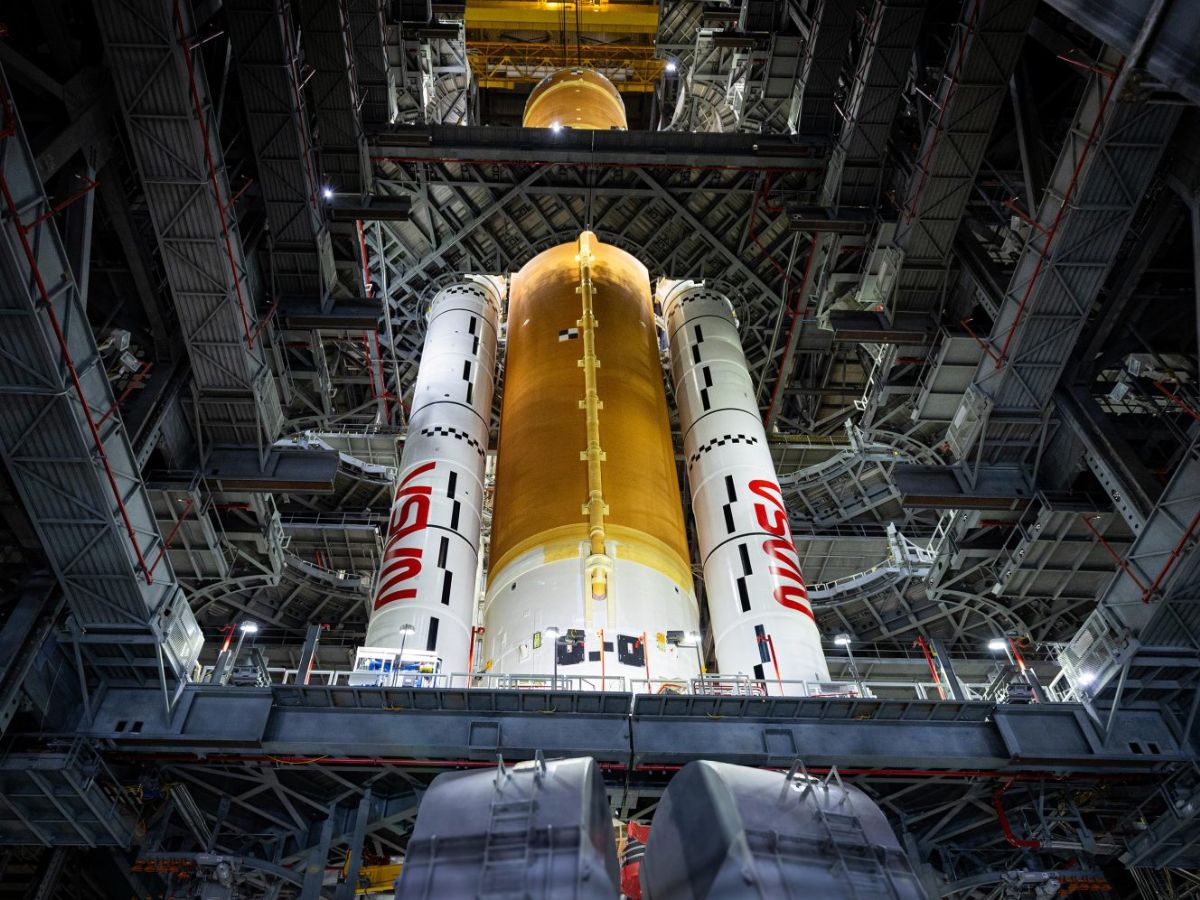
NASA, Artemis II (Source:X)
NASA is preparing to launch humans around the Moon for the first time in more than five decades with the Artemis II mission, marking humanity's farthest journey into space. The mission is scheduled for early March 2026, with March 6 as the earliest launch date (March 7 in the UK), following a successful “wet dress rehearsal” – a key pre-launch test where the rocket is fueled and taken through the countdown sequence.
This was the Artemis team’s second rehearsal at Kennedy Space Center in Florida, after a first attempt in early February was cut short due to a hydrogen fuel leak. NASA officials confirmed that issues with seals and filters have now been fixed.
"Every night I look up at the Moon and I see it and I get real excited because I can feel she's calling us and we're ready," said NASA’s Lori Glaze during a press conference. "The excitement for Artemis II is really, really starting to build, we can really start to feel it. It's coming."
The Artemis II crew consists of three Americans – Reid Wiseman, Victor Glover, and Christina Koch – and one Canadian, Jeremy Hansen. Following the successful rehearsal, the astronauts will enter quarantine before the mission.
The journey will launch aboard NASA’s Space Launch System (SLS), a 98-meter (322-foot) rocket that has flown only once before during the unmanned Artemis I mission in 2022. At the top of the rocket sits the Orion capsule, roughly the size of a minibus, where the crew will live, eat, work, and sleep for the 10-day mission.
On the first day, the astronauts will orbit the Earth. If all systems function correctly, they will then begin the four-day journey to the Moon.
Artemis II will take the crew around the far side of the Moon, the hemisphere never seen from Earth. At an altitude of 6,500–9,500 km (4,000–6,000 miles) above the lunar surface, the astronauts will spend several hours observing and photographing the Moon.
After the flyby, the crew will begin the four-day return journey to Earth, concluding with a splashdown in the Pacific Ocean.
The success of Artemis II is critical for Artemis III, which aims to land astronauts on the Moon, a feat not achieved since Apollo 17 in 1972. NASA hopes for a lunar landing by 2028, though the timeline is ambitious.
SpaceX, led by Elon Musk, has been contracted to build the lunar lander, which will launch on a Starship rocket. However, delays in Starship development have prompted NASA to request a revised, faster plan. Meanwhile, Blue Origin, owned by Jeff Bezos, is also tasked with developing an accelerated lunar plan.
The US faces growing pressure to return to the Moon, with China targeting a lunar landing by 2030, particularly at the Moon’s south pole. Both nations aim to establish bases and are competing for the most strategic locations.
