
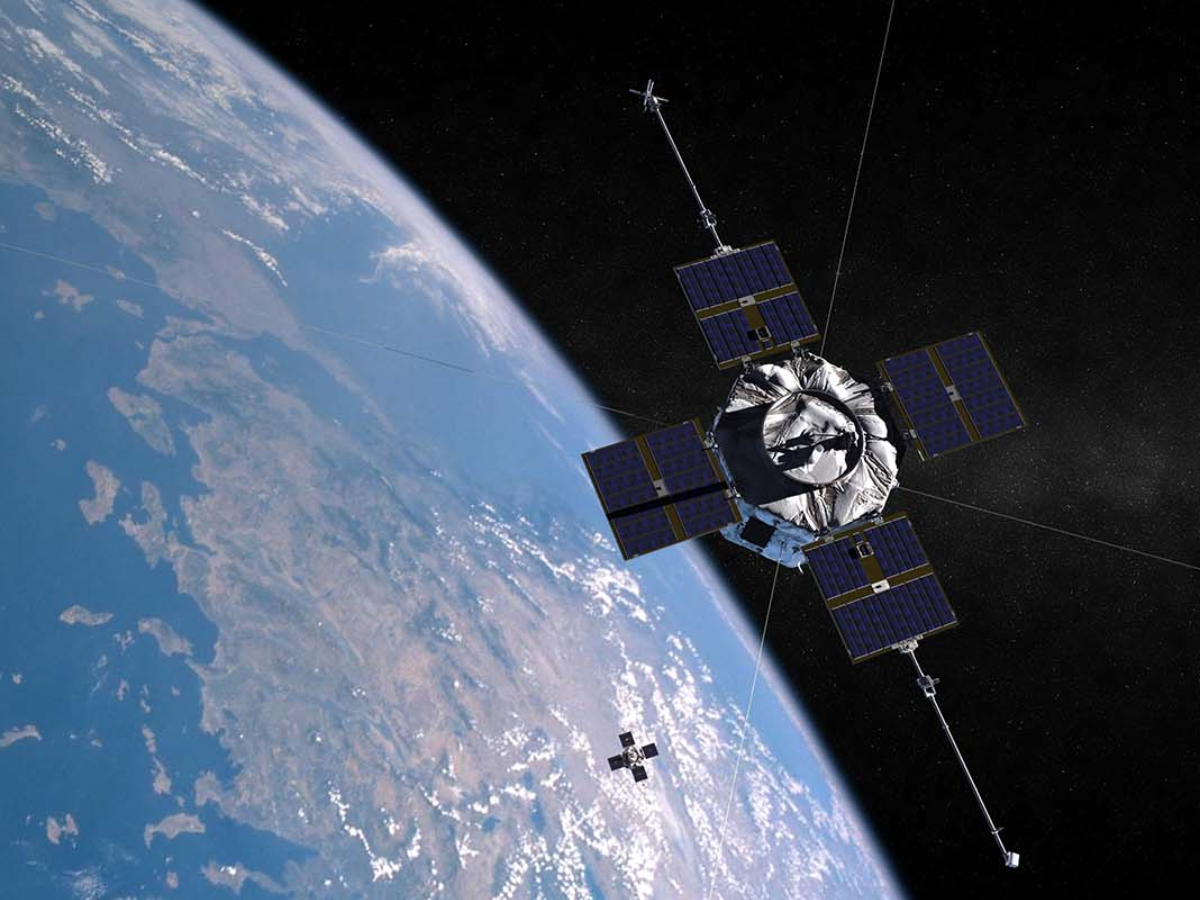
A NASA research satellite that spent more than a decade studying Earth’s radiation belts is now heading back toward the planet. The spacecraft, known as Van Allen Probe A, is expected to reenter Earth’s atmosphere around March 10 after nearly 14 years in space. Scientists say most of the satellite will burn up during reentry, but a few small fragments could survive and fall to Earth.
Experts believe the debris will most likely land in the ocean, since water covers the majority of the planet. Authorities have stressed that the risk to people or cities on the ground remains extremely low.
Where Will the NASA Satellite, Van Allen Probe, Crash on Earth?
Scientists say it is difficult to predict the exact location where Van Allen Probe A will fall. Satellite reentry paths depend on several factors, including atmospheric conditions and the spacecraft’s speed as it descends.
However, experts expect that any surviving debris will most likely land in the ocean. Since about 70 per cent of Earth’s surface is covered by water, the probability of fragments falling near populated areas is very small.
Space agencies estimate that the chance of the satellite causing injury to a person on the ground is roughly 1 in 4,200. Officials say there is no reason for the public to worry, even though the event is being closely tracked.
NASA Satellite Van Allen Probe Reentry Date and Time
The US Space Force has estimated that the spacecraft could reenter Earth’s atmosphere around 7:45 pm EDT (5:15 am IST the next day) on March 10, although the timing may change slightly as new tracking data becomes available.
Satellite reentries often come with a margin of uncertainty. Scientists typically give a window of several hours or even a full day because atmospheric conditions can alter the spacecraft’s descent speed.
Observers say the predicted time currently includes a possible variation of about 24 hours.
What Is the Van Allen Probe, A Satellite?
Van Allen Probe A was launched by NASA in August 2012 along with a twin spacecraft called Van Allen Probe B. The mission aimed to study the radiation belts that surround Earth, often referred to as the Van Allen belts.
These regions contain high-energy charged particles trapped by Earth’s magnetic field. Understanding them helps scientists learn how space weather can affect satellites, astronauts, and technology on Earth.
The two probes travelled in an elliptical orbit around Earth, moving between about 384 miles (618 km) and 18,900 miles (30,415 km) above the planet.
The mission was originally planned to last just two years. However, both satellites continued operating far longer than expected. Probe A collected valuable scientific data until October 2019, while Probe B operated until July 2019.
Why Is the NASA Satellite Falling Back to Earth?
Experts say recent solar activity played a role in the satellite’s earlier-than-expected descent.
Solar activity can heat and expand Earth’s upper atmosphere. When this happens, satellites in orbit experience more friction, which slowly pulls them closer to the planet.
Scientists believe this increased atmospheric drag caused Van Allen Probe A to lose altitude and eventually begin its journey back toward Earth.
Van Allen Probe Reentry to Earth: NASA Satellite Debris Risk
NASA officials say most of the spacecraft will burn up as it enters Earth’s atmosphere at high speed. Only a few parts made of stronger materials might survive the intense heat.
Even if fragments remain, they are expected to fall into the ocean rather than populated land areas. Experts estimate the overall injury risk at about 0.02 per cent, which is considered extremely small.
Space agencies will continue tracking the spacecraft during its final descent and may update the predicted reentry time as new data becomes available.
What Will Happen to the Second Van Allen Probe?
While Probe A is expected to reenter Earth’s atmosphere this week, its twin satellite will stay in orbit for several more years.
Scientists estimate that Van Allen Probe B may not return to Earth until around 2030. The spacecraft has experienced less atmospheric drag and continues to remain at a slightly higher orbit.
Even after their missions ended, both satellites provided valuable insights that helped scientists better understand space weather, satellite safety, and the long-term behaviour of objects orbiting Earth.




