Middle East tensions are raising fresh doubts over the Bahrain Grand Prix as F1 teams navigate travel chaos ahead of the 2026 season opener in Australia.
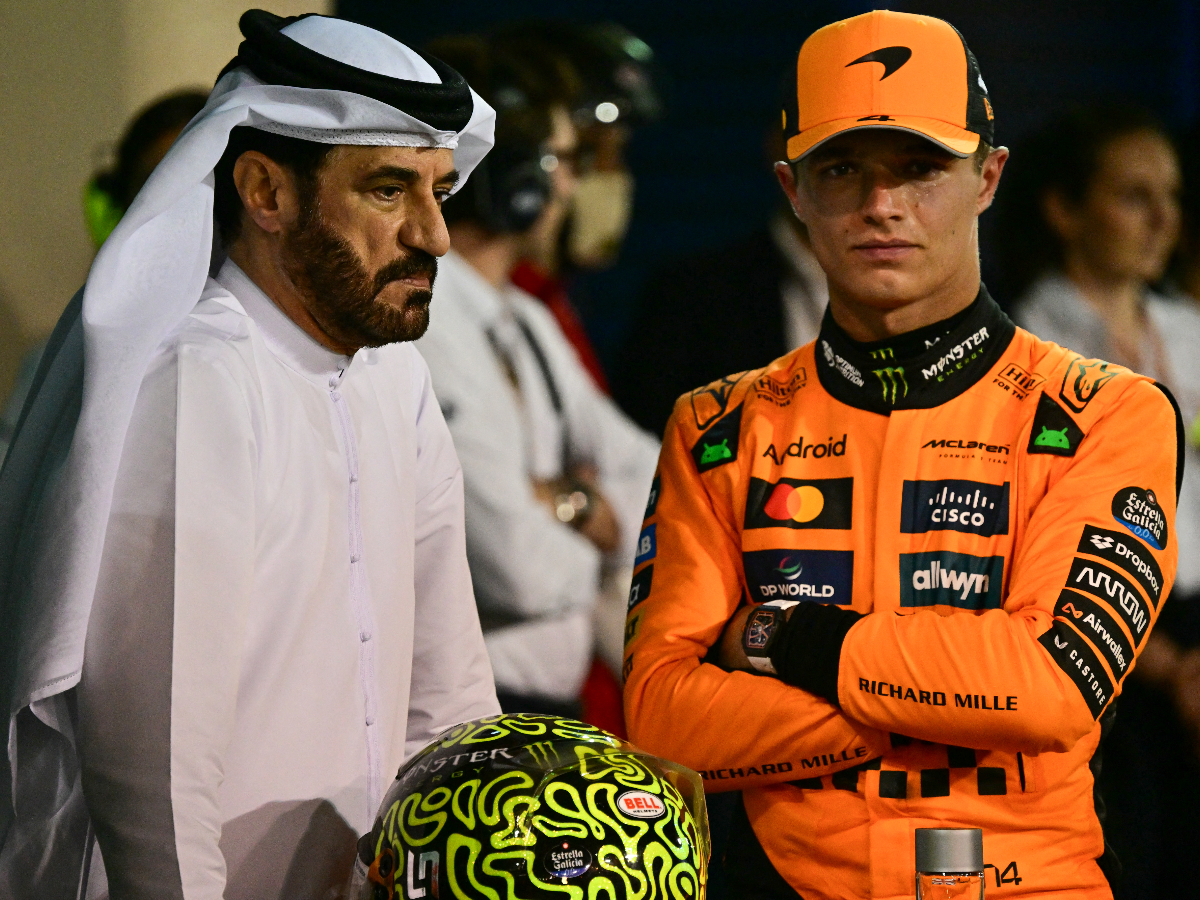
Bahrain Grand Prix 2026 in Crisis: Exploring What Lies Ahead for Formula 1 Amid Unprecedented Challenges | AFP
The rising tensions in the Middle East due to the Iran–Israel war, are now beginning to cast a shadow over the sporting world. With the Formula 1 2026 season just days away from kicking off in Australia, fresh concerns are emerging over whether the Asian leg of the calendar especially the Bahrain Grand Prix on April 12 will go ahead as scheduled or not?
The conflict has already caused disruption within the F1 ecosystem. Pirelli’s planned wet tyre test in Bahrain was cancelled after security concerns intensified following a missile strike near a U.S. naval base in the region. Mercedes and McLaren were among the teams set to take part in the session.
The temporary closure of Bahrain airspace left members of the Mercedes and McLaren teams, along with Pirelli personnel, stranded for sometime. Teams were forced to activate emergency travel plans to ensure key staff could reach Melbourne in time for the season opener.
Logistical complications extended beyond Bahrain, with travel disruptions also affecting major transit hubs such as the UAE and Qatar. Given how central the region is to global air travel, several Formula 1 personnel had to reroute their journeys and last-minute changes.
FOR THE FIRST TIME IN 2026, IT'S RACE WEEK!! 🤩
— Formula 1 (@F1) March 2, 2026
This weekend, 22 drivers will take to the track in Australia for the first round of the season 🙌#F1 #AusGP pic.twitter.com/ai83EtH7Ko
Australian Grand Prix chief executive Travis Auld confirmed that while travel has been challenging, the situation is under control. All the drivers, engineers and team principals have been prioritised and are expected to be in Melbourne without issue, though some support staff may encounter delays.
For now, the focus remains on Australia. However, the bigger question is Bahrain, which is scheduled to host a race just over a month from now.
Several governments, including the UK and the Netherlands, has issued travel advisories for the region, and now uncertainty lingers over whether conditions will stabilise in time.
An F1 spokesperson addressed the situation, as mentioned by AOL, “Our next three races are in Australia, China and Japan and not in the Middle East – those races are not for a number of weeks.
“As always, we closely monitor any situation like this and work closely with relevant authorities.”
Meanwhile, the conflict itself has intensified. The war entered a critical phase following the reported death of Iran’s Supreme Leader, Ayatollah Ali Khamenei, during joint US–Israeli operations on February 28.
Iran has since launched what it described as the “most devastating offensive in its history,” targeting U.S. military bases and locations in Bahrain, the UAE, Qatar, Kuwait and Israel.
For Formula 1, the Australian Grand Prix appears safe for now. But with Bahrain on the calendar next month and the Middle East playing a major role in the F1 schedule, the situation remains one to watch closely.
