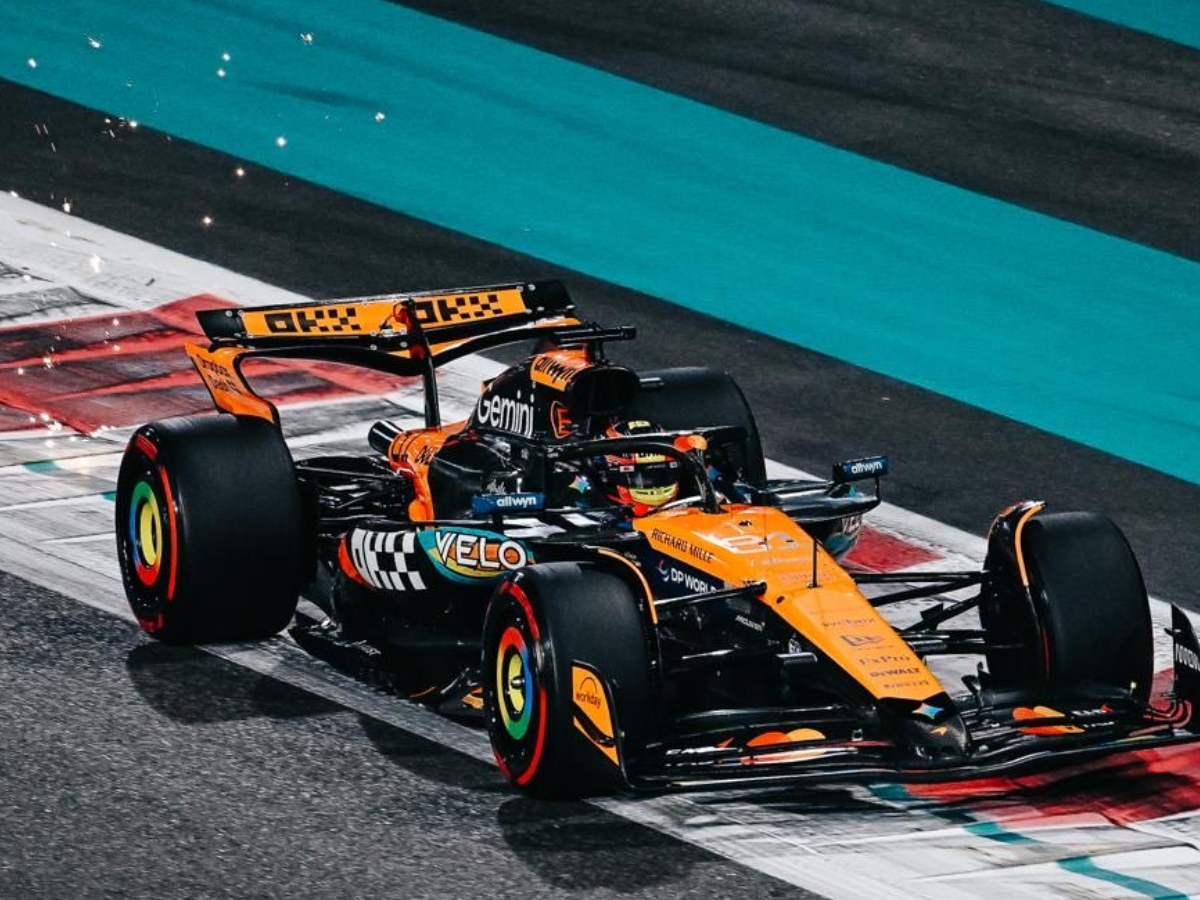
Formula 1 is currently enjoying a golden era in terms of fan following globally, growing by around 12% year-on-year. As new fans discover the thrill of the fastest motorsport in the world, one technical element remains impossible to ignore and tough to understand: tyres.
One may have heard commentators shouting about “softs,” “hards,” or “inters.” These are not just technical details, they are often the deciding factor between victory and defeat. These are the different types of wheels that the cars run on.
For example, take the dramatic and most controversial 2021 title decider between Lewis Hamilton and Max Verstappen. In the final race, Hamilton was leading on 44-lap-old hard tyres. When a late Safety Car came out, Verstappen pitted for brand-new soft tyres.
That grip advantage made the difference as Verstappen overtook on the final lap to seal the championship. It was a perfect example of how tyre condition can outweigh everything else.
Another example came at Monza, where Charles Leclerc executed a bold one-stop strategy. While rivals made two pit stops, Leclerc carefully managed his hard tyres for 38 laps, holding off faster cars on fresher rubber to take an emotional home victory for Ferrari. Again, tyre management made the difference.
Meanwhile, an important thing to note is that a major regulation changes have arrived in 2026 F1 season, including a 50-50 split between internal combustion and electric power and the introduction of a lighter “Nimble Car” concept. Given that, the tyres will continue to play a huge in these rule changes, that will be discussed below in this article.
So let’s start from the basics.
How Many Tyres Does Each Driver Get in F1?
On a standard race weekend, each driver receives 20 sets of tyres. These include dry tyres (called slicks) and wet-weather tyres.
Out of those 20 sets, 13 are dry slick tyres. The usual breakdown is two hard sets, three medium sets, and eight soft sets. In addition, each driver gets four intermediate tyres for damp conditions and three full wet tyres for heavy rain.
On Sprint weekends, the dry tyre allocation is slightly reduced to add more strategic pressure. Drivers who reach Q3 in qualifying receive an extra set of soft tyres specifically for that final session.
Explaining the F1 Slick Tyres
Slick tyres have a completely smooth surface with no grooves. This maximizes the contact patch between the rubber and the track, achieveing peak grip in dry conditions.
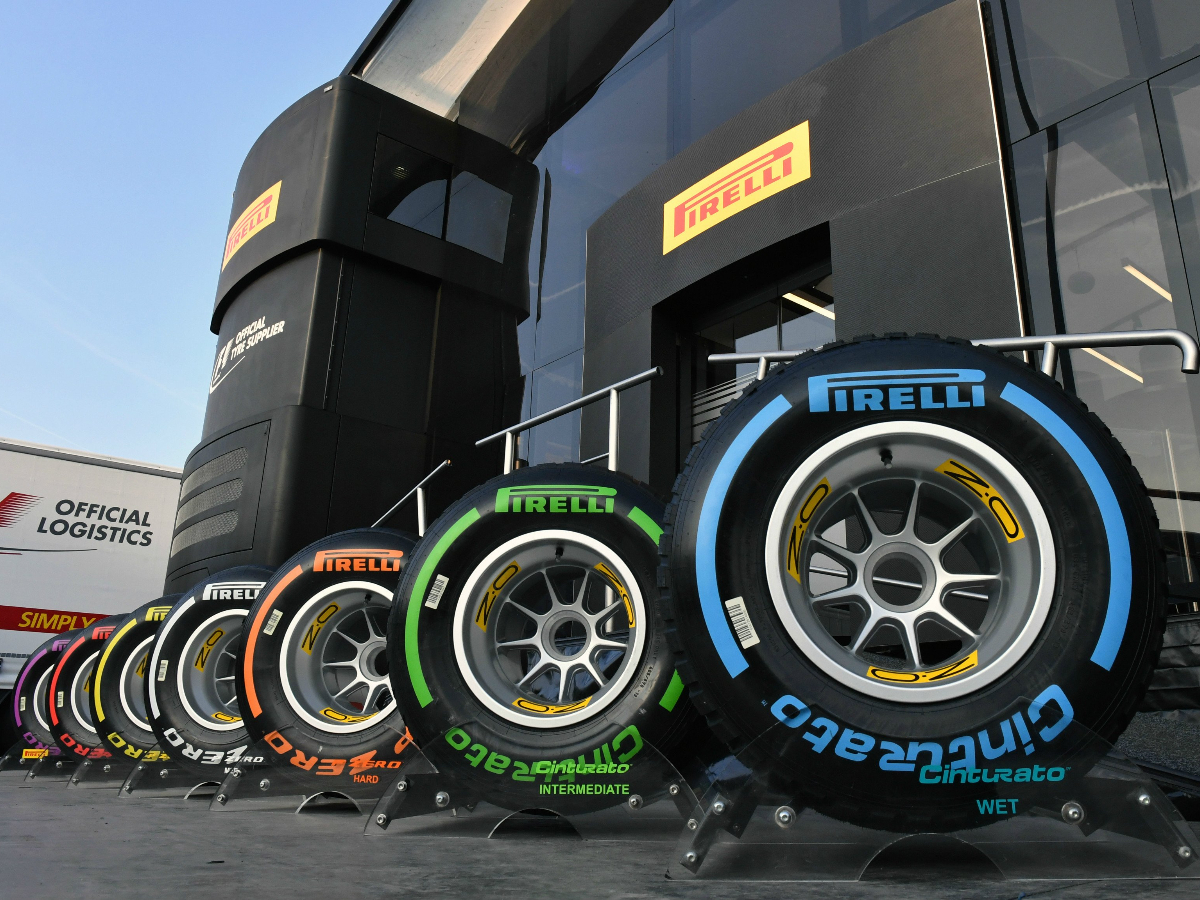
Pirelli produces five dry compounds (C1 to C5), and three are selected for each race weekend. It might sound a lot techincal but anyone watching the race can identify them by looking at their colours. Here's how:
Hard (White stripe):
The hard tyres are the most durable compound. It takes longer to warm up and provides less immediate grip, but it can last 40–50 laps. These have white stripe and are ideal for long stints and one-stop strategies.
Medium (Yellow stripe)
The yellow coloured striped tyres are the balanced option as the name suggests itself, medium. It offers a compromise between speed and durability and is often the preferred as the starting tyre.
Soft (Red stripe)
The soft tyres with red stripes are the fastest compound. It delivers maximum grip for qualifying laps or short aggressive stints but degrades quickly, sometimes lasting only 15–25 laps.
Wet-Weather Tyres: When the Rain Arrives
Unlike slicks, wet tyres have grooves to channel water away and prevent aquaplaning.
Intermediate (Green stripe):
The Intermediate tyres can be recognised by its green stripes and are used for damp tracks or light rain. At 300 km/h, they can disperse around 31 litres of water per second. They are chosen when the track is too slippery for slicks but not flooded.
Full Wet (Blue stripe)
Now the blue striped full wet tyres are designed for heavy rain and standing water. These tyres can disperse up to 76 litres of water per second. They are slightly larger in diameter to raise the car’s ride height and improve stability in deep puddles.
Who Supplies Formula 1 Tyres?
Pirelli is the exclusive tyre supplier for Formula 1 and holds the contract until the end of 2027. Every tyre used on race weekends is designed and produced by Pirelli under the regulations of FIA, the governing body of F1.
Tyre Return Policy:
The tyre usage is tightly controlled in Formula 1. Each driver begins a Grand Prix weekend with 13 sets of slick tyres and must return two after FP1, two after FP2, and two after FP3.
Drivers reaching Q3 hand back the extra soft set allocated for that session. Teams usually return their most worn tyres, leaving only seven sets for qualifying and the race.
After the Sunday race, every tyre, used or unused, is returned to Pirelli, where they track them digitally, shred, and recycle.
F1 Tyre Size and Dimensions and Changes in 2026
Since 2022, Formula 1 cars have used 18-inch wheel rims, replacing the old 13-inch wheels that were used for decades. Currently, till 2025, the front tyres were 305 mm wide and the rears were 405 mm wide, with an overall diameter of 720 mm. Weight of these tyres are 8 kg (front), 21 kg (rear, including rim)
However, the 2026 regulations will make the tyres narrower and slightly smaller to reduce drag and weight while improving agility. The 18-inch rim remains, but rubber dimensions change:
-
Front width: reduced from 305 mm to 280 mm
-
Rear width: reduced from 405 mm to 375 mm
-
Front diameter: reduced from 720 mm to 705 mm
-
Rear diameter: reduced from 720 mm to 710 mm
These changes align with the new lighter and more nimble car philosophy.
When and Why Do Drivers Change Tyres?
In Formula 1, pit stop timing is a science. In dry races, FIA regulations require every driver to use at least two different slick compounds (like hard, medium or soft). This guarantees at least one pit stop.
But regulation is only part of the story. As tyres wear, the rubber degrades and loses grip. Eventually, performance drops suddenly. This phenomenon is known as “the cliff.”
Lap times can fall by one to two seconds instantly. At that point, it becomes faster to spend 20–25 seconds in the pit lane for fresh tyres than to continue on worn-out rubber.
Teams also use strategy to gain position:
An undercut happens when a driver pits earlier than a rival, using fresh tyres to gain speed and jump ahead once the rival stops.
An overcut means staying out longer, hoping cleaner air or improving track conditions compensate for older tyres.
Weather adds another layer of drama into this tyre strategy. Switching from slicks to intermediates or from intermediates to full wets at precisely, the right moments of when, what and where decides who takes the lead in the race.
Formula 1 2026 rules:
Under the new active aero regulations, the Formula 1 cars have become lighter shedding 30kg to reach a new minimum weight of 768kg.
To make the chassis more agile, the overall length (wheelbase) is shrinking by 200mm to a maximum of 3.4 metres, while the width is narrowing by 100mm to 1.9 metres.
These changes in the physical appearance of the F1 cares are paired with the introduction of the revolutionary Aerodunamics System that allows the manufacturers to make movable front and rear wings that switch between X-mode (low drag for straights) and Z-mode (high downforce for corners), replacing the traditional DRS.
| Feature | 2025 | 2026 |
| Weight | 798 kg | 768 kg |
| Length (Wheelbase) | 3.6 meters | 3.4 meters |
| Width | 2.0 meters | 1.9 meters |
| Aero | Fixed (DRS only) | Active (X & Z Modes) |
Also Read: F1 2026 Season: Teams, Drivers, Full Schedule, Live Streaming Details – All You Need To Know