
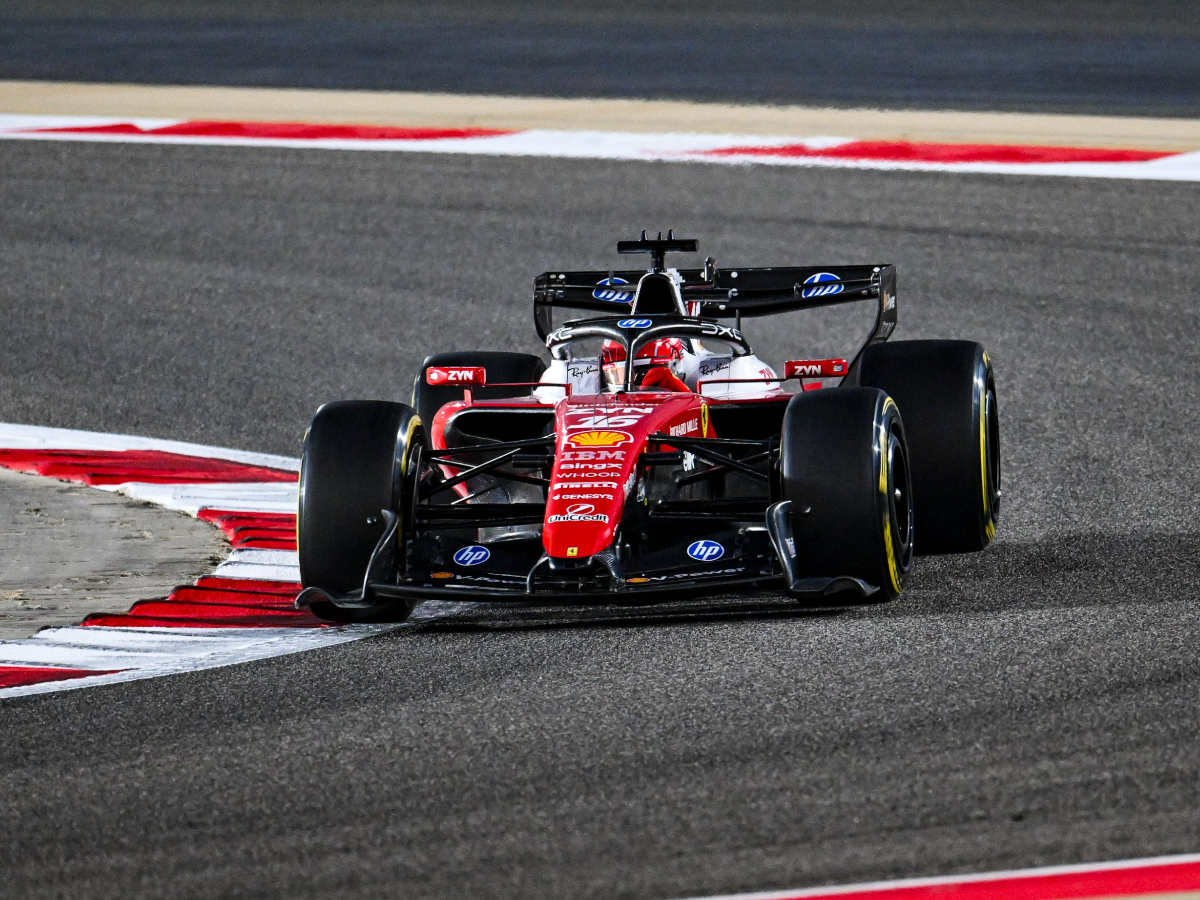
The 2025 Formula 1 season was another heartbreaking chapter for Scuderia Ferrari. Despite making one of the biggest moves in F1 history by signing seven-time world champion Lewis Hamilton to replace Carlos Sainz, the Prancing Horse failed to secure a single Grand Prix victory. The team finished fourth in the Constructors’ Championship with 398 points, as the SF-25 struggled throughout the season.
Charles Leclerc managed to salvage some pride with seven podiums and a fifth-place finish in the standings, while Hamilton endured the first winless and podium-less season of his career. Ferrari knew they cannot win the 2025 season and eventually shifted focus mid-season to its ambitious 2026 project.
And, now, things might finally change.
A New Era, A New Ferrari
The 2026 season introduced a complete overhaul of technical regulations, new active aerodynamics, a 50/50 hybrid power split, and the removal of the MGU-H. Ferrari appear to have adapted exceptionally well with their new challenger, the SF-26.
Early signs from pre-season testing in Bahrain and Barcelona were promising. Both Hamilton and Leclerc expressed surprise at the car’s consistent pace and refined concept, particularly how it exploits the new active aero system.
But the biggest surprise came on February 19 during the morning pre-season session in Sakhir.
The Rotating Rear Wing – A Game Changer?
Ferrari unveiled a revolutionary rotating rear wing, a concept that perhaps no teams can replicate easily.
Now that the DRS have been removed under the new regulations, Ferrari worked on their active aero system that allows the rear wing to rotate, maybe up to 225 degrees, before returning to its original position under braking.
This innovation reduces drag on straights, potentially generates slight lift and targets a 5–8 km/h top speed gain
Renowned F1 technical journalist Craig Scarborough described the concept as extremely difficult to imitate.
Because Ferrari reportedly repositioned elements like the driveshaft to create aerodynamic space around the diffuser and exhaust area. This type of structural change other teams cannot quickly copy without redesigning their gearbox architecture.
“Ferrari clearly have moved [their driveshaft] rearwards in order to bring this bodywork zone into the area around the diffuser and the exhaust to get this effect. So, other teams aren’t necessarily going to be able to copy [the rear wing] very easily. Most teams I would imagine that are running their own gearboxes… if [the driveshaft is] too far away then they can’t do something like this,” he said.
Pre-Season Testing: Ferrari Sends a Statement
Ferrari enjoyed near-perfect reliability across Barcelona and Bahrain testing.
-
Charles Leclerc set the fastest overall lap of testing: 1:31.992 on C4 tyres
-
Ferrari completed 324 laps in the final three-day Bahrain test
-
Across all testing, they logged 6,090 km, ranking third overall for mileage
While many manufacturers struggled with the removal of the MGU-H, Ferrari’s smaller and lighter turbocharger appeared to give them a strong launch advantage, earning the tag of ‘rocket’ start by many F1 pundits.
Leclerc admitted, “We’re a bit ahead in this area… winning or losing depends heavily on a good or bad start. I think we should be on the better side of the grid.”
Telemetry also suggested Ferrari held an 8–10 km/h straight-line speed advantage when deploying the experimental rotating rear wing.
🚨 New safety feature for 2026 🚨
Lights will flash on the wing mirrors and at the rear when:
👉 A car has stopped on track
👉 A car is going under 20 km/h outside the pit lane #F1 #F1Testing pic.twitter.com/anLFQ9kmAo— Formula 1 (@F1) February 11, 2026
How Do Rivals Compare with Ferrari ahead of F1 2026 season?
Mercedes
Mercedes topped the mileage charts in the final test with 432 laps and produced the strongest race simulation of the week. However, reliability concerns emerged as Kimi Antonelli suffered a pneumatic issue on the final day.
Despite Ferrari’s speed, Mercedes are still considered pre-race favourites for Australia. But the rare rear wing and a rocket like start are still something the silver Arrows don’t have so they are going to face huge threat by the Italian manufacturers.
McLaren
McLaren completed the most combined testing mileage overall. Oscar Piastri’s race simulation was comparable to Max Verstappen’s pace.
However, Lando Norris believed, “We’re certainly not quick enough… we’re not really close to Ferrari at the minute.”
Red Bull
Red Bull showed good consistency, particularly on high fuel. While their single-lap pace appeared slower than Ferrari’s, their tyre degradation was minimal over longer stints.
Their Ford-backed power unit featured an oversized battery cooling system, allowing more aggressive energy harvesting without overheating reducing issues like electrical “clipping” at the end of straights.
Also Read: F1 2026: New Lights on Formula 1 Cars Explained – What They Signal During a Race
Why 2026 Feels Different for Ferrari
Ferrari have not won a Constructors’ Championship since 2008. After the disappointment of 2025, the team abandoned development early to focus entirely on what insiders referred to as’“Project 678′, the innovation program that has now materialised in the SF-26.
Unlike previous seasons where Ferrari showed flashes of speed but lacked consistency, this time the package looks complete. This time they Innovative active aero, strong hybrid adaptation, competitive straight-line speed, solid reliability and a confident driver feedback.
If testing form translates into race-day performance, Ferrari could genuinely disrupt the competitive order. After years of frustration, the Prancing Horse may finally be ready to gallop back into title contention.




