Rising Middle East tensions have disrupted connecting flights to Melbourne ahead of the F1 2026 Australian Grand Prix, forcing teams to reroute travel plans and sparking concerns over the season opener.
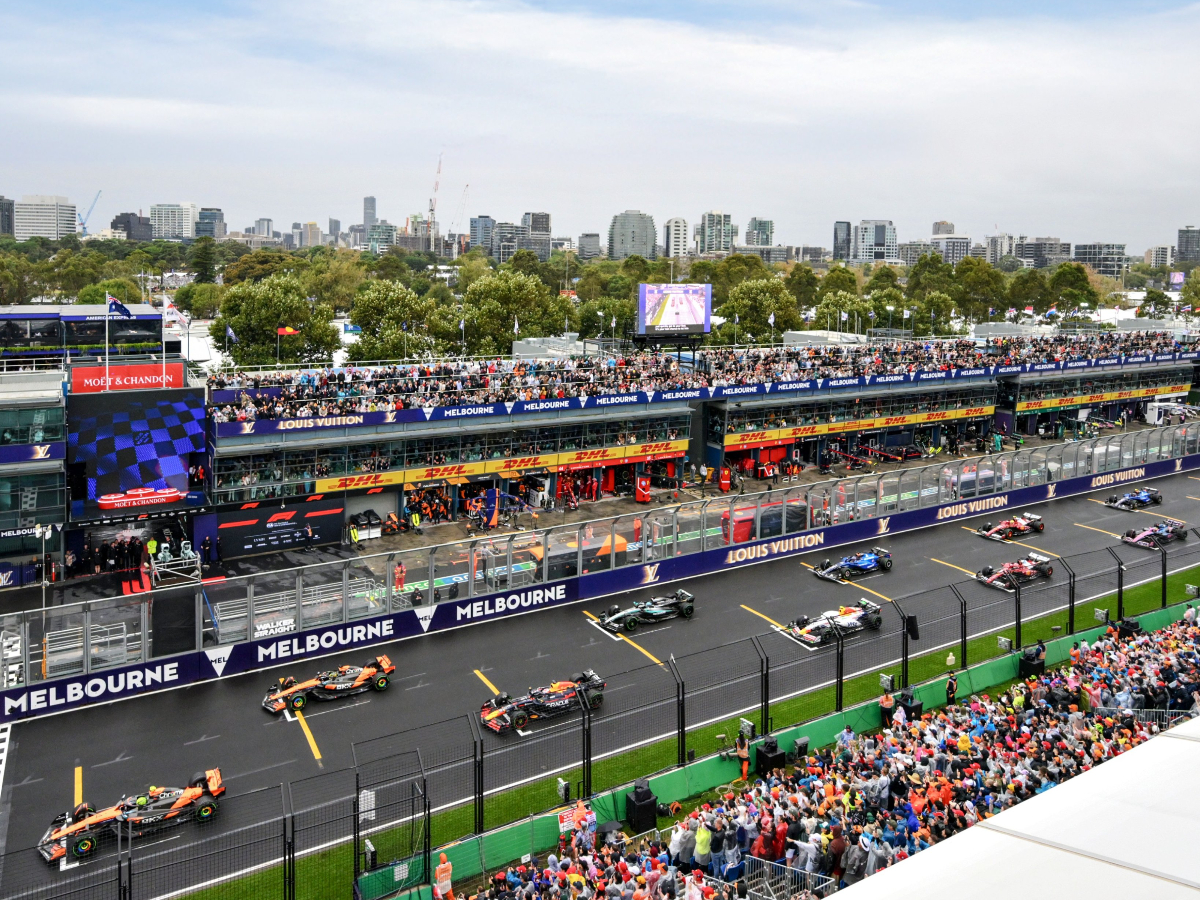
Iran-US War Impact on F1? Flights Cancelled Ahead of 2026 Australian GP, Season Opener Faces Travel Chaos | @ausgrandprix/X
Rising tensions in the Middle East involving Iran, Israel and the United States have now begun impacting global sporting events, with logistical chaos spilling over into preparations for the 2026 Formula 1 season opener, the Australian Grand Prix, set to take place on March 8.
The United Arab Emirates, a major international travel hub, has suspended air traffic amid the ongoing security crisis.
With Dubai, Qatar, Bahrain, serving as a key connecting route to Melbourne for many Formula 1 personnel, the shutdown forced teams, engineers and support staff to urgently rearrange their travel plans, avoiding transit routes through the UAE and Qatar.
The impact of the Iran-Israel war on F1 began earlier when Pirelli’s scheduled tyre testing in Bahrain was cancelled by the FIA following missile strikes in some part of the region, including multiple waves of drone and missile attacks near the US Navy’s Fifth Fleet headquarters in Manama.
However, there is this relief for the teams. Even before tensions escalated further, pre-season testing operations in Bahrain had already ensured that the cars and essential equipment were shipped to Australia. As a result, machinery and technical infrastructure will not pose a problem for the season opener.
Australian Grand Prix chief executive Travis Auld confirmed the scale of the disruption while assuring that the situation is under control.
“You’re talking about teams, drivers, Formula One personnel, I’m guessing there’d be close to a thousand people that would have already booked their flights and would be landing somewhere between today, tomorrow, Wednesday – they had to all be changed," Auld told Channel Nine.
PSA: #F1 HAS LANDED IN MELBOURNE! 📣#AusGP pic.twitter.com/OqtQ4F5HGH
— F1 Australian Grand Prix (@ausgrandprix) March 2, 2026
“But a lot of people around the world are doing the same thing and so you’re competing obviously with that increase in demand, but they’ve been able to sort it out,” he added.
Despite the travel uncertainty, the event’s important figures are able to attend. “The drivers will be here, the engineers will be here, the team principals will be here, they’re the ones that have been prioritised [for travel] and so you won’t see any sort of surprise drivers under a helmet,” he said.
“Some of the other ones [staff] are coming out now, probably you could continue the race without them, but luckily we’ve been able to get everyone that needs to be here, here.”
The Middle East plays a crucial role in the Formula 1 calendar, hosting several races including the Bahrain Grand Prix, Saudi Arabian Grand Prix, Qatar Grand Prix and the season-ending Abu Dhabi Grand Prix.
However, those events are scheduled later in the year, with Bahrain’s race set for April, meaning the current conflict may not immediately disrupt those rounds if tensions ease.
The 2026 Formula 1 season, running under a new set of regulations, will kick off in Melbourne on March 8 and continue with a double-header, as the Chinese Grand Prix follows the very next week.
Also Read: PV Sindhu Defends UAE Authorities Over Dubai Airport Chaos Amid Middle East Tensions
