Ukrainian skeleton star Vladyslav Heraskevych was disqualified from the Milan Cortina Games, triggered a major IOC controversy
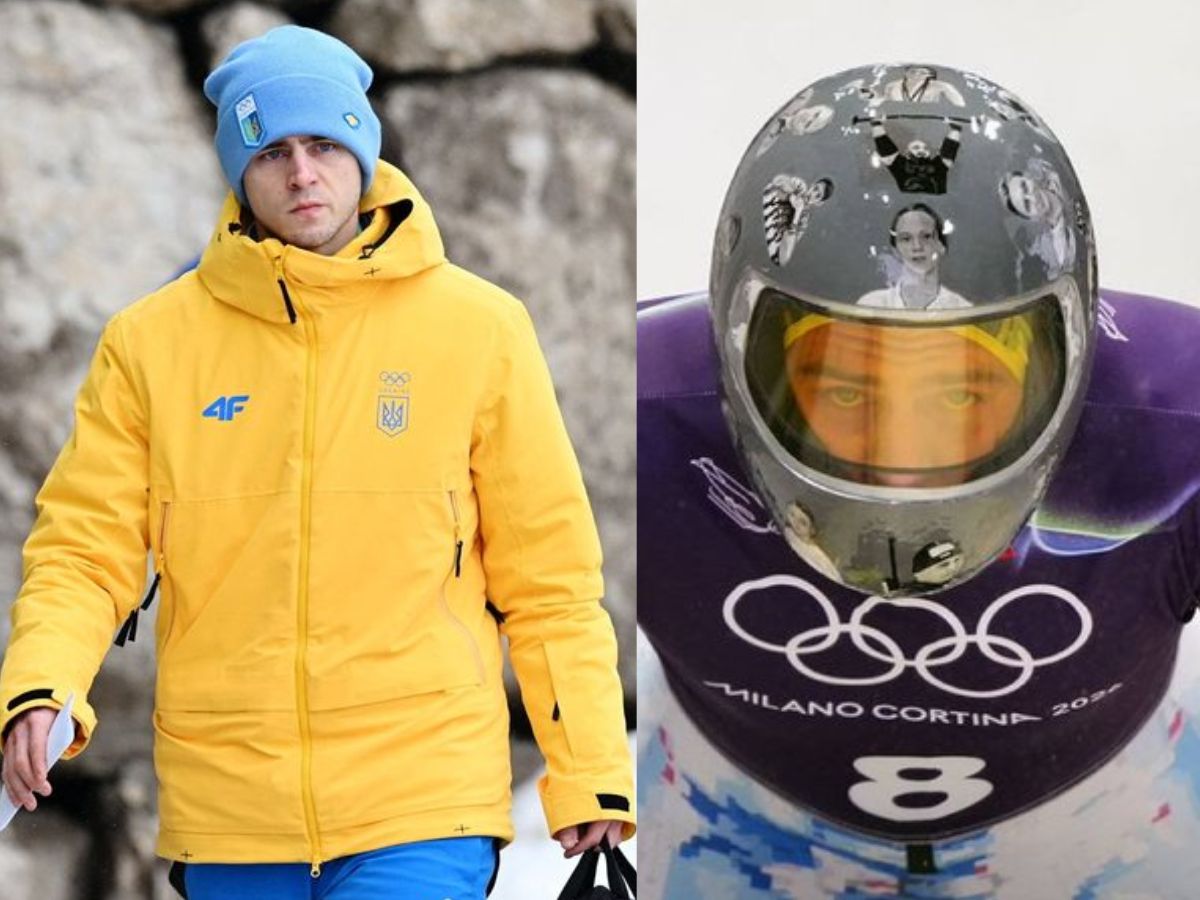
IOC Disqualifies Ukrainian Skeleton Star Vladyslav Heraskevych Ahead of Race Over Political Expression (Source: X/ @heraskevych)
Ukrainian skeleton athlete Vladyslav Heraskevych, a strong medal hopeful at the Milan Cortina Games, was stopped from competing on Thursday after refusing to remove a helmet honoring more than 20 Ukrainian athletes and coaches killed since Russia’s invasion four years ago.
The decision came just 45 minutes before the race. It followed three days of discussions in which Heraskevych was aware that wearing the helmet could lead to his disqualification.
Vladyslav Heraskevych is a leading Ukrainian skeleton racer and the first athlete from Ukraine to compete in the sport at the Winter Olympic Games. He was born on born on 12 January 1999. He has emerged as a powerful symbol of Ukrainian resistance at the Milano-Cortina Winter Olympics after being disqualified for refusing to remove his “helmet of memory,” which honoured fellow athletes killed during Russia’s invasion.
Heraskevych was due to race in the men’s skeleton event on 12 February 2026, but the International Olympic Committee (IOC) barred him from competing just hours before the start following several days of disagreement over his equipment. The helmet at the centre of the controversy featured portraits of 24 Ukrainian athletes and coaches who died in the war, including figure skater Dmytro Sharpar and weightlifter Alina Perehudova.
He holds a Master's degree in Physics from Taras Shevchenko National University of Kyiv. He made history at the PyeongChang 2018 Olympics by becoming the first Ukrainian to compete in skeleton, finishing in 12th place.
At the Beijing 2022 Olympics, where he finished 18th, he gained international attention for displaying a "No War in Ukraine" sign. His best result is a 4th-place finish at the 2025 IBSF World Championships. Beyond sports, Heraskevych is a co-author of physics papers and co-founded the Heraskevych Charity Foundation to assist war victims in Ukraine.
The International Olympic Committee said the helmet violated Olympic rules that ban political or personal statements during competition. Officials stressed that the rules apply only during races, not training sessions.
The International Bobsled and Skeleton Federation backed the decision, stating that Heraskevych’s helmet was “inconsistent with the Olympic Charter and Guidelines on Athlete Expression.”
While Heraskevych was allowed to wear the helmet during training, the IOC asked him to switch helmets for official runs. Officials offered alternatives such as a black armband or displaying the helmet after leaving the track.
“I believe, deeply, the IBSF and IOC understand that I’m not violating any rules,” Heraskevych said. “Also, I would say (it’s) painful that it really looks like discrimination because many athletes already were expressing themselves. ... They didn’t face the same things. So, suddenly, just the Ukrainian athlete in this Olympic Games will be disqualified for the helmet.”
IOC President Kirsty Coventry personally went to the sliding venue and met Heraskevych privately before the race. The discussion lasted around 10 minutes but failed to change his position.
“We didn’t find common ground in this regard,” Heraskevych said. Coventry later appeared emotional and said the decision was taken with regret.
“As you’ve all seen over the last few days, we’ve allowed for Vladyslav to use his helmet in training,” Coventry said. “No one, no one especially me is disagreeing with the messaging. The messaging is a powerful message. It’s a message of remembrance. It’s a message of memory and no one is disagreeing with that. The challenge that we are facing is that we wanted to ask or come up with a solution for just the field of play.”
Vladyslav Heraskevych filed an appeal with the Court of Arbitration for Sport, but the competition went ahead without him. Two runs were held on Thursday, with the final two scheduled for Friday.
Although he was allowed to keep his Olympic accreditation, his opportunity to compete in the Games is effectively over.
Ukraine President Volodymyr Zelenskyy criticized the disqualification on social media.
“Sport shouldn’t mean amnesia, and the Olympic movement should help stop wars, not play into the hands of aggressors,” Zelenskyy wrote. “Unfortunately, the decision of the International Olympic Committee to disqualify Ukrainian skeleton racer Vladyslav Heraskevych says otherwise.”
Heraskevych pointed to other athletes who were allowed to express remembrance, including U.S. figure skater Maxim Naumov and Israeli skeleton racer Jared Firestone.
“A competitor literally placed the memory of the dead on his head to honor them,” Heraskevych wrote. “I frankly do not understand how these two cases are fundamentally different.”
Vladyslav Heraskevych who finished fourth at last year’s world championships, was among the fastest in training. Despite strong medal prospects, he chose not to compromise. “The International Olympic Committee destroyed our dreams,” said his father and coach, Mykhailo Heraskevych. “It’s not fair.”
