Get ready for the Blood Moon on March 3, 2026, a total lunar eclipse visible from India and beyond. See exact timings and best viewing tips for this rare celestial event.
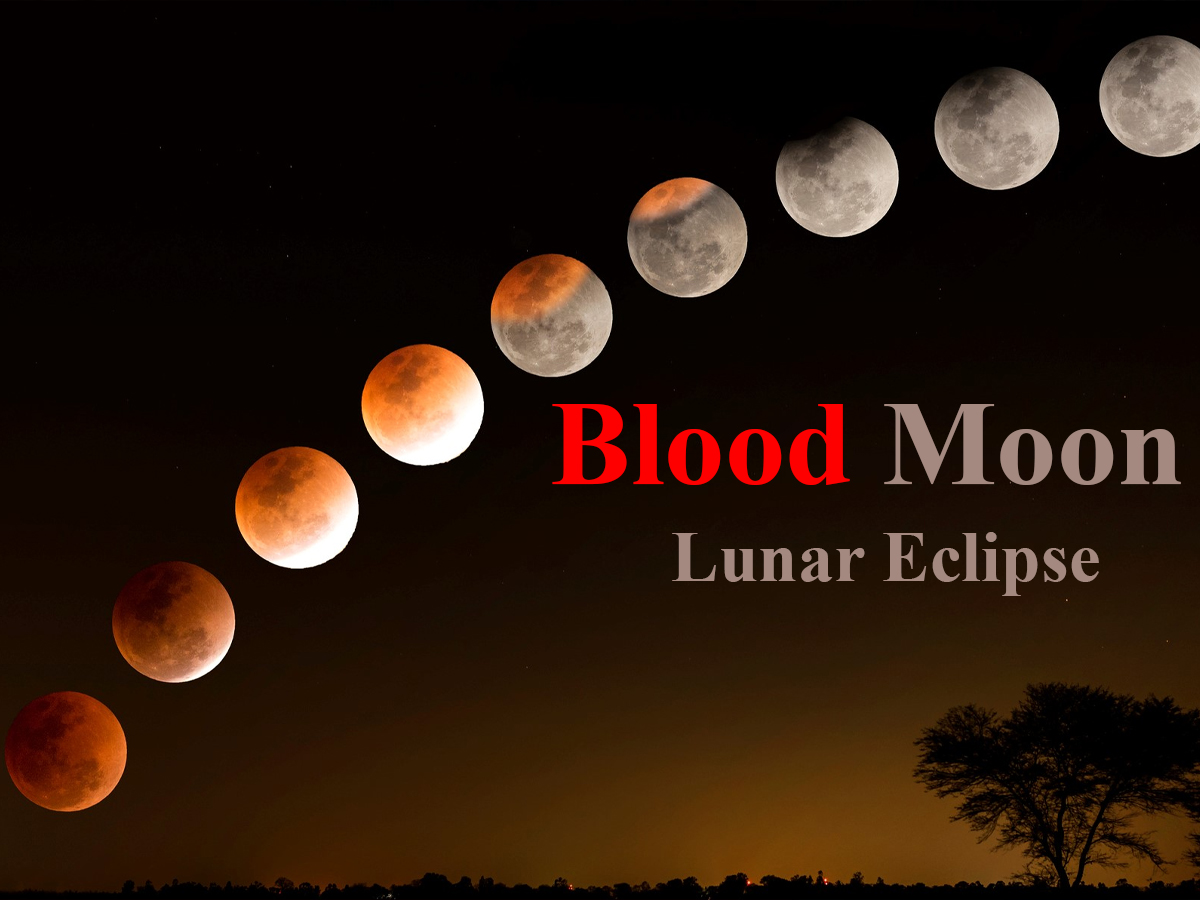
This dramatic red hue can last for about 58 minutes during the eclipse’s peak phase, known as totality, making the event a spectacular sight for stargazers across continents. (Photo: Social Media)
The sky will put on a rare celestial show on March 3, 2026, as the Moon turns a dramatic shade of red during a total lunar eclipse, popularly known as a Blood Moon. This breathtaking phenomenon will be visible from many parts of the globe, and skywatchers are gearing up to witness it with the naked eye — no special glasses needed.
A Blood Moon occurs when the Earth comes directly between the Sun and the Moon, blocking direct sunlight from hitting the lunar surface. Instead of fading into darkness, the Moon glows red because Earth’s atmosphere bends and filters sunlight, allowing longer red and orange wavelengths to reach its surface, the same effect that makes sunsets appear red.
This dramatic red hue can last for about 58 minutes during the eclipse’s peak phase, known as totality, making the event a spectacular sight for stargazers across continents.
According to astronomers, the total lunar eclipse on March 3, 2026, will follow this global timeline for UTC and IST:
Throughout this period, the Moon passes through Earth’s shadow, first dimming and then taking on the reddish glow that gives this event its nickname.
Skywatchers in India will have a good chance to see this event, though the experience will vary by location.
In northeastern states such as Assam, Arunachal Pradesh, and Meghalaya, the Moon will rise already during totality, giving residents a chance to see the deep red Moon just as it appears above the horizon.
The March 3 eclipse is one of the few total lunar eclipses visible across large parts of the world:
This event is special because it’s the only total lunar eclipse in 2026 and the last one until late 2028.
Here’s how to make the most of this sky spectacle:
Even though the Moon won’t be fully eclipsed for all regions in India, stepping outside at moonrise on March 3 around sunset will offer a memorable glimpse of Earth’s shadow lifting off the lunar surface, a beautiful reminder of the cosmic dance in our skies.
