Holiday Destinations: Holi in North India is a vibrant celebration of colours, devotion, and Krishna bhakti, blending centuries-old traditions with spiritual and cultural festivities
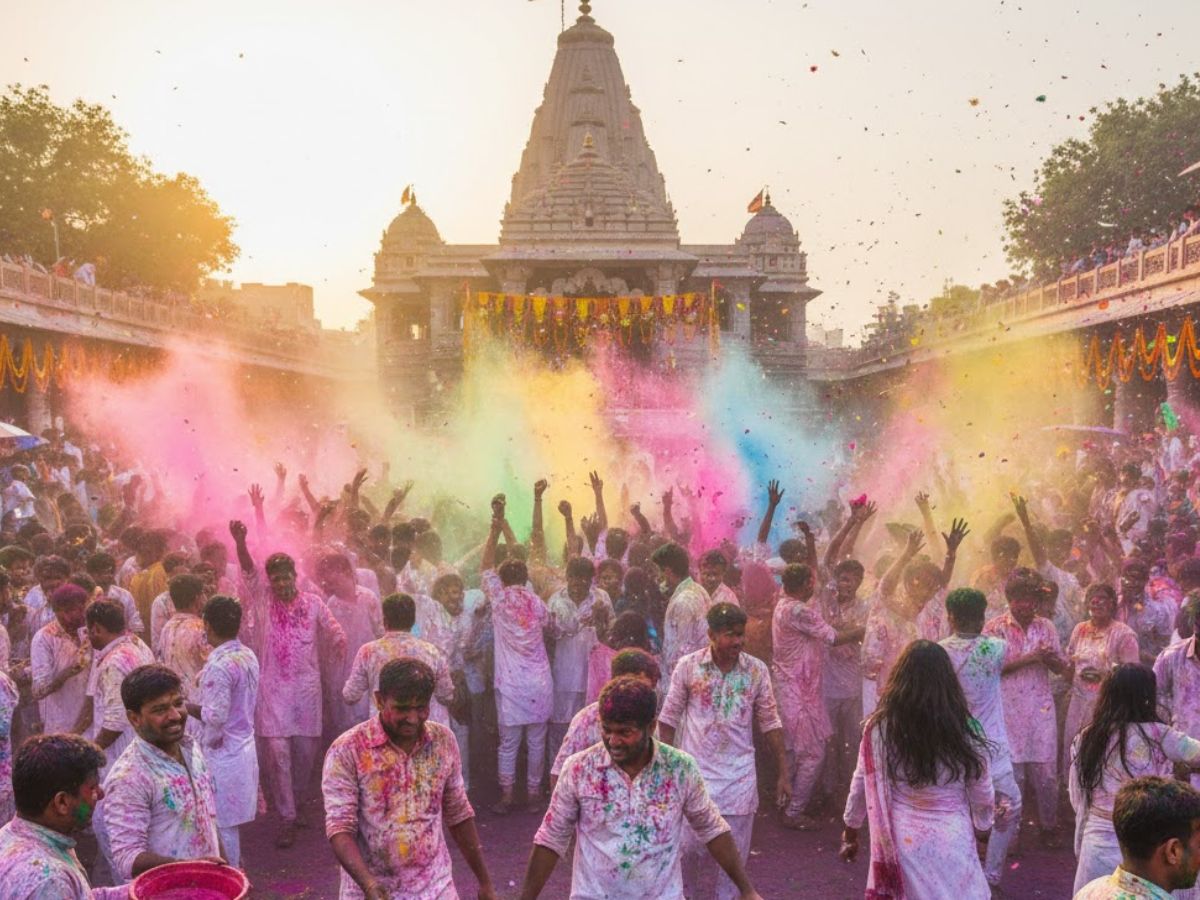
5 temples to visit during Holi Festival (Source: Gemini AI)
Holi in North India is much more than a color festival; it is a deeply spiritual celebration of devotion to Lord Krishna, temple traditions, and divine love that dates back centuries. In Braj and other sacred cities, Holi turns the streets, temples, and social gatherings into kaleidoscopic hubs of spiritual energy. Whether it is Lathmar Holi and Phoolon Ki Holi in Barsana and Vrindavan or royal temple celebrations in Jaipur, every Holi is a distinct amalgamation of cultural diversity and spiritual passion.
The festival usually takes place around Gaura Purnima, which is a celebration in the Gaudiya Vaishnava tradition marking the appearance of Sri Chaitanya Mahaprabhu, who was instrumental in the revival of sankirtan, or collective chanting and devotional assemblies, which are now an essential part of Holi celebrations.
Barsana, the home of Radha Rani, is globally recognized for its Lathmar Holi, a fun-filled and symbolic event that marks the visit of Krishna to Barsana. The festivities begin days prior to the event, as the town is painted with colors, music, and traditional Braj culture.
At the Radha Rani Temple, situated on a hilltop, the priests conduct a unique shringar ceremony and apply gulal to the idol. The most exciting part of the celebration is the traditional Lathmar Holi ceremony, in which women beat men with sticks, representing the divine love and play of Krishna and Radha. The devotees perform samaj gayan with dhol and nagada beats, and flower Holi, laddoo Holi, and non-stop kirtans provide a spiritual ambiance. The chanting of “Radhe Radhe” on the temple steps makes climbing a spiritual experience.
In Jaipur, the Govind Dev Ji Temple in the City Palace celebrates Holi with majesty. It is believed to be the personal deity of the royal family of Jaipur. The deity is dressed in Holi colors and is offered "Rajbhog."
Flower Holi is celebrated in an organized manner, where the priests shower flowers and colors on the devotees. The devotional atmosphere is further amplified by classical "bhajans and kirtans," which are a part of Jaipur's royal and religious traditions.
Nandgaon, the childhood place of Krishna, marks Holi at Nand Bhavan Temple. On the main day, people of Barsana come to Nandgaon, turning around the Lathmar tradition. Devotees sing Braj bhajans, while priests throw gulal and flower petals from balconies.
The festival is personal and spiritual, with sweets, thandai, and temple prasadam being distributed to everyone. The evening aarti with colors in the air represents the amalgamation of devotion, happiness, and social fervor.
The Sri Sri Rukmini Dwarkadhish ISKCON Temple in Delhi has a massive two-day celebration of Holi in March. The first day is observed as Gaura Purnima with Gaura Katha, abhishek of Gaura-Nitai, kirtan mela, and Chhappan Bhog.
The second day has Phoolon Ki Holi, Lathmar Holi, and Matki Phod in an organized pandal. Live kirtans by international devotional artist Gaur Mani Mataji, flower processions, food stalls, and selfie points are arranged for devotees of all ages.
Vrindavan still remains the spiritual hub of Holi celebrations. At Banke Bihari Temple, the celebrations begin with Phoolon Ki Holi, where the devotees are showered with flower petals. The temple reverberates with kirtans, mridangam beats, and Braj Holi songs dedicated to the playful activities of Krishna and Radha.
Outside the temple, the roads are filled with Ras Leela shows, satsangs, and devotional processions, offering a holistic spiritual and cultural experience. Devotees from across the world assemble here to experience Holi not only as a color festival but also as a manifestation of bhakti and divine love.
Holi in North India, from Braj to Jaipur and Vrindavan to Delhi, is a distinct combination of spiritual devotion, cultural heritage, and celebration, making it one of the most immersive religious experiences in the world.
