Netaji Subhas Chandra Bose Jayanti 2026 honours the fearless freedom fighter’s life, sacrifices, iconic slogans and enduring legacy that continue to inspire India’s spirit of independence.
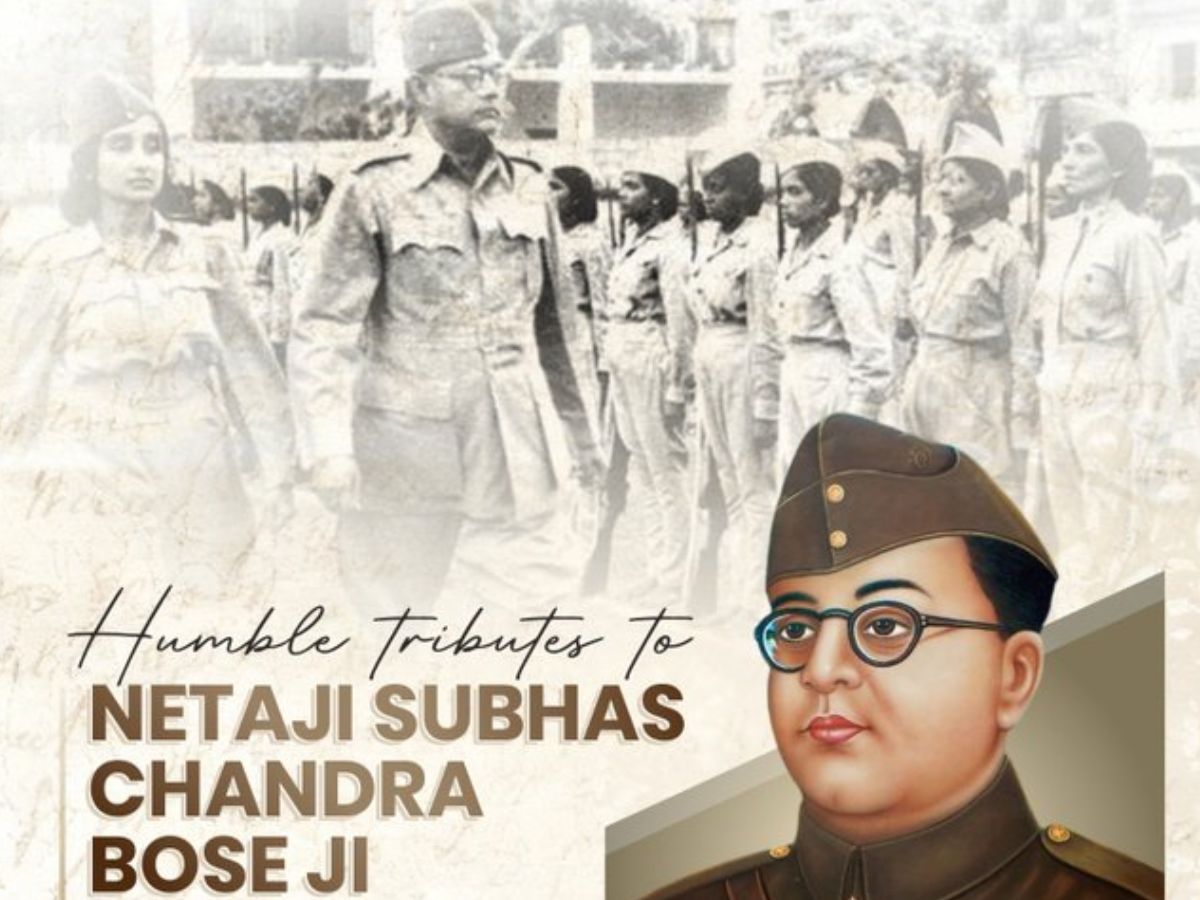
Netaji Subhas Chandra Bose Jayanti 2026 (Source: X/ @DrPramodPSawant)
Netaji Subhas Chandra Bose Jayanti 2026: India honours the birth anniversaries of its great freedom fighters to remember their immense contribution to the nation’s independence. Among them, Netaji Subhas Chandra Bose stands out as one of the most powerful and fearless leaders of the freedom movement. His birth anniversary is observed every year on January 23 as Subhas Chandra Bose Jayanti, also known as Parakram Diwas, to celebrate his courage, dedication and lifelong commitment to India’s liberation.
It is often said that when the dream of freedom turns into an unshakable resolve, a revolutionary like Subhas Chandra Bose is born. His life was filled with extraordinary, bold and deeply inspiring moments.
Bose was not just a freedom fighter, he was a spark that could awaken a nation’s conscience. The slogans he gave became the voice and heartbeat of India’s struggle for independence.
Subhas Chandra Bose showed extraordinary courage not only in action but also in the choices he made early in life. He secured the fourth rank in the prestigious Indian Civil Services (ICS) examination, an achievement most aspirants could only dream of.
Yet, Bose rejected the position because he did not want to serve under British rule. Placing the nation above personal success, he gave up a powerful government post to dedicate himself entirely to India’s freedom struggle.
In 1941, while under British surveillance in Kolkata, Bose carried out a dramatic escape that shocked the colonial authorities. Disguised as an insurance agent named Ziauddin, he quietly slipped out of his house.
Accompanied by his nephew Shishir Bose, he left Kolkata by car, successfully deceiving the British and beginning a dangerous journey abroad to continue the fight for India’s independence.
During World War II, Subhas Chandra Bose established Azad Hind Radio in Germany. Through this platform, he addressed Indians across the world and spread messages of resistance against British rule.
Determined to free India at any cost, Bose also met Adolf Hitler to seek support for India’s independence, reflecting how far he was willing to go for the country’s cause.
With support from Japan, Bose reorganised the Azad Hind Fauj (Indian National Army) and led an armed struggle against British forces. During this phase, he gave the nation powerful slogans such as “Jai Hind” and “Delhi Chalo”.
These words ignited passion among soldiers and youth, transforming the INA into a symbol of bravery, sacrifice and national unity.
Subhas Chandra Bose strongly believed in discipline and equality. Under his leadership, the INA formed the Rani Jhansi Regiment, a women’s military unit that was revolutionary for its time.
He also renamed the Andaman and Nicobar Islands under the provisional government of Azad Hind, reinforcing the idea of complete freedom from British control.
While leading the INA, Bose delivered several slogans that became historic. Along with “Jai Hind” and “Delhi Chalo”, his powerful words “Tum mujhe khoon do, main tumhe azaadi doonga” filled soldiers and young Indians with courage, hope and determination.
Subhas Chandra Bose was born on January 23, 1897, in Cuttack, Odisha, into a Bengali Kayastha family. His father was Janakinath Bose, and his mother was Prabhavati Devi.
The mystery surrounding his death remains unresolved even today. It is believed that Bose died in a plane crash in Taiwan on August 18, 1945, but doubts and unanswered questions continue to keep the mystery alive decades later.
