A polar vortex plunged Niagara Falls into extreme winter cold in 2026, causing breathtaking ice formations and a surreal frozen spectacle as mist and spray froze in place.
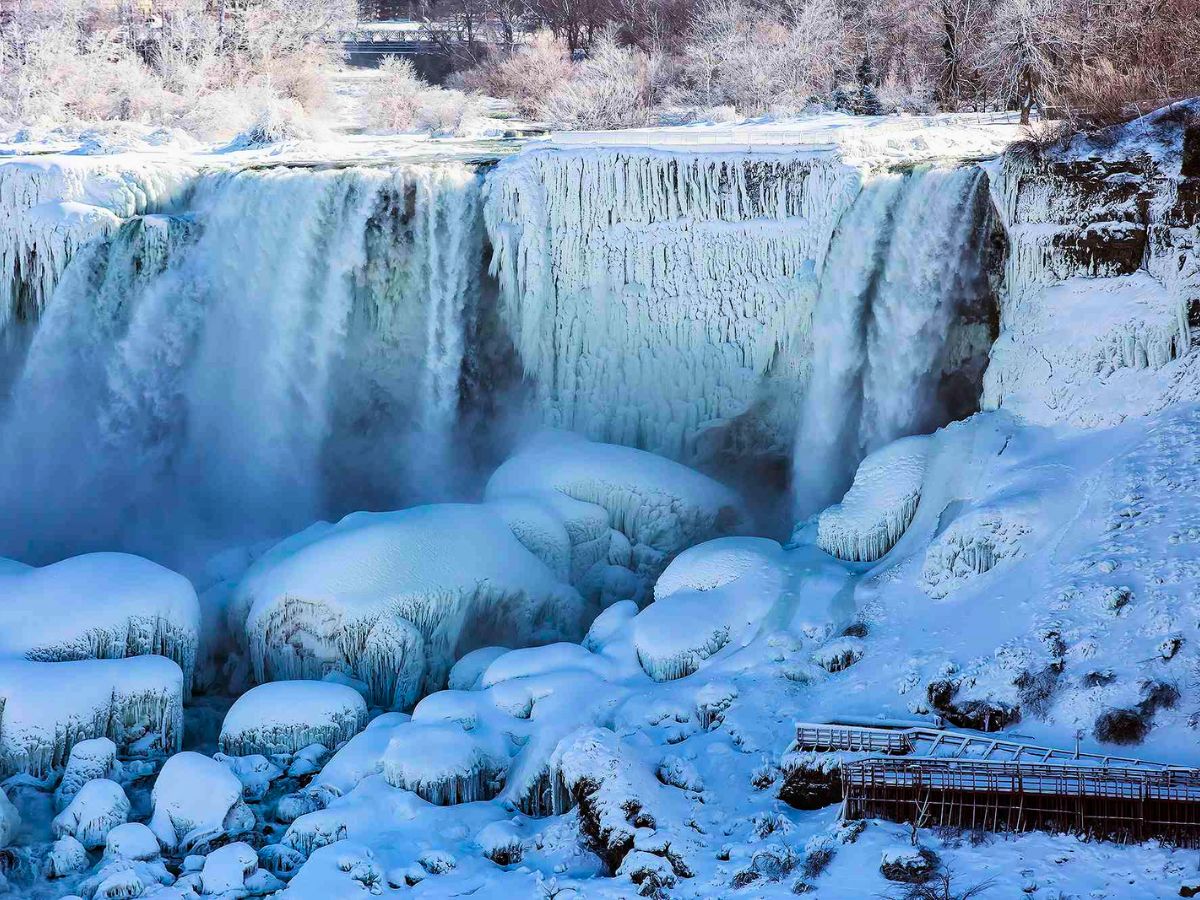
A polar vortex plunged Niagara Falls into extreme winter cold in 2026 [Photo: X]
Niagara Falls, one of the world's most iconic waterfalls, turned into a spectacular frozen wonderland in early 2026. Extreme Arctic air caused thick ice to form along cliffs, railings, trees, and even parts of the river.
Although the water continues to flow beneath, the mist and spray froze in mid-air, creating a breathtaking scene for tourists and photographers. This rare event highlights how powerful winter weather and polar vortex disruptions can transform familiar landscapes into magical ice sculptures. Visitors braved sub-zero temperatures to witness the frozen cascades firsthand.
The falls never fully froze, but ice formed along edges, riverbanks, and surrounding structures. Mist from the waterfalls quickly turned into ice, creating a surreal, almost otherworldly appearance. Tourists captured photos of frozen cliffs, trees, and bridges, showing the immense scale of the icy formations.
❄️| Extreme cold freezes the iconic Niagara Falls.
pic.twitter.com/oyCw7mlTCe— Earth (@earthcurated) January 26, 2026
The scene combined flowing water and frozen surfaces, making it look like time had stopped. Despite the cold, millions of litres of water continued to pour over the cliffs. The partial freeze gave Niagara Falls a rare winter face, drawing crowds from across the U.S. and Canada.
In January 2026, extreme Arctic air pushed temperatures below −20°C in the Niagara region. The mist from the falls froze almost instantly when it contacted cold surfaces. Ice built up on trees, boulders, and observation points, giving the area a crystalline appearance. Strong winds made the freezing process faster, forming thick layers of ice that covered much of the river’s edges.
While the falls themselves kept moving, the ice gave the illusion of a completely frozen waterfall. Videos from residents showed frozen spray patterns and rainbow-like reflections in the ice. The combination of extreme cold and natural mist created a striking winter spectacle.
The extreme cold that hit the region stemmed from a polar vortex disruption, a shift in the normally stable band of Arctic winds that allowed frigid air to plunge far south. This displaced air brought prolonged sub‑zero temperatures that blanketed southern Ontario and northern New York state in intense cold, creating ideal conditions for ice to form.
Meteorologists say such polar vortex events push cold air into areas that rarely see such dramatic winter weather, leading to abrupt temperature drops and widespread ice buildup.
Despite the striking ice covering its edges, Niagara Falls rarely freezes solid, even in deep winter. The massive volume and velocity of water flowing over the Horseshoe, American and Bridal Veil Falls make a full freeze extremely unlikely; water continues to flow underneath the frozen surface.
Instead, the dramatic ice seen this year forms primarily from the mist and spray that rises from the falls and freezes on contact with cold air and surfaces. Historical records show only very rare events, such as in 1848, where ice jams reduced flow significantly, but such complete freeze‑ups are virtually unheard of in modern times.
The ice has created massive, crystalline formations that sometimes tower over viewing platforms, railings and trees, giving the falls a “frozen” façade that attracts visitors from around the world. Videos and photos shared on social media show misty spray turning into ice midair and thick sheets covering riverbanks, adding a magical quality to the familiar landmark.
Though the water keeps moving beneath, the windows of ice give the impression of a static, suspended world, making for extraordinary visuals and an unforgettable winter outing.
The freezing dynamics at Niagara are driven by the interaction of mist and extreme cold air. As thousands of droplets get pushed into the air by the powerful cascades, those droplets encounter temperatures far below freezing.
In typical winter weather, some mist may freeze slowly, but in the current conditions, the spray freezes almost instantly, coating every surface it touches with thick ice. Over days of persistent cold, this builds up into impressive ice structures that frame the falls and surrounding riverbanks like natural sculptures.
The freezing of Niagara Falls is part of a larger Arctic outbreak affecting much of the U.S. and Canada. Millions of people faced sub-zero temperatures, wind chills, snow, and icy roads. The storm disrupted travel, closed roads, and cancelled flights in several states.
Northern US regions recorded temperatures far below average, while southern states experienced unusual cold waves. Meteorologists attribute this pattern to the displaced polar vortex and global atmospheric changes. Similar extreme cold events were reported in Europe and Asia, showing how Arctic disruptions impact large areas.
Niagara Falls has partially frozen in several winters historically, but full freezes are extremely rare. Notable events occurred in 1848, when both the American and Canadian sides saw ice jams, and in 1936, when the American Falls nearly stopped flowing. Modern river management and high water flow prevent a complete freeze today.
The 2026 ice formations are among the most dramatic seen in decades. Visitors witness rare frozen spray and ice-encrusted cliffs, providing a unique glimpse of the falls’ winter transformations.
Officials warn that extreme cold makes surfaces slippery and dangerous. Visitors should wear warm layers, sturdy footwear, and follow posted safety signs. Ice can form quickly on observation decks and pathways. Wind chills increase the risk of frostbite or hypothermia.
Tourists are advised to stay on designated paths and maintain a safe distance from icy edges. Despite hazards, the winter spectacle offers a once-in-a-lifetime visual experience. Visitors are encouraged to respect both the natural beauty and the safety rules to enjoy the frozen wonderland responsibly.
