India celebrates National Women’s Day on February 13 to honour Sarojini Naidu’s birth anniversary
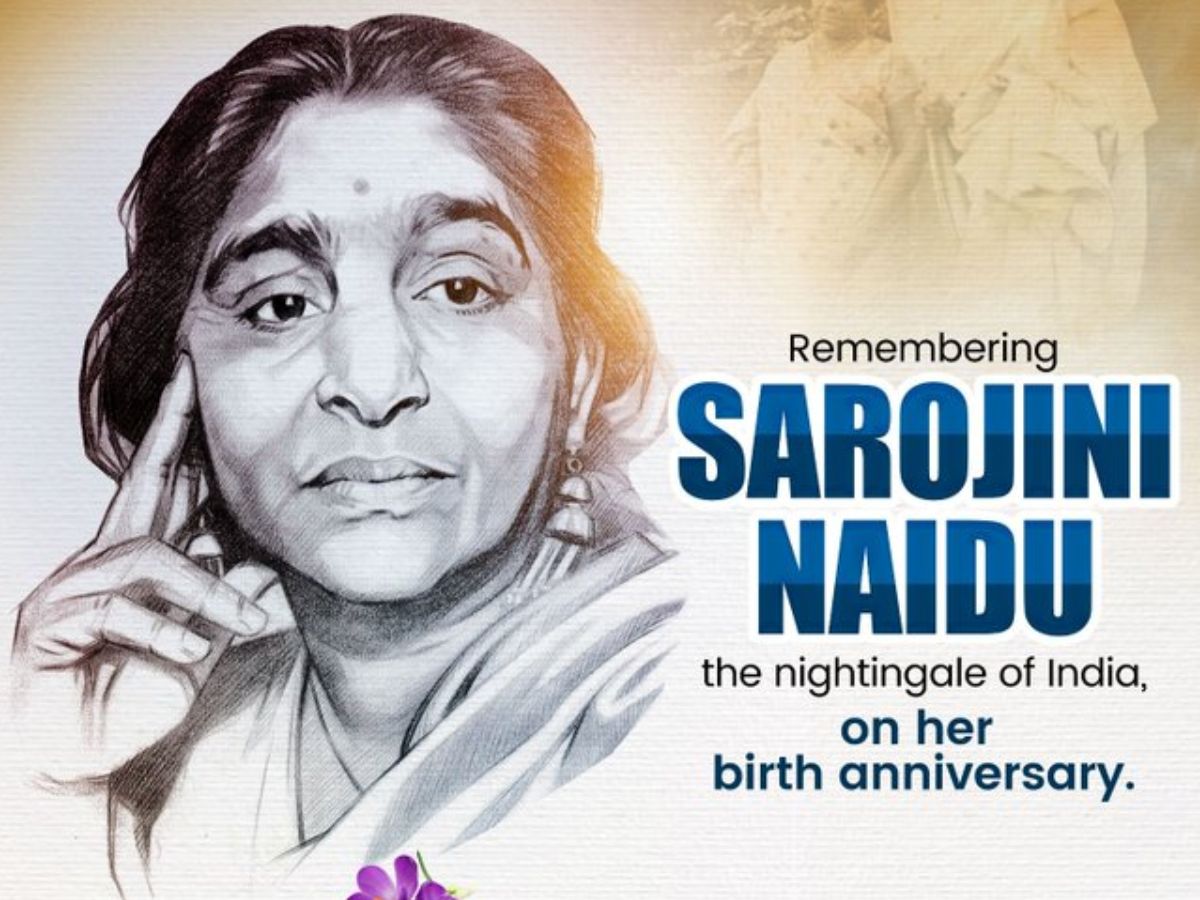
Sarojini Naidu’s Birth Anniversary; The Story Behind National Women’s Day (Source: X)
National Women’s Day in India is observed every year on the 13th of February to mark the birthday of Sarojini Naidu, whose life is an example of beautiful linkages between art and politics. She was most commonly referred to by the title Nightingale of India.
Sarojini Naidu was born on February 13, 1879, in Hyderabad. She was not only a gifted poet but also one of the strongest voices of the freedom struggle. From a young age, she showed exceptional talent.
At just 13, she wrote a 1,300-line poem titled The Lady of the Lake, surprising her family and teachers with her brilliance. Her academic prowess gave her a path to London and later Cambridge, where she honed her literary skills. It was in these places that she shaped her personality as a poet. With her famous pieces like 'The Golden Threshold' and 'The Broken Wing,' she extolled India’s culture, beauty, and zest. Lyrical writing earned her the sobriquet ‘Nightingale of India.’"
Even though literature dominated her growing years, later the course of her life was shaped by her interactions with persons like Gopal Krishna Gokhale and Mahatma Gandhi. Her thoughts were profoundly affected by Gandhi, and gradually she moved from poetry into politics.
She emerged as one of the most powerful speakers of the independence movement. Her speeches were emotional, poetic, and bold. She was involved in significant movements and was a key member of notable events like the Non-Cooperation Movement and the Civil Disobedience Movement. She even had to undergo imprisonment several times.
In 1930, during the Salt March, she took leadership at Dharasana Salt Works after Gandhi's arrest. She encouraged protesters to stay peaceful even when confronted with brutal police force. This is an episode that proved her strength and discipline as a leader.
Not only was Sarojini Naidu popular because of her bravery, but her affable nature and humor were also quite popular. It is said that she named Gandhi "Mickey Mouse" and made jokes regarding the expense of keeping him poor.
In 1925, she made history by becoming the first woman of Indian origin to preside over the Indian National Congress. This is indeed a significant achievement at such a time when women did not usually hold such powerful posts. She again made history by becoming the first woman Governor of an Indian state, becoming the Governor of the U.P. after India gained its independence.
However, in addition to major political roles, she never let go of her poetry. Her writing continued to show both romantic beauty and patriotic pride.
In India, National Women’s Day is celebrated every year on February 13 to commemorate women’s achievement and recognize the importance of gender equality by celebrating Sarojini Naidu’s birthday.
It is unlike International Women’s Day, which is celebrated across the world on March 8. International Women’s Day is concerned with issues affecting women worldwide, but National Women’s Day in India honours the contribution made by Sarojini Naidu and the role played by women in India in building the country’s society.
Different countries observe similar days on different dates. For example, South Africa celebrates National Women’s Day on August 9 to remember the 1956 Women’s March against apartheid laws.
Sarojini Naidu died on March 2, 1949. Nevertheless, her impact is still being felt today. She is not only celebrated as a poet and a politician, but as a symbol for intellectual stimulation, courageous defiance, and women’s liberation.
Every 13th of February, India not only remembers her birthday, but more importantly, honors the voice of a woman who proved that poetry and protest could indeed coexist, and bravery could alter the course of history.
