
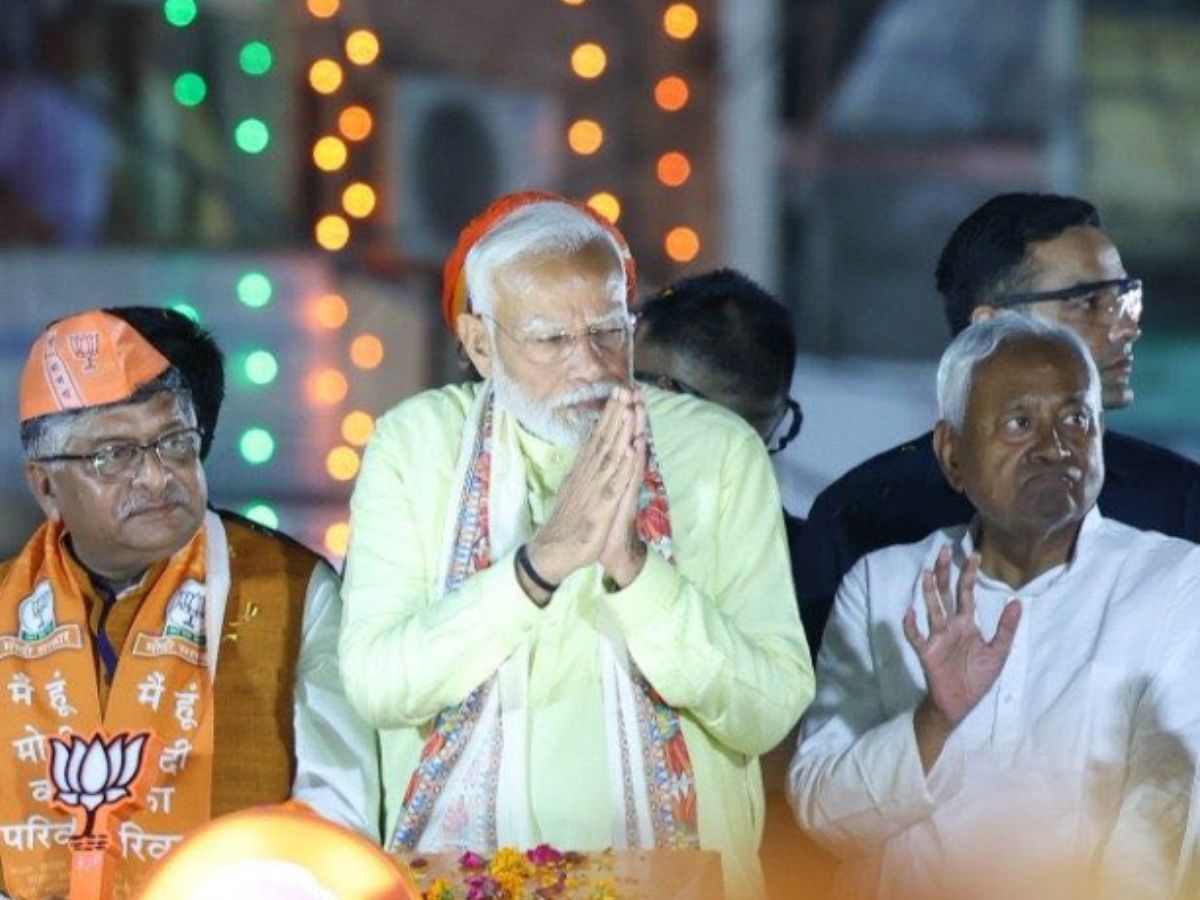
New Delhi: A delegation of foreign diplomats is in Patna to observe Prime Minister Narendra Modi’s Sunday roadshow through the Bihar capital — a visit focused on witnessing electoral politics in action and understanding the scale of his enduring popularity.
Envoys from seven countries — Japan, Indonesia, Denmark, Australia, the United Kingdom, Bhutan, and South Africa — are scheduled to watch Modi’s roadshow through Patna’s main thoroughfares this evening. The delegation includes Noriaki Abe, Political Minister from Japan; Yudho Sasongko, Deputy Ambassador, and Maulana Syahid, Minister Counselor (Political Head) from Indonesia; Martin Egknud Petersen, Deputy Head of Mission from Denmark; Orson Passi, Political Second Secretary from Australia; Andrew Fleming, Deputy High Commissioner to East and North East India from the UK; Dorji Khandu, Political Counsellor from Bhutan; and Mashudebele Mamabolo, Political Counsellor from South Africa.
The visit reflects growing diplomatic interest in understanding how Modi has sustained strong voter connect and popularity after a decade in power. For many foreign missions, observing his campaign style offers insight into a political appeal that has proven both durable and commanding across India’s diverse electorate.
Over the coming days, the envoys are expected to meet leaders from major political parties and assess Bihar’s political climate ahead of the polls. The visit allows diplomats to observe firsthand the organizational machinery, messaging strategy, and public response that underpin Modi’s continued political dominance.
Bihar, known for its politically astute electorate, provides a significant testing ground for such observation. For diplomats based in India, the Patna visit represents an opportunity to witness what has become a subject of study in many capitals — how Modi’s personal appeal translates into on-ground mobilization in one of the country’s key political states.
Modi’s ability to draw large crowds and maintain strong popular support remains a distinctive feature of his political tenure. Globally, few leaders command a comparable blend of domestic electoral strength and international recognition, making his campaign methods a point of analysis for foreign observers seeking to understand India’s political landscape.
The visit underscores international attention on India’s electoral democracy and the political dynamics that continue to shape the world’s most populous nation.




