
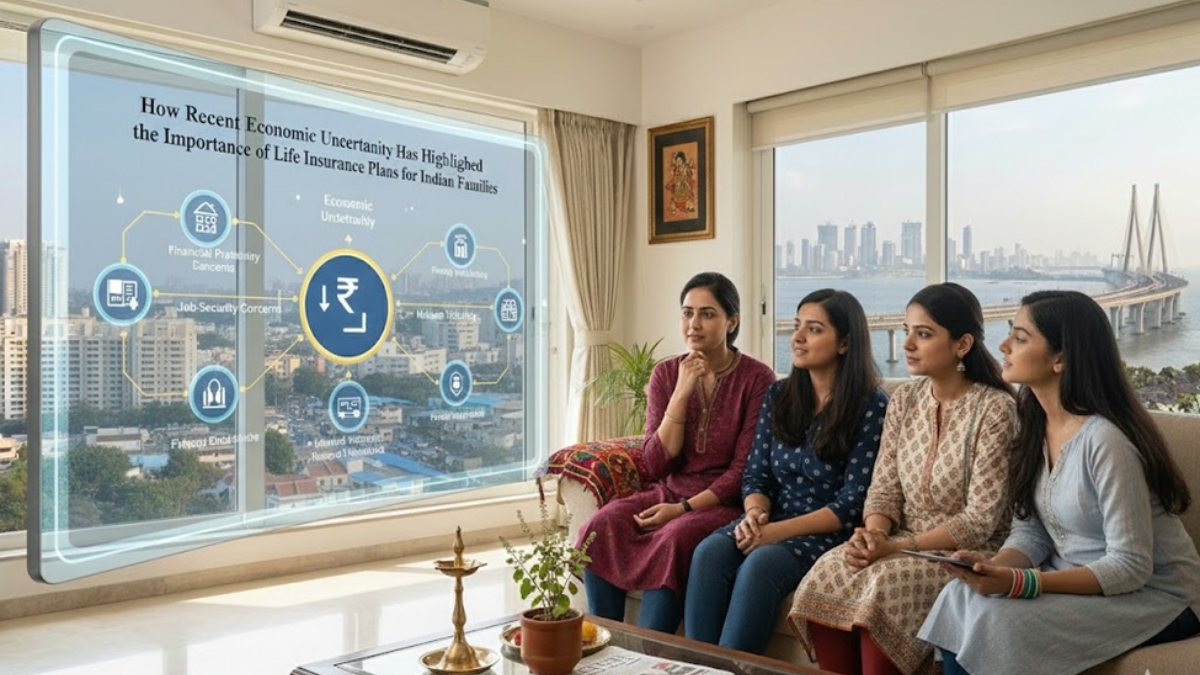
The last few years have been uneasy for many Indian households. Jobs changed suddenly, salaries froze without warning, and prices kept rising even when incomes did not. Families that once planned their expenses with confidence began cutting back, adjusting, and reworking their budgets almost every few months. In the middle of all this unpredictability, conversations around security took on a different tone. People who had never thought much about a life insurance policy started paying attention simply because the world around them felt less steady than before.
The shift did not happen loudly. It showed up first in the way people spoke at home—parents reminding adult children to secure their futures, colleagues quietly mentioning how a hospital bill had wiped out years of savings, or a neighbour sharing a story about someone forced to take a high-interest loan after an unexpected event. These stories lingered, not because they were dramatic, but because they sounded entirely possible for anyone.
Why uncertainty has pushed families to rethink protection
Economic uncertainty does something subtle—it makes people reevaluate what they consider essential. During stable years, insurance often sits low on the priority list. A life insurance policy feels optional, something to think about “eventually.” But when months become unpredictable and incomes fluctuate, people start asking questions they would normally avoid.
What if something unexpected happens to the main earner?
Would the family manage ongoing costs?
Would loans overwhelm the household?
These questions became common during recent economic swings. When the financial safety of a home becomes shaky, the importance of life insurance plans becomes clearer. It is not just about payouts—it is about ensuring the family does not fall into chaos when life takes an unexpected turn.
Real experiences have shaped new attitudes
Almost every family in India knows someone who faced financial hardship after a sudden event—an illness, an accident, a job loss. Those experiences create quiet but lasting impressions. A medical emergency during a period of salary cuts, for example, can easily drain savings that took years to build. A sudden death of a key earner can leave dependants with loans they cannot manage. Situations like these used to feel rare. In recent times, they have felt far closer to home.
As more people witnessed these events happening to friends or relatives, the conversation shifted from “insurance is for later” to “maybe we should have something in place.” The trigger wasn’t marketing, but lived experiences. And it pushed families to look more closely at the importance of life insurance plans that could offer stability when everything else felt unstable.
Why families now prefer simpler and clearer policies
One noticeable change is the preference for straightforward plans. Complicated structures, lengthy brochures, and investment-linked products often feel overwhelming, especially when people are already dealing with financial stress. What resonates more are clear, uncomplicated policies—pure protection plans where the benefits are easy to understand.
A term life insurance policy that states exactly how much will be paid, under what conditions, and how premiums remain fixed over the years offers reassurance. Families appreciate simplicity when every rupee matters. The need isn’t for fancy features; it is for certainty.
Several families have also begun exploring riders that fit real-world risks—accidental cover, income protection, or critical illness add-ons. These additions feel practical because they address the exact situations that caused financial strain during the last few uncertain years.
Affordability plays a bigger role during economic turbulence
When incomes become unpredictable, long-term commitments get evaluated carefully. This is where premium calculators have become common in Indian households. People now check how much a policy would cost rather than assuming it will be expensive. The results often surprise them. Many discover that a basic protection plan for the primary earner costs less than what they spend on occasional takeaways.
Affordability is not just about fitting premiums into a monthly budget—it is about securing peace of mind. Knowing that the cost remains fixed for years also adds comfort, especially in an environment where prices rise suddenly and frequently.
For families who tightened their budgets recently, a modest premium feels easier to justify than the risk of leaving dependants without support.
Families are researching more before choosing a policy
The era of blindly purchasing insurance on someone else’s recommendation has largely faded. Families today want to understand what they are getting. They read policy summaries online, compare options, and check claim settlement experiences. Quiet research sessions at home—often during late evening hours after work—have become common.
People look for clarity on:
● What the policy covers
● What it does not cover
● How long the claim process takes
● Whether the premium might rise later
● How the family will access the payout
This self-guided learning builds confidence. Once the basics feel clear, advisers are consulted—but the conversations are very different from earlier years. Instead of asking “Which plan should I buy?” families now ask “Does this plan suit our situation?” The shift might sound small, but it reflects a more aware and cautious approach.
How advisers fit into this new decision-making style
Advisers still hold an important place, but their role has changed. Indian families now want advisers who explain policies in simple, daily language and personalise the guidance. They value advisers who ask genuine questions about dependants, existing loans, income consistency, and future plans before suggesting a cover amount.
The best adviser conversations are those that feel like mutual problem-solving. When someone walks a family through the benefits, limitations, and claims process calmly, trust grows. This style matters even more when households are already dealing with financial anxiety.
Technology has made life insurance feel less stressful
Digital adoption has quietly transformed the experience. People can now compare policies online in minutes, fill applications through their phones, upload documents instantly, and track their policy status anytime. Even claims—once dreaded for their paperwork—have become smoother due to digital verification.
For families adjusting to economic uncertainty, this ease matters. A life insurance policy is no longer tied to long office visits or confusing forms. The entire process feels more approachable, and that accessibility encourages more families to secure protection without postponing it endlessly.
Economic uncertainty has changed what families value
Recent changes have reshaped priorities. Families now prefer:
● Transparent policies
● Clear claim procedures
● Predictable premiums
● Strong protection for the main earner
● Minimal complexity
● Riders that address real risks
The trend reflects a shift from “insurance as an extra” to “insurance as a foundation.” Financial shocks have shown families how quickly savings can disappear. The importance of life insurance plans becomes obvious when people see that a single policy can prevent long-term debt, maintain household stability, and support dependants through tough periods.
The comfort that early protection brings
A protection plan does not stop uncertainty from arriving, but it cushions the impact. Families with a strong policy in place often speak of a calmness they did not expect. Bills, education fees, outstanding loans, and basic household needs do not become overwhelming during a crisis, because someone planned ahead.
This comfort is subtle but powerful. It lets families think about the future without feeling that everything rests on one person’s income. Many Indian households have begun recognising this emotional stability as one of the most underrated benefits of life insurance.
Bringing it all together
Economic uncertainty has changed financial behaviour across India. Households that once postponed decisions about insurance now see protection as a necessity. Clear terms, reliable payouts, and affordable premiums matter more than ever. A life insurance policy is no longer seen as a distant responsibility but as a practical, protective step that keeps families steady when life throws surprises.
Indian families are discovering that the real strength of protection lies not in the policy document itself, but in the quiet confidence it creates. And that is exactly why the importance of life insurance plans has become more evident than at any point in recent memory.




