Trump threatens 200% tariffs on French wine and champagne to pressure Macron over a global peace board invite, deepening US-Europe tensions over Greenland.
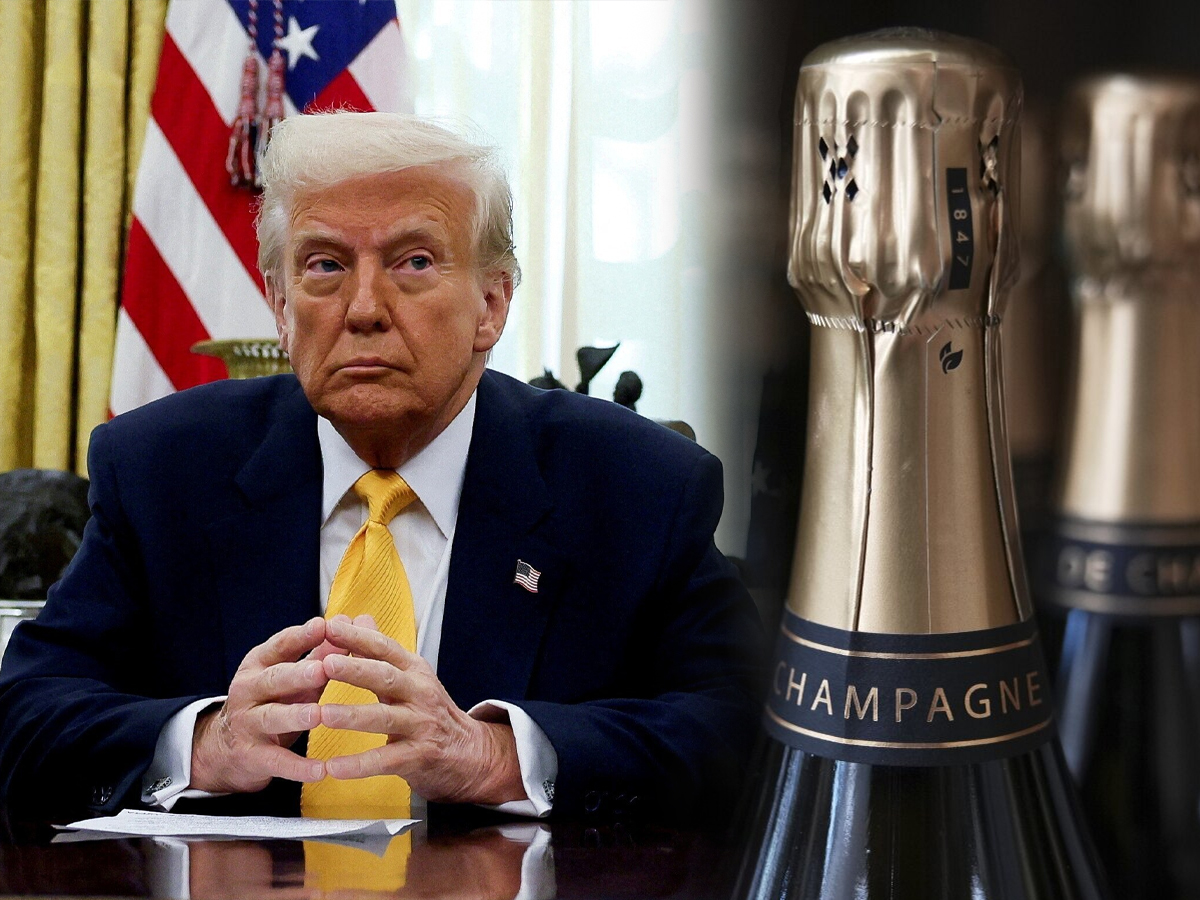
The French wine tariff threat comes as part of a wider diplomatic duel over Greenland, a semi-autonomous Danish territory that Trump has repeatedly said the U.S. must control for strategic reasons. (Photo: Social Media)
U.S. President **Donald Trump on Tuesday vowed to slap a steep 200% tariff on French wine and champagne imports if French President Emmanuel Macron refuses to join his proposed global “Board of Peace,” a body intended to help oversee the Gaza conflict cease-fire. Trump made his comments during a press interaction in Miami, signalling a new front in deepening trade and diplomatic tensions between Washington and its European allies.
Trump told reporters, “Well, nobody wants him because he’s going to be out of office very soon. So you know, that’s all right. What I’ll do is ... I’ll put a 200% tariff on his wines and champagnes, and he’ll join. But he doesn’t have to join.”
His remarks framed the tariff threat as leverage to secure Macron’s participation on the peace board, even as France reportedly plans to decline the invitation for now.
The French wine tariff threat comes as part of a wider diplomatic duel over Greenland, a semi-autonomous Danish territory that Trump has repeatedly said the U.S. must control for strategic reasons. Trump has threatened to impose tariffs of up to 25% on eight European countries, including Denmark, France, Germany, and the UK, unless Greenland transfers to U.S. control.
European nations have condemned these moves. German and French finance ministers said Europe will not be blackmailed by such tactics, calling them unacceptable and preparing counter-measures.
The “Board of Peace” is a new international body endorsed by the United Nations Security Council last November to help oversee and sustain the cease-fire between Israel and Hamas in Gaza. Trump has invited a range of world leaders to join the board, including Russian President Vladimir Putin, UK Prime Minister Keir Starmer, and Indian Prime Minister Narendra Modi.
Macron’s reported reluctance to join appears to have triggered Trump’s extraordinary tariff threat, which would target one of France’s most iconic export markets, wine and champagne, if carried out.
French President Emmanuel Macron has strongly criticized Trump’s tariff threats as “unacceptable,” and vowed that Europe will respond “in a united and coordinated manner” to uphold sovereignty and legal norms.
Macron said, “Tariff threats are unacceptable and have no place in this context. Europeans will respond in a united and coordinated manner should they be confirmed. We will ensure that European sovereignty is upheld.”
Similar sentiments came from UK Prime Minister Keir Starmer, who called the idea of tariffs over a political dispute “completely wrong,” arguing that disputes should be resolved through dialogue instead of economic pressure.
Swedish leaders also pushed back, declaring that Europe will not let itself be intimidated by U.S. actions.
French winemakers warn that steep U.S. tariffs could crush a critical export sector. The U.S. market accounts for about 10% of French champagne exports by volume and 15% by value, a significant share of the industry’s global business. Producers fear that a dramatic price increase due to tariffs would sharply reduce demand and potentially cost jobs across the supply chain.
French wine and spirits exporters said the tariffs, combined with currency challenges, could slash revenue by around €1 billion and disrupt one of France’s most globally recognised industries.
In response to Trump’s multi-nation tariff threats, the European Union is weighing strong counter-measures, including activating its so-called anti-coercion instrument, a powerful trade defense mechanism designed to respond to economic coercion.
EU ambassadors are set to meet in the coming days to discuss next steps, including the possibility of imposing tariffs worth billions of euros on U.S. imports or delaying approval of key trade agreements.
European leaders are also pushing to present a unified front against what they consider a risky escalation in transatlantic relations that could undermine diplomatic cooperation and damage economic ties if it spirals into a full-blown trade conflict.
