
LONDON: The end of the Cold War created a powerful sense of optimism in international politics. With the collapse of the Soviet Union, the long-standing ideological and military confrontation between East and West appeared to be over. Many observers believed the world was entering a more peaceful, cooperative and prosperous era. Yet, while the early post-Cold War years did look promising, subsequent developments revealed that this optimism was only partly justified.
As a result, if we try to look ahead to next year without considering conflict, we quickly find it impossible. So much of what is happening globally, politically, socially, and economically, is being driven by wars, rivalries, and the aftershocks of violence. From Europe to East Asia, from great-power manoeuvring to the calculations of middle-ranking states, conflict has become the central organising principle of international life as the world edges toward 2026.
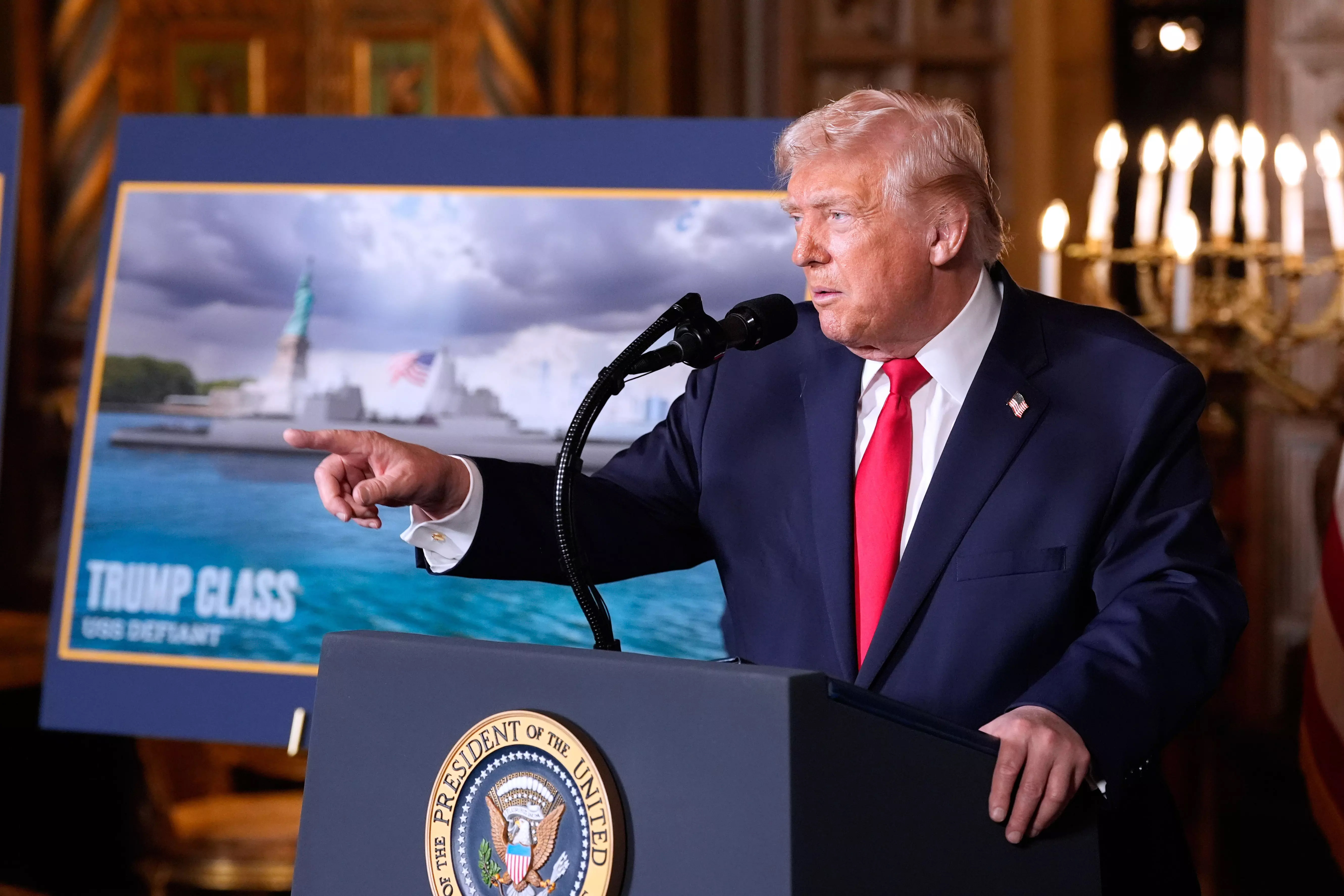
President Donald Trump has claimed to have ended eight conflicts, yet few of those conflicts show meaningful signs of resolution. Instead, the map of global tension remains crowded with danger spots. Taiwan continues to loom as one of the most perilous flashpoints, where clashing interests between China, the United States and regional allies could rapidly escalate. At the same time, many democracies are experiencing their own internal conflicts, marked by rising political antagonism and, in some cases, violence. The hope that politics might become less bitter and less polarised feels distant for now.
Against this backdrop, Europe and Russia remain at the centre of global anxiety, largely because of the war in Ukraine. This conflict will be the dominant issue shaping the year ahead. Despite intermittent peace talks, it’s difficult to see how negotiations can overcome the most fundamental disagreements. The unresolved questions are not minor details but core issues: credible post-war security guarantees for Ukraine, and Russian President Vladimir Putin’s demand that Ukraine surrender control of the Donbas region, the parts occupied and those yet to be conquered. These are not problems that can easily be papered over. As a result, the most realistic expectation is that the war will continue, grinding on throughout 2026.
While public attention often focuses on the front lines and battlefield developments, the true driver of the conflict’s outcome will be economics rather than military manoeuvre alone. On one side, the European Union is scrambling to generate the financial resources needed to keep Ukraine fighting, as sustaining a modern war requires vast sum of money, not only for weapons but for salaries, reconstruction, energy supplies, and basic government functions. On the other side, Russia’s economy is sliding towards what experts describe as a “shabby recession”. Sanctions, war spending, and long-term structural weaknesses are taking their toll, and over time the balance between European financial endurance and Russian economic decay may prove more decisive than any single offensive.
Yet even as the current war drags on, policymakers are already thinking ahead to the next one. Security guarantees for Ukraine are not just about ending the present conflict; they are about preventing a future invasion. Here, Europe’s role is pivotal. The degree of European solidarity, and Europe’s willingness to shoulder responsibility in a world where US support may be diminishing will shape the continent’s security for decades, which is why seemingly obscure political events can take on outsized importance.
In 2026, several European countries will hold national elections, including Denmark, Hungary, Latvia, and Sweden, but the French municipal elections are a key indicator of what lies ahead for Europe. While local elections rarely attract international attention, they may offer insight into the rise of Jordan Bardella and the populist far right in France. If France continues down this path ahead of the 2027 presidential election, it could weaken Europe’s collective will to intervene abroad and to confront Russia over Ukraine. The European Union itself may not fragment, but its political cohesion and strategic resolve could.
This uncertainty is compounded by a growing distance between the United States and Europe. The war in Ukraine has highlighted diverging approaches to ceasefire negotiations and security commitments. Since 1945, the United States has played a central role in European security, and while Washington has threatened retrenchment before, this time the signals appear more serious. To many observers, the recently published National Security Strategy suggests that the US intends to play a reduced role in the Western Hemisphere and was not welcomed by Europeans, as they may not yet be prepared to take on the burden the United States is increasingly willing to shed. For decades, America reassured Europe that it would provide protection and the possibility that this guarantee may weaken came as a shock.
Russia, meanwhile, is unlikely to abandon its efforts to destabilise what it sees as hostile neighbours. Even if its conventional military power has been badly damaged by the war in Ukraine, Moscow will continue to rely on asymmetrical tactics—cyberattacks, disinformation, political interference, and economic pressure. Yet Russia’s room for manoeuvre is narrowing. The war has left it far more dependent on China, a position many Russians would once have found uncomfortable as over time this dependency may force Moscow to align more closely with Beijing’s interests.
The broader danger lies in the precedent being set by Moscow. Russia has violated the rules of an international order that, despite its flaws, has provided relative stability since 1945. If Russia is seen to have “got away with it”, or even to be rewarded with territorial gains, other states with revisionist ambitions may feel emboldened. Border disputes could multiply, as already seen in clashes along the Thailand-Cambodia border. In this contest, Taiwan stands out as a particularly sensitive and potentially explosive issue.
Beyond the great powers, however, the global picture is more complex than a simple contest between Washington, Beijing, and Moscow. There is a persistent myth that only great powers shape the world, while smaller countries are mere pieces on a geopolitical chessboard. This view is shared by leaders like Trump and Putin, who see international politics as the domain of a few decisive players. In reality, middle-tier countries often exert outsized influence: they can play larger powers against one another, exploit rivalries, and pursue their own regional ambitions. Azerbaijan, for example, has carved out influence in the South Caucasus by skilfully balancing relations with Turkey and Russia. Elsewhere, states that once seemed peripheral are asserting themselves with growing confidence.
This reflects a deeper shift towards a genuinely multipolar world. The rise of China is only part of the story. Countries such as India and Brazil are also emerging as influential actors, unwilling to align fully with any single bloc. Their choices complicate the old models of alliance politics and weaken the ability of traditional powers to dictate outcomes.
Some analysts are extending this argument by revisiting the idea of empire. While decolonisation after 1945 led many to believe empires were a thing of the past, the fact remains that empires never really disappeared. The Soviet Union was itself an empire and modern Russia still rules over diverse peoples who may not wish to remain under Moscow’s control. Many experts believe that Putin’s ultimate ambition is to recreate the Russian Empire in full. Today, both formal and informal empires are re-emerging, alongside the notion that spheres of influence could provide stability. History suggests otherwise, as spheres of influence are inherently unstable. Those trapped within them often resist and clashes frequently erupt along their borders, illustrating that a world divided into rigid zones dominated by great powers is more likely to produce conflict than peace.
In response, smaller and middle-ranking states are beginning to hedge their bets. Countries like Canada are forging new partnerships and supply chains, as seen recently in Canada’s efforts to deepen economic ties with Brazil in response to American tariffs. Such moves suggest that US influence over smaller powers may gradually decline, even as Washington remains a central player.
As the world enters 2026, the picture that emerges is one of turbulence rather than resolution. Wars are unlikely to end cleanly, alliances are under strain, and the international order is becoming more fragmented. Economics, as much as ideology or military force, will shape outcomes, and while great powers continue to dominate headlines, the choices of middle and smaller states may increasingly determine how this unsettled era unfolds.
John Dobson is a former British diplomat, who also worked in UK Prime Minister John Major’s office between 1995 and 1998. He is currently a visiting fellow at the University of Plymouth.




