The instability within NATO is also seen as an opportunity for Russia and China to advance their interests in the Arctic and beyond.
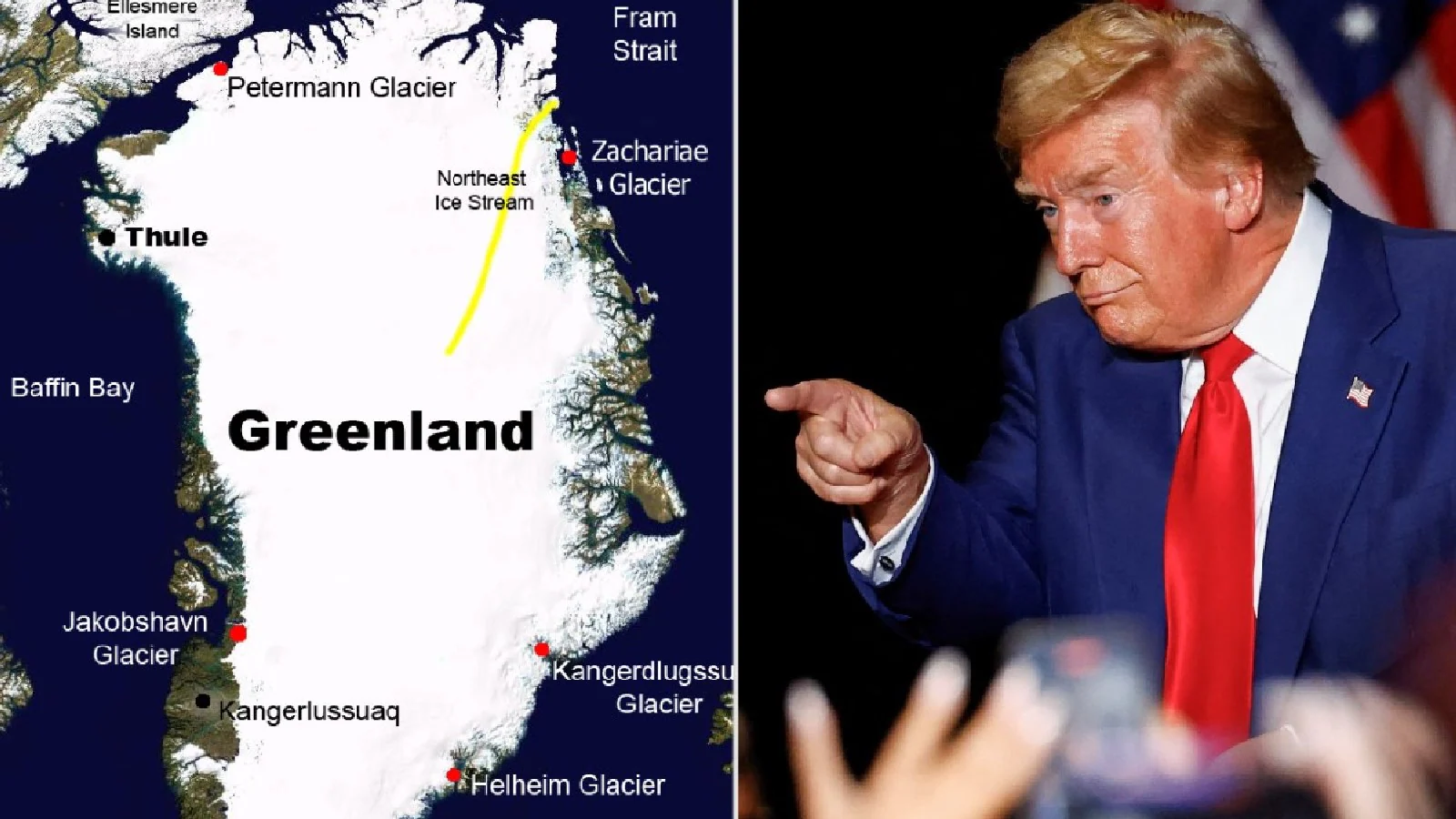
Greenland emerges as a flashpoint as US President Donald Trump revives claims over the Arctic territory, straining NATO ties (Photo: File)
NEW DELHI: Geopolitical tensions surrounding Greenland have escalated significantly following statements by US President Donald Trump regarding the potential for US control over the territory, soon after he successfully launched Operation Absolute Resolve, a surprise military raid that resulted in the capture and abduction of Venezuelan President Nicolás Maduro and his wife, Cilia Flores, to the United States. Trump stated, "We need Greenland from the standpoint of national security," frequently citing the presence of Russian and Chinese ships in the Arctic. He has downplayed interest in its mineral resources, though aides often highlight its wealth in rare earth minerals.
Greenland is a semi-autonomous territory of the Kingdom of Denmark. Under the 2009 Self-Government Act, Greenland can choose independence from Denmark via a referendum and parliamentary approval, but currently, Denmark remains responsible for its defence and foreign policy. The 1951 Greenland Defence Agreement, amended in 2004, allows a US military presence (primarily at Pituffik Space Base) but explicitly requires Danish and Greenlandic consent for any expansion.
Trump has mocked Denmark’s defence of the island, jokingly claiming they only "added one more dog sled" for security and asserting they are incapable of safeguarding the territory. While Trump initially offered to buy the island in 2019, he has more recently declared he will get it "one way or the other". He has refused to rule out the use of force, though top aides like Stephen Miller have suggested "nobody’s going to fight the US over its future".
US-Denmark tensions over Greenland have been steadily increasing. In late 2025, Trump appointed Louisiana Governor Jeff Landry as a special envoy to Greenland. Landry is not a formal envoy or diplomat to Greenland, having no diplomatic status or accreditation in Denmark. Landry said he would work to "make Greenland part of the US". Danish government officials were described as "incensed" at attempts to undermine Denmark’s sovereignty, and Foreign Minister Lars Rasmussen called Landry’s statements "completely unacceptable," adding, "we insist that everyone—including the US—must show respect for the territorial integrity of the Kingdom of Denmark".
Vice President J.D. Vance visited the Pituffik Space Base in March 2025, urging Greenlanders to "cut a deal" and accusing Denmark of failing to protect the territory. Vance stated that Denmark has "not done a good job" for the people of Greenland and has "underinvested in the island's security architecture". He justified a stronger US presence by pointing to "aggressive incursions" and growing interest from Russia and China in the Arctic region.
Danish Prime Minister Mette Frederiksen rejected Vance's claims as inaccurate, noting that Denmark and the US have stood "side-by-side for years" and that Denmark has significantly increased its defence spending. Leaders in Greenland called the visit a "provocation" and "unacceptable pressure," with local protesters in Nuuk holding signs such as "Yankees, Go Home".
These developments have raised critical questions about the future of NATO. Danish and European leaders have warned that a US military move to annex Greenland would likely lead to the dissolution of NATO. Danish Prime Minister Mette Frederiksen has called Trump's talk of annexation a "fantasy" and warned that a US attack on a NATO ally would "spell the end of NATO". Greenland’s Prime Minister Jens-Frederik Nielsen has demanded an end to "fantasies of annexation," stating that "Greenland belongs to Greenlanders" and while they are open to dialogue, they will not be sold. Leaders from the UK, France, Germany, Italy, Poland, and Spain issued a joint statement with Denmark on January 6, 2026, asserting that Greenland belongs to its people and its sovereignty is not negotiable.
The instability within NATO is also seen as an opportunity for Russia and China to advance their interests in the Arctic and beyond. Russian President Vladimir Putin has used the situation, specifically Donald Trump’s repeated expressions of interest in acquiring Greenland, to assert Russia’s influence in the Arctic and frame the US as a potential source of destabilization in the region. Essentially, Putin utilized the controversy over Greenland to justify Russia’s own significant military buildup and expansion of economic infrastructure in the Arctic while accusing the US of aggressive intentions. China conducts joint exercises with Russia in the Bering Strait, increasing coast guard cooperation, and exploring military applications of its Arctic presence.
Continued US hostile statements and the refusal to rule out military force to acquire Greenland pose a significant risk of fracturing NATO unity and potentially leading to the collapse of the alliance itself—which would benefit Russia’s and China’s goals in the North Atlantic.
Prabhu Dayal is a retired ambassador of the US.
