Opposition lobbying in Washington signals deepening political contest ahead of Armenia’s 2026 elections.
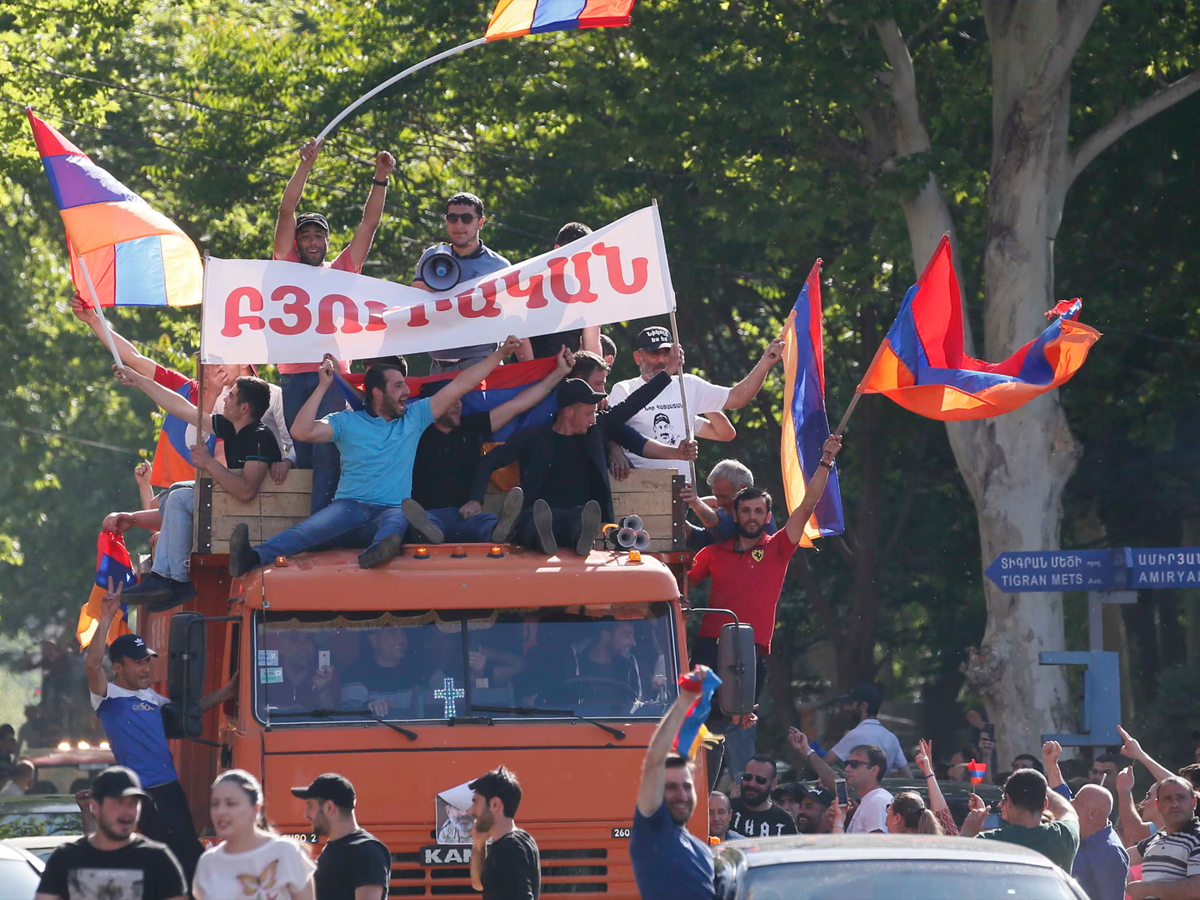
The NDA is using this confrontation to argue that the state is targeting a core national institution to neutralize opposition-aligned social forces. (Photo: Reuters)
New Delhi: The National Democratic Alliance (NDA), a pro-Western opposition movement, has stepped up lobbying in Washington, D.C., seeking U.S. political support by portraying Prime Minister Nikol Pashinyan’s administration as presiding over democratic backsliding and authoritarian overreach ahead of Armenia’s June 2026 parliamentary elections. In recent years, Armenia has emerged as one of India’s closest allies in West Asia.
The opposition has expanded its presence in the U.S. capital by retaining high-profile lobbying firms such as Moran Global Strategies, led by former congressman Jim Moran, with the explicit aim of reshaping Armenia’s standing in Washington.
According to people familiar with the outreach, the NDA is arguing that the Pashinyan government should no longer be treated as a democratic partner, but as a regime that suppresses dissent and concentrates power under the cover of reformist rhetoric.
Lobbyist Elias Gerasoulis and NDA board members, including Ara Papian, have held meetings with members of Congress and White House staff to press for stronger U.S. oversight of human rights conditions in Armenia.
In practical terms, the effort seeks to redirect U.S. political goodwill away from the incumbent government and toward the opposition at a critical moment in the electoral cycle.
A central element of this lobbying campaign is the government’s confrontation with the Armenian Apostolic Church, which the opposition is presenting in Washington as evidence of religious persecution rather than institutional reform.
In mid-2025, Armenian authorities arrested senior clerics, including Archbishop Bagrat Galstanyan, who had led the “Sacred Struggle” protests against border concessions to Azerbaijan, on charges related to an alleged coup plot. Other high-ranking figures, such as Archbishop Mikael Adjapahyan, have faced criminal proceedings, while the government has moved to revoke the broadcasting license of the church-run Shoghakat TV channel and removed church history as a mandatory subject in schools. Pashinyan has publicly questioned the legitimacy of Catholicos Karekin II, framing the Church leadership as a remnant of the old political order and a potential threat to state security.
The NDA is using this confrontation to argue that the state is targeting a core national institution to neutralize opposition-aligned social forces.
Some regional observers see parallels between the Armenian trajectory and recent political upheavals in Bangladesh and Nepal, where domestic protest movements escalated rapidly after gaining international traction, notably from Washington.
In Bangladesh, a studentled campaign that began over job quotas in 2024 expanded into a nationwide movement that ultimately forced Sheikh Hasina from power after sustained international pressure and critical signaling from Western capitals, including Washington. In Nepal, mass protests in late 2025 over corruption and digital restrictions were followed by the collapse of Prime Minister KP Oli’s government and the formation of an interim administration-a sequence that analysts say was accelerated by external scrutiny and diplomatic distancing.
These observers caution that while Armenia’s circumstances differ, the combination of internal unrest, legitimacy challenges, and growing engagement by U.S. political institutions reflects a familiar pattern in which domestic power struggles become intertwined with external validation.
The Armenian government has responded to the opposition’s Washington push by launching its own lobbying effort, hiring Mercury Public Affairs at a reported cost of $50,000 per month to maintain its image as a democratic reformer and a strategic U.S. partner in the South Caucasus.
