Asim Munir’s remarks on Pakistan’s Islamic foundation revive debate on ideology, military power and the nation’s future direction.
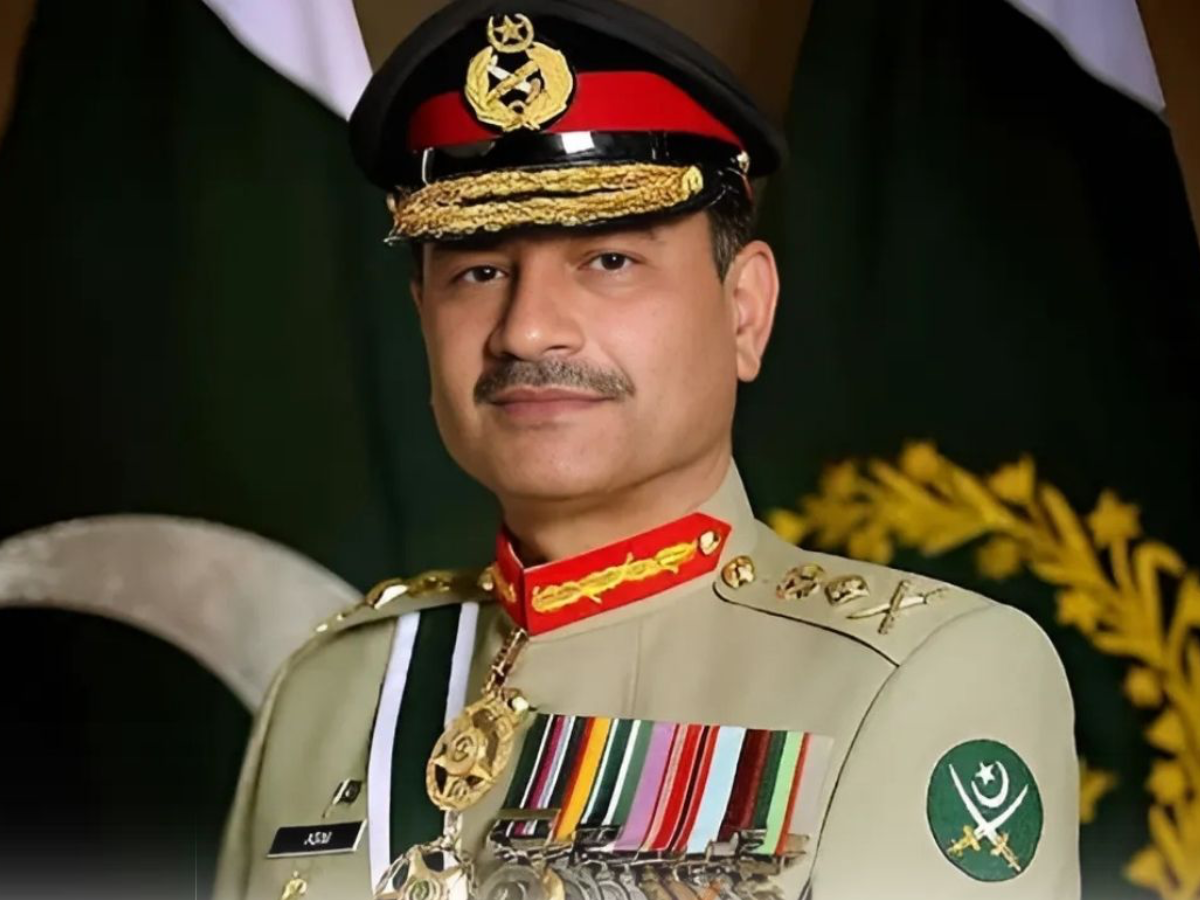
Pakistan Army Chief Asim Munir speaks at a Lahore event, outlining his vision of the country’s ideological and strategic future (Photo: X)
Pakistan's Chief of Defence Staff and Field Marshal Syed Asim Munir has again kicked up a storm of politics and ideology with a carefully crafted utterance concerning the original aim behind the foundation of Pakistan. When Munir declared that Pakistan was founded in the name of Islam and is presently moving very quickly towards its original point of direction, he reignited a controversy that has defined Pakistan since its foundation in 1947.
His remarks made at a glittering social meet at Lahore and interpreted in a recent interview conflate religiosity, nationhood, and military prowess into a unified narrative. This particular utterance of Munir is more than a mere gesture.
"The original founders had in mind the Islamic identity and ideology of this land; however, now it is on the cusp of realizing its long-cherished dream because of its influence in the world through its military power," Asim Munir.
Munir's comments have come at a time when Pakistan is struggling to balance economic recovery, regional tension, and internal security. By invoking religion and divine purpose, Munir sets national progress in a spiritual frame. "Pakistan has been afforded a historic opportunity," he said, "to realize the dream and vision that dictated its creation." The framing is anything but accidental. It reinforces the notion of national direction being divinely approved-a message that simply catches on like a wild bush fire amongst the public in a country where more than 96 percent of its population identifies as Muslim.
The Pakistani military leader equated ideology with power and pointed to the country's strong military and increasing significance in the international arena. The country remains the world's lone Muslim nation with nuclear weapons and has been estimated to hold a nuclear arsenal of 170 warheads by independent global estimates. It has had three military conflicts with India and has been combating terrorists along its western border. Munir observed that the country has gained greater respect in the international community due to economic consolidation and involvement in diplomatic efforts such as talks related to Gaza peace initiatives.
When asked about personal recognition, Munir Khan sidestepped him by saying any recognition was that of Pakistan and had been bestowed by divine will. Such statements have reiterated Khan's stance in emphasizing the success of leadership in matters of faith rather than leadership itself being inherently authoritative. Such is the positioning of the military leadership in this regard, wherein they spread messages of humility even as they exalt their ideological stance.
Munir has also continued to go back to the idea of the Two-Nation Theory. This is the ideological foundation of the creation of Pakistan. He continues to base his ideology on Islam as the foundation of his nation. This is because he has been able to create cohesion among his followers through his ideology while limiting the idea of purpose.
Through the linkage of Pakistan's future with ideology and military power, the statements of Munir have left many questions unanswered. India, Afghanistan, as well as other countries in the region, are likely to observe the implementation of this vision in Pakistan. Although the use of faith can bring together a nation, it can have regional implications too.
