Governments built on tight political control tend to overreact early, because they cannot afford to wait.
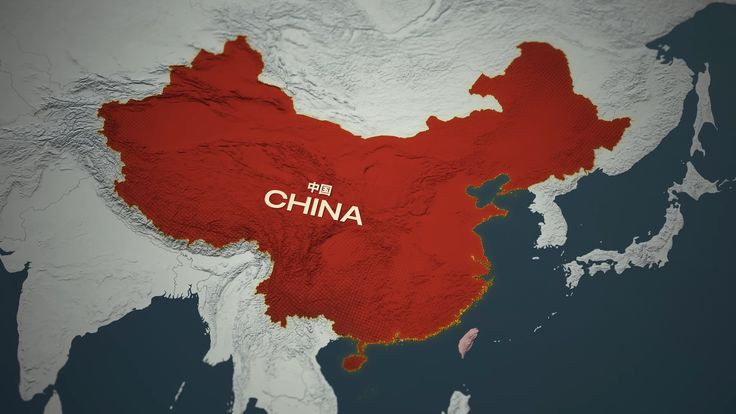
Chinese authorities swiftly disperse small gatherings to prevent dissent from gaining momentum, reflecting authoritarian priorities over civic expression (Photo: File)
NEW DELHi: When small groups of people gather peacefully in China's cities, the response from local authorities is swift and unambiguous. It often surprises observers who expect large numbers or confrontational slogans to trigger state action. Yet authoritarian systems do not view unarmed gatherings as harmless. They treat them as potential signals of something deeper: coordination, grievance and moral.
As someone who spent a career studying stability dynamics and civil-military behaviour, the pattern is familiar. Governments built on tight political control tend to overreact early, because they cannot afford to wait. Once a crowd grows, it gains visibility. Visibility creates momentum. Momentum leads to the one thing authoritarian systems cannot tolerate—a sense of shared purpose that arises outside official structures.
In democracies, security forces respond to disorder or violence. In authoritarian systems, the threshold is much lower. A handful of residents assembling on a street in Shanghai, or a cluster of workers raising concerns about local conditions, is seen as the earliest stage of disorder. The objective is not to manage protests, it is to ensure that protests never take shape. This explains the speed with which Chinese authorities act. Police units arrive within minutes, online content disappears and individuals are questioned later. The state prefers small interventions because they rarely draw attention. In effect, control shifts from the street to the digital space and then into private lives.
China projects extraordinary confidence. Its cities showcase prosperity, its institutions project discipline and its development record is substantial. Yet the manner in which it handles civic expression reveals a more fragile underside. Systems that rely on singular political authority cannot risk public gatherings turning into focal points for wider discontent. Even when residents raise apolitical issues—neighbourhood safety, local regulations, or service failures—the state treats them as potential political statements. This blurring of civic and political space is common across authoritarian environments.
Every organised movement begins with a few individuals. History shows that once people see others taking a stand, the psychological barrier weakens. Authoritarian regimes understand this dynamic well. Their fear is not the crowd itself but the first few who signal that speaking out is possible. This is why China devotes significant resources to monitoring university campuses, labour clusters and online discussion spaces. These environments produce the early movers—students, workers, grassroots volunteers who can inspire others through small acts of assertion.
It is important for democratic societies, including India, to recognise the contrast in approach. Public expression is part of the democratic fabric; it cannot be treated as a threat in itself. Order must be maintained, but the method matters. Excessive control over peaceful gatherings, or heavy-handed policing of criticism, weakens public trust. India's own experience shows that open channels for dissent, even when inconvenient or noisy, contribute to long-term stability. People who feel heard need not look for unregulated spaces to articulate concerns. The difference between managing dissent and suppressing it is the difference between confidence and insecurity.
Authoritarian systems fear unarmed crowds because they are not merely gatherings; they are moments of shared understanding. Once people see others expressing the same concerns, they realise power does not rest solely with the state. That moment—brief, intangible and often unnoticed—is what China seeks to prevent when it disperses even the smallest gatherings in cities like Shanghai. The absence of visible unrest does not imply contentment. It often reflects a system that has spent years removing the constituencies capable of speaking openly. The real measure of confidence in governance lies not in how quickly dissent is silenced, but in whether the state can tolerate dissent at all.
Maj Gen R.P.S. Bhadauria (Retd) is the Additional Director General of the Centre for Land Warfare Studies (CLAWS), New Delhi, and was formerly the Director of the Centre for Strategic Studies & Simulation (CS3) at USI of India, having served in the Indian Army for 36 years.
