
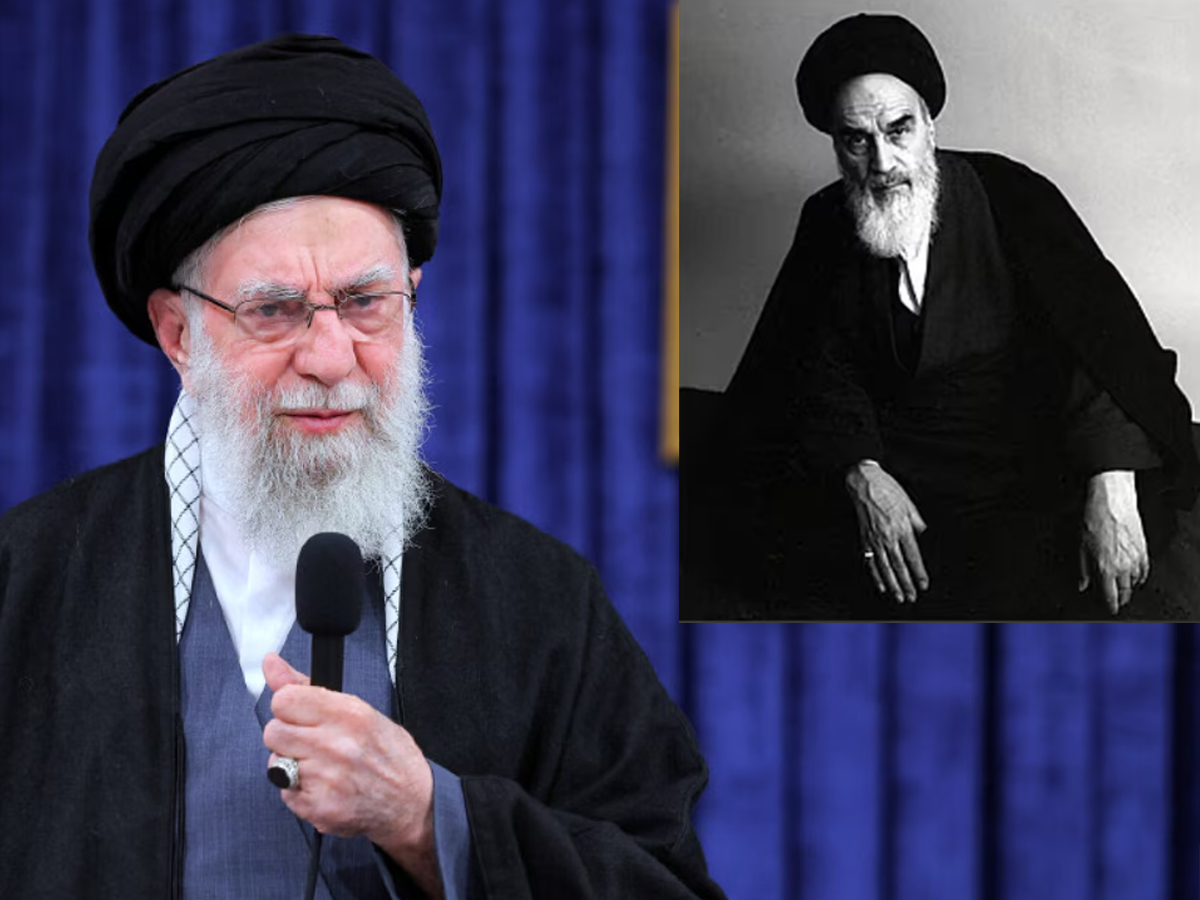
As the Middle East reels from reports claiming that Ayatollah Ali Khamenei was killed in joint US–Israel air and missile strikes, global attention has turned not only to Iran’s future leadership but also to the deeper history of the Islamic Republic. Amid the chaos of war and uncertainty, a lesser-known story has resurfaced, and that is Iran’s revolutionary leadership’s unexpected historical connection to India.
While the current Supreme Leader’s family does not trace its lineage to India, the roots of Iran’s Islamic Republic itself do. That connection runs through the family of Ayatollah Ruhollah Khomeini, the man who led the 1979 Islamic Revolution and reshaped Iran’s political and religious identity.
What is the Indian Connection to Ayatollah Khamenei?
Despite widespread online speculation following reports of Khamenei’s death, it is important to clarify one key fact: Ayatollah Ali Khamenei does not have a verified ancestral link to India. His family belongs to a separate clerical lineage rooted in Iran and the wider Shia scholarly world.
However, the ideological and institutional foundations of today’s Iranian state were laid by Ayatollah Ruhollah Khomeini, and it is his family history that leads back to India — specifically to a small village in Uttar Pradesh.
Ayatollah Khamenei Indian Connection: How Barabanki (UP) Shaped Iran’s Revolution?
Long before Iran became a theocratic state, Kintoor, a modest village near Barabanki, served as a centre of Shia religious learning. In the early 19th century, the village was home to Syed Ahmad Musavi, the grandfather of Ayatollah Ruhollah Khomeini.
Born in Kintoor in the early 1800s, Syed Ahmad Musavi belonged to a Shia clerical family that had migrated to India from Iran generations earlier. At a time when British colonial power expanded across the subcontinent and Mughal authority declined, Musavi embarked on a journey that would quietly influence Iran’s destiny.
Ayatollah Ali Khamenei: From Kintoor to Najaf and Iran
In 1830, Syed Ahmad Musavi left India for Najaf, one of Shia Islam’s most sacred cities, to visit the shrine of Imam Ali. What began as a pilgrimage became a permanent migration.
Within a few years, Musavi settled in the Iranian town of Khomein. He married, raised children, and integrated deeply into Iran’s clerical society. Yet he never abandoned his Indian identity. He carried the title “Hindi”, a marker of Indian origin, throughout his life. Iranian historical records still reflect this title today.
Musavi died in 1869 and was buried in Karbala, but his influence endured through his descendants.
Who Was Ayatollah Ruhollah Khomeini?
One of Syed Ahmad Musavi’s grandsons was Ruhollah Khomeini, born in 1902. He would later emerge as the most influential cleric in modern Iranian history.
By the 1960s, Khomeini had become a fierce critic of Mohammad Reza Pahlavi, Iran’s pro-Western monarch. He opposed rapid secularisation, foreign influence, and authoritarian rule. Decades of exile failed to silence him.
In 1979, mass protests toppled the Shah, and Khomeini returned to Iran to lead the Islamic Revolution. He established the Islamic Republic and became its first Supreme Leader, fundamentally altering Iran’s laws, governance, and foreign policy.
Ayatollah Khamenei Indian Connection: Indian Influence on Khomeini’s Thought
Although Ruhollah Khomeini never met his grandfather, family teachings passed down through generations shaped his worldview. Scholars believe Syed Ahmad Musavi’s emphasis on Shia spirituality and resistance to injustice influenced Khomeini’s ideological foundation.
Khomeini often lived modestly, even as the most powerful man in Iran. He resided in a simple home in Tehran and refused public money for personal comfort. His poetry and writings occasionally referenced “Hind”, the land of his grandfather — a quiet acknowledgment of his Indian roots.
Ayatollah Khamenei Indian Connection: Khamenei, Khomeini, and the Present Crisis
After Khomeini died in 1989, Ali Khamenei became Iran’s Supreme Leader. Though not related by blood, he inherited the political system Khomeini created.
Now, as reports claim Khamenei was killed in US–Israel strikes, the world faces questions about Iran’s future. The current crisis highlights how a revolution shaped by a cleric whose family once lived in an Indian village continues to influence global geopolitics.
Ayatollah Khamenei Indian Connection: Why the Indian Connection Still Matters
Kintoor today remains far removed from missile strikes and Middle East power struggles. Yet its link to Iran’s revolutionary history underscores how ideas, faith, and migration can shape nations across centuries.
As Iran stands at a possible turning point following claims of Khamenei’s death, the story of its origins, beginning in a quiet village in Uttar Pradesh, offers a striking reminder that history often begins far from the battlefield.




