UK Womb Transplant: Baby Hugo’s birth marks the UK’s first successful womb transplant from a deceased donor and offering new hope to thousands of women.
Medical team at a London hospital celebrates milestone birth following pioneering womb transplant (Photo: File)
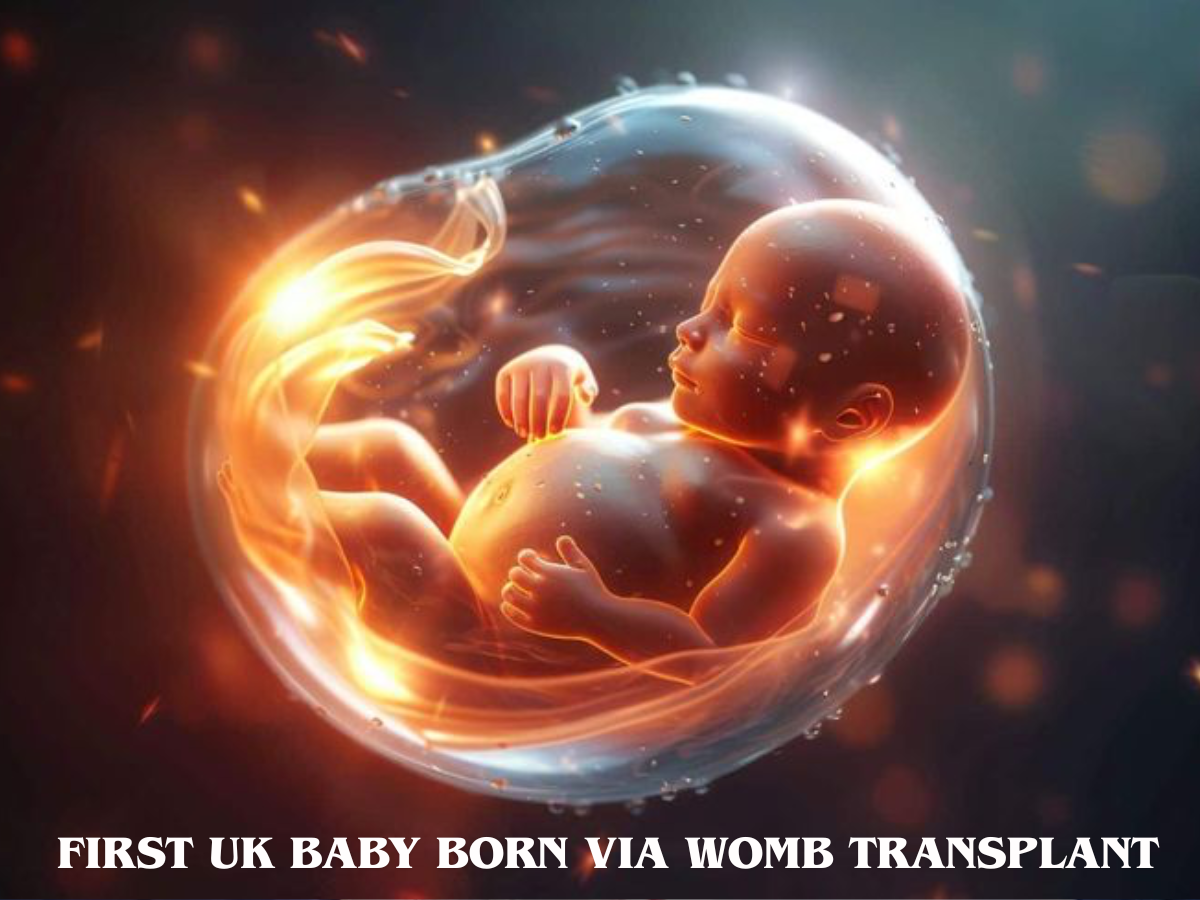
UK Womb Transplant Surgery: The delivery room was filled with more than the usual level of excitement when baby Hugo Powell was born in London just before Christmas in 2025. It was a medical milestone. Hugo weighed as 6lb 13oz (3.1kg) and was the first baby born in the UK after a womb transplant from a deceased donor where it was a moment of triumph for the team that performed the surgery and it was as if the long years of research and hard work had finally paid off.
The delivery took place at Queen Charlotte’s and Chelsea Hospital, under the care of Imperial College Healthcare NHS Trust during the pregnancy over 30 specialists were involved in caring for the mother, which goes to show the complexity of pregnancies post-transplantation. Globally, very few children have been born as a result of deceased donor womb transplants.
"This is an extraordinary moment," said Bryony Jones, a consultant obstetrician who has delivered two babies in the UK born from womb transplants. "It is a moving experience, as few are, because the team has been with this patient from the beginning of the program. They have walked with her through every scan, every consultation and every step. It is a collective victory for the doctors who are used to dealing with high-risk cases."
The most recent transplant was conducted by the new team of Isabel Quiroga at the Oxford Transplant Centre. In the UK, there have been five womb transplants performed by surgeons, two of which were from living women and three from deceased women. The timing is extremely important, as the uterus from the deceased woman has to be transported within a 12-hour period for a successful transplant. Worldwide, statistics indicate that there is a greater risk of failure if the uterus is from a deceased woman than from a living one, making Hugo’s birth even more precious.
A womb transplant, or uterine transplant, is a surgical procedure that helps women who lack a uterus to conceive. Globally, over 100 of these surgeries have been conducted, resulting in more than 50 successful births. In the UK alone, five transplants have been performed, three of which were from deceased donors where each transplant requires the collaboration of 30 or more medical professionals, scans and monitoring to ensure the health of both the mother and the baby.
Hugo’s mother was born with no uterus due to MRKH syndrome, a condition that affects 1 in 5,000 women in the UK although her ovaries are functional, she cannot support a pregnancy where many women with MRKH syndrome have only two options as surrogacy or adoption. The transplant presented an opportunity that was previously closed: the possibility of feeling pregnant herself.
The women who have received womb transplants require regular scans, blood tests and specialist care. Although experts agree that the world’s experience is limited, they point out that skills developed in other transplant pregnancies can be applied. Each pregnancy helps with research and the results are closely monitored to improve success rates.
The initiative is supported by Womb Transplant UK, which has funded all five procedures so far. According to Professor Richard Smith, “Growth is possible, but problems with money are still in the way.” In the UK, there are 5,000 women born without a womb, and 15,000 women of childbearing age who could benefit from the scheme due to medical loss or congenital factors.
But there is something even more profoundly human than the scalpel and the science as generosity. Organ transplants from deceased donors rely on the generosity of families who are willing to say yes in the midst of overwhelming loss. "We are constantly amazed by the decisions people make," say doctors. Hugo’s parents see the gift of life from the donor as more than a medical triumph it’s a child, a future and a reminder that even in loss, life can begin again.
1. What makes Hugo’s birth historically significant?
He is the first baby born in the UK following a womb transplant from a deceased donor, marking a major step in reproductive transplant medicine.
2. How many womb transplants have been performed in the UK so far?
Doctors have carried out five procedures to date, including both living and deceased donor transplants.
3. Who can benefit from a womb transplant?
Women born without a womb, such as those with MRKH syndrome, or those who lost it due to illness, may be eligible.
4. How complex is the treatment process?
Each patient is supported by more than 30 specialists and undergoes intensive monitoring throughout pregnancy.
5. Is the programme publicly funded?
So far, procedures have been funded by Womb Transplant UK, with discussions ongoing about future NHS support.
Disclaimer: This article is based on publicly reported medical information and expert statements. Medical outcomes may vary by patient case.
