
Bangladesh Election 2026: Bangladesh is set to hold its general elections on February 12, 2026, a vote that will decide the next Government of Bangladesh and shape the country’s post-crisis political direction. The election will take place under an interim administration led by Muhammad Yunus, which has been governing since August 2024. Alongside the parliamentary polls, voters will also take part in a constitutional referendum on the July Charter, adding further weight to the exercise.
With 127,695,183 eligible voters, the election is being described as the biggest democratic process of 2026. A total of 1,981 candidates are contesting for 300 seats in the Jatiya Sangsad, highlighting the scale of political participation. However, despite the large field, the absence of one dominant force has reshaped the contest entirely.
Why Bangladesh Election 2026 Has Become a Bipolar Contest?
Unlike previous elections, the Awami League, which won the last four national polls, is suspended and not participating this time. As a result, the election has turned into a largely bipolar battle between the Bangladesh Nationalist Party (BNP) and the 11-Party Alliance, led by Jamaat-e-Islami and the National Citizen Party (NCP).
This shift has opened political space for parties that were sidelined for much of the past decade. At the centre of this resurgence is the BNP, which is seeking to reclaim its influence after years in political isolation.
Bangladesh Election 2026: How the BNP Is Trying to Reassert Itself After a Decade?
The BNP is now rallying under the leadership of Tarique Rahman, the son of former prime minister Khaleda Zia. Rahman, who spent 17 years in exile in London, is portrayed by supporters as a symbol of resistance against one-party dominance. Critics, however, continue to point to his past convictions and corruption allegations.
Adding emotional weight to the contest, this is the first national election since Khaleda Zia’s death in December, making the vote deeply symbolic for BNP supporters and reshaping voter sentiment.
Bangladesh Election 2026: How the Interim Government Changed the Political Landscape
Meanwhile, the interim government under Muhammad Yunus, which assumed power after Sheikh Hasina’s ouster, has taken a decisive step by banning the Awami League from electoral politics. This decision has fundamentally altered campaign dynamics across the country nowhere more visibly than in Hasina’s own backyard.
Bangladesh Election 2026: Why Hasina’s Hometown Faces an Unfamiliar Ballot?
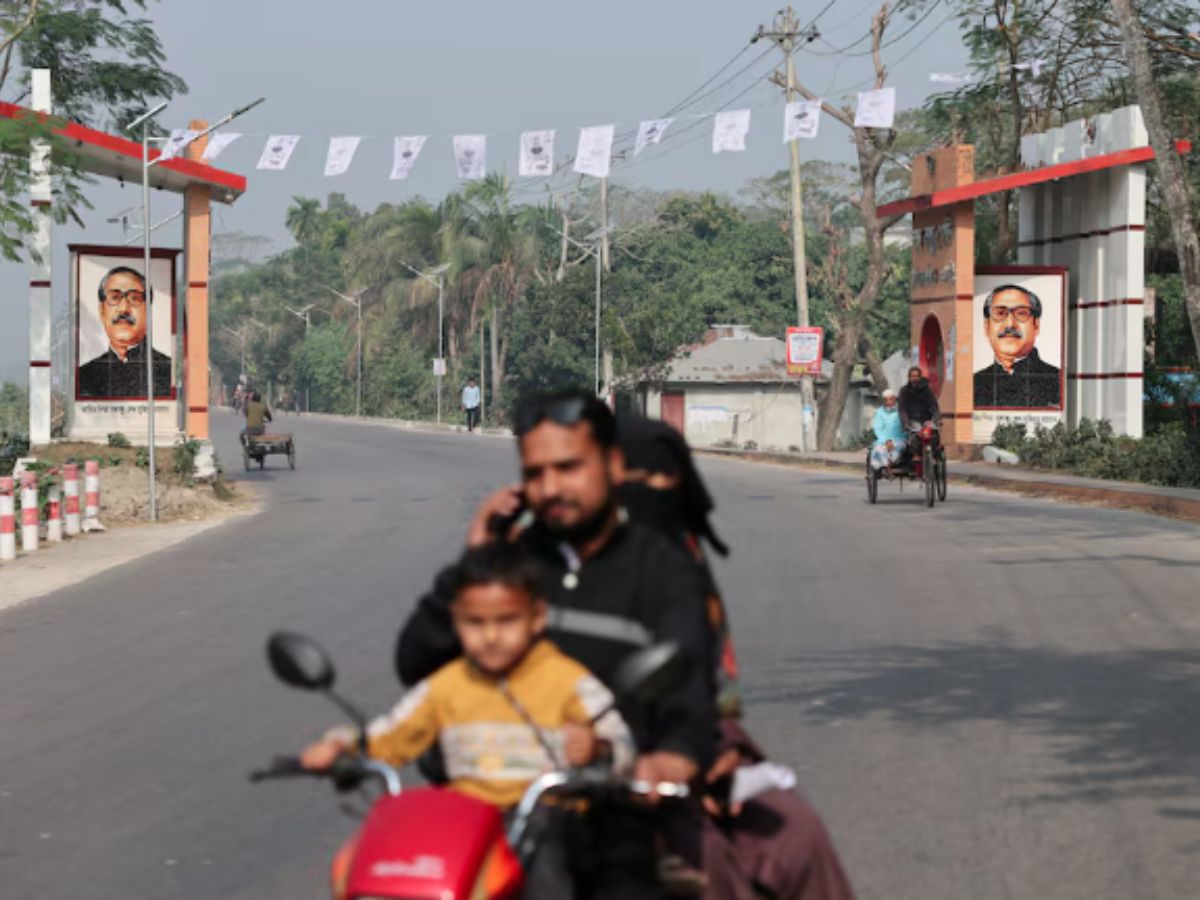
For the first time in decades, a defining symbol of Bangladeshi elections is missing from Gopalganj, the hometown of ousted prime minister Sheikh Hasina. The Awami League’s iconic “boat” symbol, once dominant during elections, has disappeared from the February 12 ballot.
In its place, posters from the BNP, Jamaat-e-Islami, and independent candidates now cover walls, street poles, and public spaces, urging voters to back alternative political visions.
Bangladesh Election 2026: Gopalganj’s Political Shift Is Historically Significant
Gopalganj has long been regarded as the safest stronghold of the Awami League. It is the birthplace of Sheikh Hasina, Bangladesh’s longest-serving prime minister, and her father Sheikh Mujibur Rahman, the country’s founding leader.
Hasina ruled continuously for more than 15 years until 2024, a period marked by repeated election boycotts by the opposition and widespread arrests of rival leaders. Her long rule ended abruptly in August 2024, when a youth-led uprising forced her from power and into exile in India.
Why the Awami League Was Barred From the Election 2026 in Bangladesh
Following Hasina’s removal, the Awami League was formally barred from contesting the February election. In an email interview with Reuters last October, Hasina warned that excluding her party would leave millions of supporters without representation and could trigger voter boycotts.
Bangladesh Election 2026: How Legal Troubles Deepened Hasina’s Fall
The political crisis intensified further late last year when a Dhaka court sentenced Sheikh Hasina to death for ordering a violent crackdown on the 2024 uprising. A United Nations report estimated that up to 1,400 people were killed and thousands injured, mostly by gunfire from security forces. Hasina has denied ordering the killings.
As a result, voter loyalties have begun to shift in unexpected ways.
Bangladesh Election 2026: Former Awami League Voters Are Turning to BNP and Jamaat
Recent surveys show a major realignment of political support. Nearly half of former Awami League voters now prefer the BNP, which leads most opinion polls, while about 30 percent have shifted toward Jamaat-e-Islami.
The July rally in Gopalganj, organised by the student-led National Citizen Party to mark the 2024 uprising, turned violent, leaving five people dead in clashes with police. Several Awami League supporters and members of minority communities say they are now living in fear.
Bangladesh Election 2026: Bangladeshi Voters Still Hope for a Fair Election
Despite the tension, others see the February vote as a rare opportunity for genuine democracy. Local businessman Sheikh Ilias Ahmed said he hopes the election will finally allow free choice. “In the past, I went to the polling station and found my vote already cast,” he said. "This time, I want to believe things will be different.