
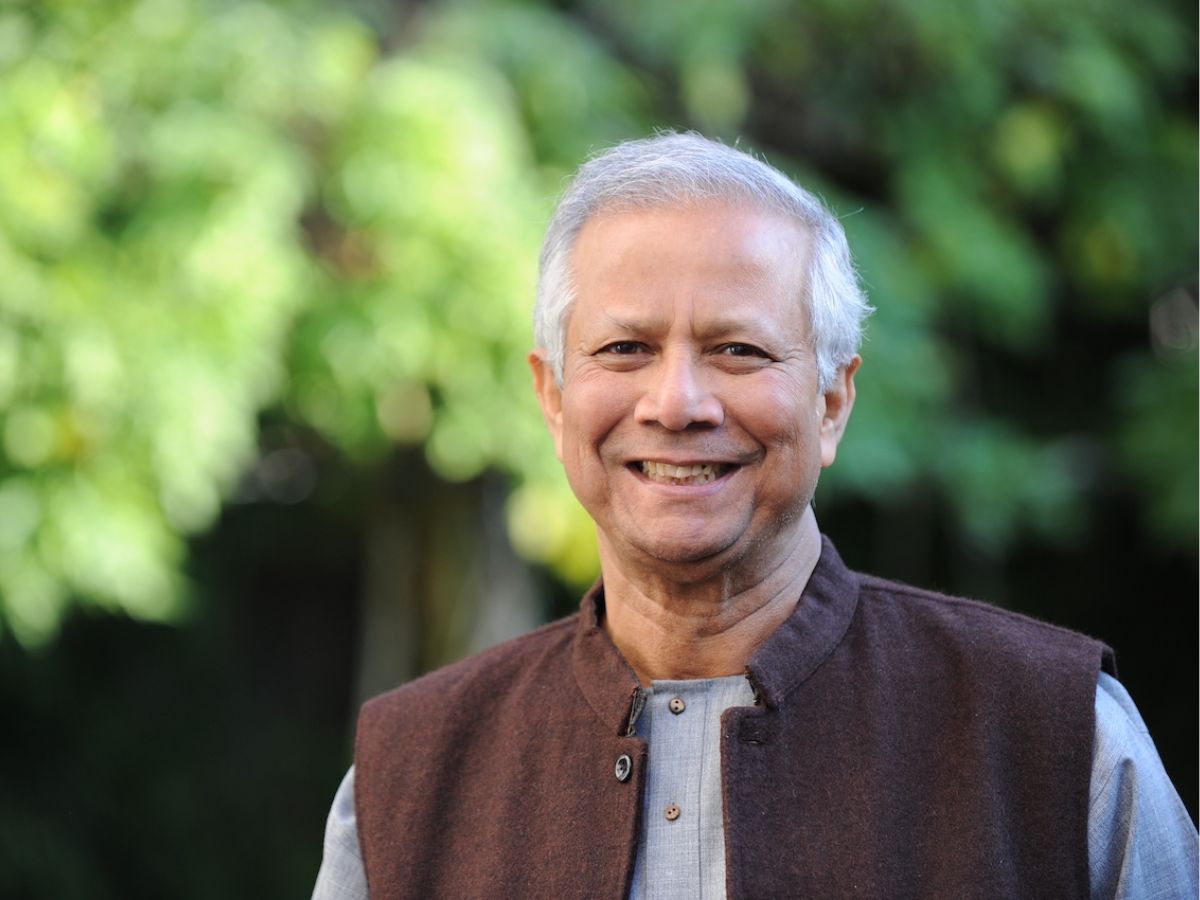
Government officials and employees in Bangladesh staged protests on Friday outside the official residence of Chief Adviser Muhammad Yunus in Jamuna, Dhaka, demanding the immediate implementation of the Ninth National Pay Scale. The protest turned violent as the police used barricades, water cannons, and sound grenades to disperse the crowd, leading to 15 people injured.
Bangladesh Protest Violence: What Happened Exactly?
Protestors gathered at Shahbagh around 10:30am local time and began marching towards Jamuna, the official residence of Yunus. Their demands were to immediately implement the Ninth National Pay Scale. Shouting slogans in favour of their demands, such as “there is no rice in the stomach, what development is there in the mouth?”, protestors were reportedly stopped and detained by the police.
Despite this, demonstrators said they would continue their protest and refused to disperse until the Ninth National Pay Scale was formally gazetted. The incident is part of a broader pattern of unrest in Bangladesh, with repeated protests and violent demonstrations reported since the fall of the Sheikh Hasina government in August 2024.
Bangladesh Protest Violence: What is Ninth National Pay Scale?
The Ninth National Pay Scale is a proposed revision of government salaries in Bangladesh, demanded by government employees who say their incomes no longer match rising living costs. They have cited sharp increases in the prices of gas, electricity, water, essential goods, and medical treatment. At present, government salaries are governed by the Eighth National Pay Scale, which was introduced in 2015. Since then, inflation and other factors have significantly reduced earnings, which prompted calls for an updated pay structure.
Discontent over this previously escalated in December, when a faction of employees and officials working at the Bangladesh Secretariat confined Finance Advisor Salehuddin Ahmed at his office, demanding various allowances. They alleged that their demands had been unmet for a long time, and threatened to launch a tougher movement if the pay scale was not gazetted by December.
Bangladesh Protest Violence: Will it Affect Upcoming Elections?
Bangladesh is headed for general elections in less than a week. This will be the first national election in nearly two years, following the removal of Prime Minister Sheikh Hasina from office in August 2024 and the installation of an interim administration headed by economist Muhammad Yunus.
The timing of the protests has raised concerns about whether ongoing unrest, including clashes between protesters and police, could impact voter turnout, security arrangements, and the overall election atmosphere. With tensions already high over economic issues and governance, the demonstrations add another layer of uncertainty ahead of a closely watched vote.
(With inputs from Agencies)




