
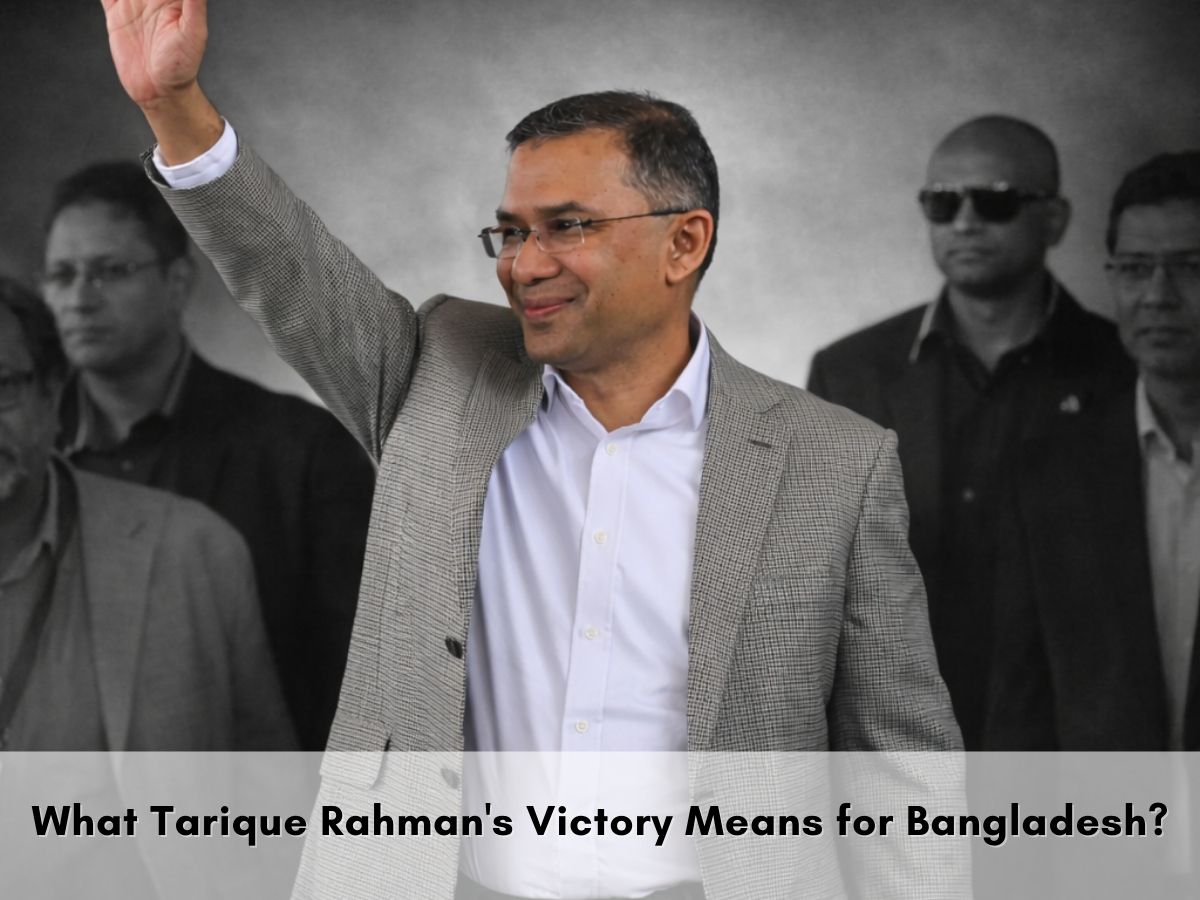
Bangladesh Nationalist Party (BNP) acting chairman Tarique Rahman is set to become prime minister after unofficial results showed BNP crossing 175 seats in the February 12 parliamentary election. The 60-year-old returned from 17 years of exile in London only three months ago, following acquittal of life sentences and corruption convictions imposed during the Sheikh Hasina era. The interim government led by Muhammad Yunus is expected to transfer power between February 15 and 18.
Who Is Tarique Rahman?
Tarique Rahman is the eldest son of former President Ziaur Rahman and three-time Prime Minister Khaleda Zia.
He rose to power in the early 2000s from Hawa Bhaban, an office critics called a “parallel power center” where he influenced cabinet appointments and government contracts. A 2005 U.S. diplomatic cable later released by WikiLeaks described Rahman as a “symbol of kleptocratic government” and coined the moniker “Dark Prince” for his alleged involvement in “violent politics.”
Rahman fled to London in 2008 during a military-backed crackdown. He was convicted in absentia and sentenced to life imprisonment for the 2004 grenade attack on an Awami League rally that killed 24 and injured Sheikh Hasina. Between August 2024 and December 2025, following Hasina’s ouster in a mass uprising, Bangladesh’s judiciary acquitted Rahman of all charges. He returned December 12, 2025.
What Are Tarique Rahman’s Promises?
Rahman campaigned on “Democratic Restoration” and “Bangladesh First.”
Institutional reforms:
- Two-term, 10-year limit for prime ministers
- Creation of a vice-president post
- Constitutional amendments for “people’s ownership of the state”
- “Zero tolerance” for corruption
- End to “revenge politics”
Economic and social pledges:
- Farmer loan interest waivers
- Two million new youth jobs
- Economic diversification beyond garments
- Free women’s education
- Zero tolerance for violence against minorities and women
Foreign policy:
- “Reset” India ties on “equality and mutual respect”
- Balance relations with China and India
- Revive SAARC, pursue ASEAN membership
- Continue rapprochement with Pakistan
What Are Critics Saying?
Dynastic politics: Skeptics question whether democratic renewal can come from a leader whose power rests entirely on family legacy. Rahman has never held elected office before Bogura-6 and spent 17 years abroad while his party faced crackdowns.
Past corruption: Opponents still call him “Khamba Tarique” (Electric Pole Tarique), referencing 2000s contracts for poles never connected to the grid.
Accuracy issues: Fact-checkers documented campaign speeches where Rahman misidentified regional crops, which analysts said “eroded confidence” among urban voters.
Islamist alliance: BNP campaigned as centrist but relied on Jamaat-e-Islami, which unofficially secured 41 seats. Secular and minority groups fear Jamaat’s influence on education and social policy.
Critics Ask: Does Tarique Rahman’s Rise Mean Return to ‘Hawa Bhaban’?
Tarique Rahman’s probable premiership has raised worries in Bangladesh due to his affiliation with “Hawa Bhaban,” an office from which he allegedly held “total authority” during his mother’s previous administrations. His return after 17 years in exile without prior ministerial experience, as well as subsequent acquittals, have prompted critics to ask whether a “parallel power center,” dubbed the “Dark Prince” by US diplomats, is being formally installed in the prime minister’s office. While Rahman has promised transparency, he has not stated how he will avoid informal influence from associates.
How Will Bangladesh’s Geopolitical Stand Shift?
India Relations
New Delhi remembers 2001–2006 BNP rule as a period of cross-border insurgency and the 2004 Chittagong arms haul—ten truckloads of weapons traced to anti-India militants.
Rahman now calls for a “reset.” He has pledged continued counterterrorism cooperation, Teesta water-sharing resolution, and protection of Hindu minorities. But his “Bangladesh First” doctrine rejects the near-total strategic alignment of the Hasina era.
Analysts say India will be treated as an equal partner, not a patron. One regional expert told Reuters: “Dhaka under Hasina was India’s closest neighbour. Dhaka under Rahman will be a normal neighbour—cooperative when interests align, assertive when they diverge.”
China
Bangladesh maintains $6 billion in outstanding Belt and Road loans. Rahman is expected to continue defence procurement and infrastructure engagement with Beijing. No project cancellations are anticipated.
Pakistan
The Yunus government initiated rapprochement in 2025. Rahman has indicated he will sustain engagement. Islamabad views his ascent as an opportunity to restore diplomatic weight in Dhaka.
Regional forums
Rahman aims to revive dormant SAARC and deepen ASEAN ties—mechanisms to reduce over-dependence on any single power.
What Immediate Challenges Will Tarique Rahman Face?
Economy: An economy worth $475 billion, double-digit inflation, a banking non-performing loan rate of more than 25%, foreign reserves less than four months’ worth of imports, and a decline in clothing orders.
Political reconciliation: Rahman has promised no prosecutions of Awami League leaders. Whether he can restrain BNP factions demanding retribution remains untested.
Minority confidence: Hindus, Christians, Buddhists and indigenous communities—approximately 12% of the population—voted in reduced numbers following campaign-period attacks. Early executive action will be required.
Jamaat expectations: The alliance partner secured 41 seats and expects policy influence on education, social welfare and local government.
Disclaimer: This article is based solely on trends of statements and facts as per news agency reports. All election results are unofficial and subject to Election Commission certification.




