
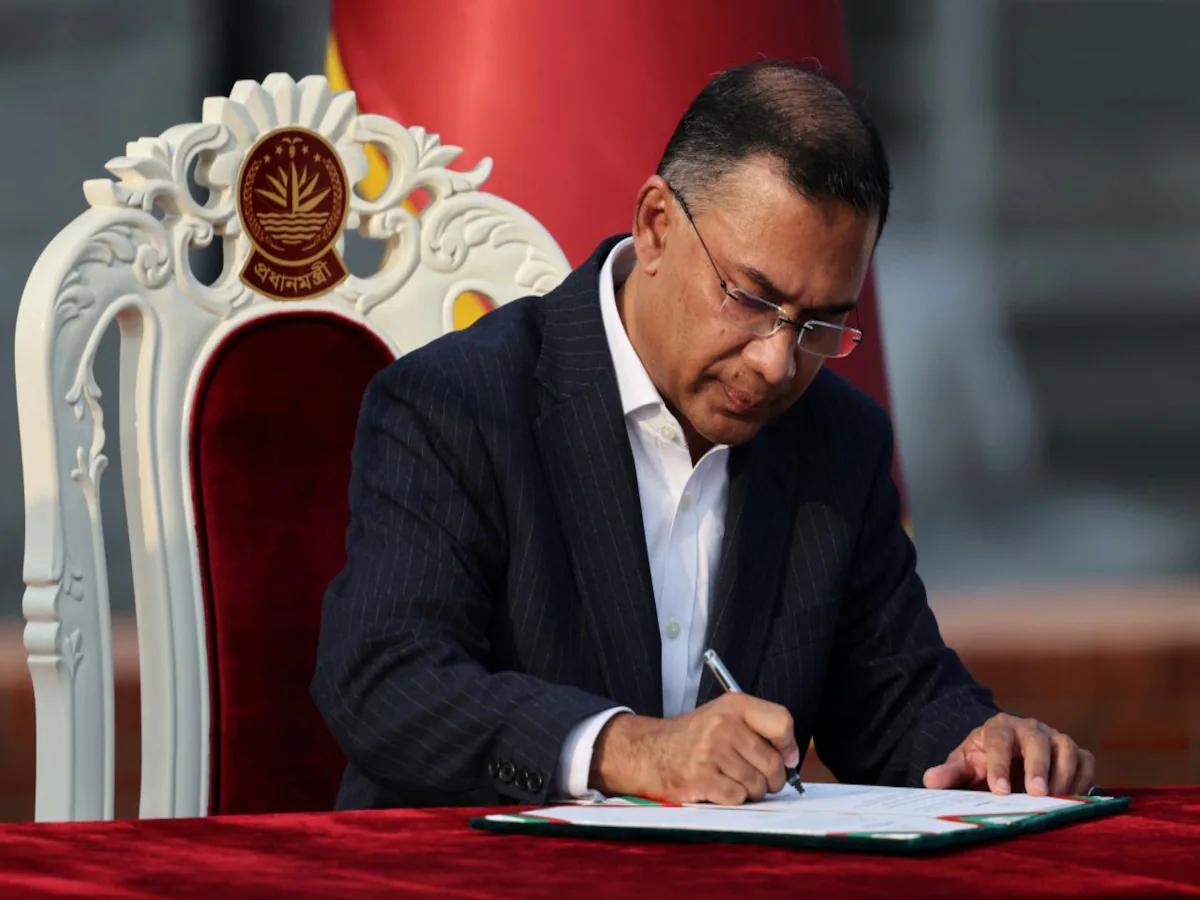
NEW DELHI: In the first significant military reshuffle since the national elections and the appointment of Tarique Rehman as Prime Minister, the new administration has transferred six senior generals of the Bangladesh Army from operational or influential field appointments into headquarters and institutional roles. The move recalibrates field command authority at the top tier of the force.
Two three-star officers—Lt Gen Shaheen and Lt Gen Faiz—have been reassigned between the National Defence College and the Quarter Master General branch at Army Headquarters. Four two-star officers—Maj Gen Nasim, Maj Gen Morshed, Maj Gen Fakhrulazzaman and Maj Gen Hasan—have also been shifted, including transfers out of the 19th Infantry Division and the 66th Infantry Division into staff, academic or logistics appointments. In rank terms, a Major General is a two-star officer who typically commands a division comprising several brigades and thousands of troops. A Lieutenant General is a three-star officer, one rung below the Army Chief, and occupies corps-level or principal staff roles. Officers at these grades form the uppermost decision-making layer and constitute the pool from which future Army Chiefs are selected.
The most consequential aspect of the reshuffle is movement away from field formations. A division commander exercises direct operational control over combat units. By contrast, logistics, personnel or academic postings are primarily administrative. While senior, they do not entail day-to-day command of maneuver units.
Maj Gen Morshed’s transfer from 19 Division to the Adjutant General’s Branch places him in charge of personnel policy rather than field troops. Maj Gen Hasan’s move from 66 Division to a logistics area command similarly shifts him from frontline command to sustainment oversight. Maj Gen Nasim’s deputation from the Military Institute of Science and Technology to the Ministry of Foreign Affairs places him outside the direct military chain of command.
In institutional power terms, field command translates into coercive capability. Headquarters roles oversee administration, procurement and training but lack immediate troop authority. For that reason, such reassignments are often interpreted as limiting operational influence, particularly when they follow a political transition.
All six officers were elevated or appointed to their earlier roles during the interim administration led by Muhammad Yunus. The new government’s decision to redistribute them away from divisions coincides with a broader effort to reset alignments after the election.
In parliamentary systems, incoming governments frequently seek to ensure that key coercive institutions are aligned with the constitution/executive. Reassigning senior generals from divisions to headquarters posts reduces their independent command leverage without resorting to dismissals or forced retirements. Security circles in Dhaka have circulated allegations that some of the officers maintained close professional ties with Pakistan’s defence establishment, including interactions with its Ministry of Defence. There are also claims that certain interim-era appointments followed consultations involving Pakistani defence interlocutors. These assertions have not been independently substantiated, and the government has not issued a formal confirmation. The reshuffle stops short of removals. Instead, it repositions senior officers within the hierarchy while shifting the locus of field command.
Whether the moves amount to routine rotation or deliberate containment of interim-era influence will become clearer in subsequent promotion decisions, particularly at the three-star level. For now, officers who recently exercised direct troop command no longer hold operational formations.




