
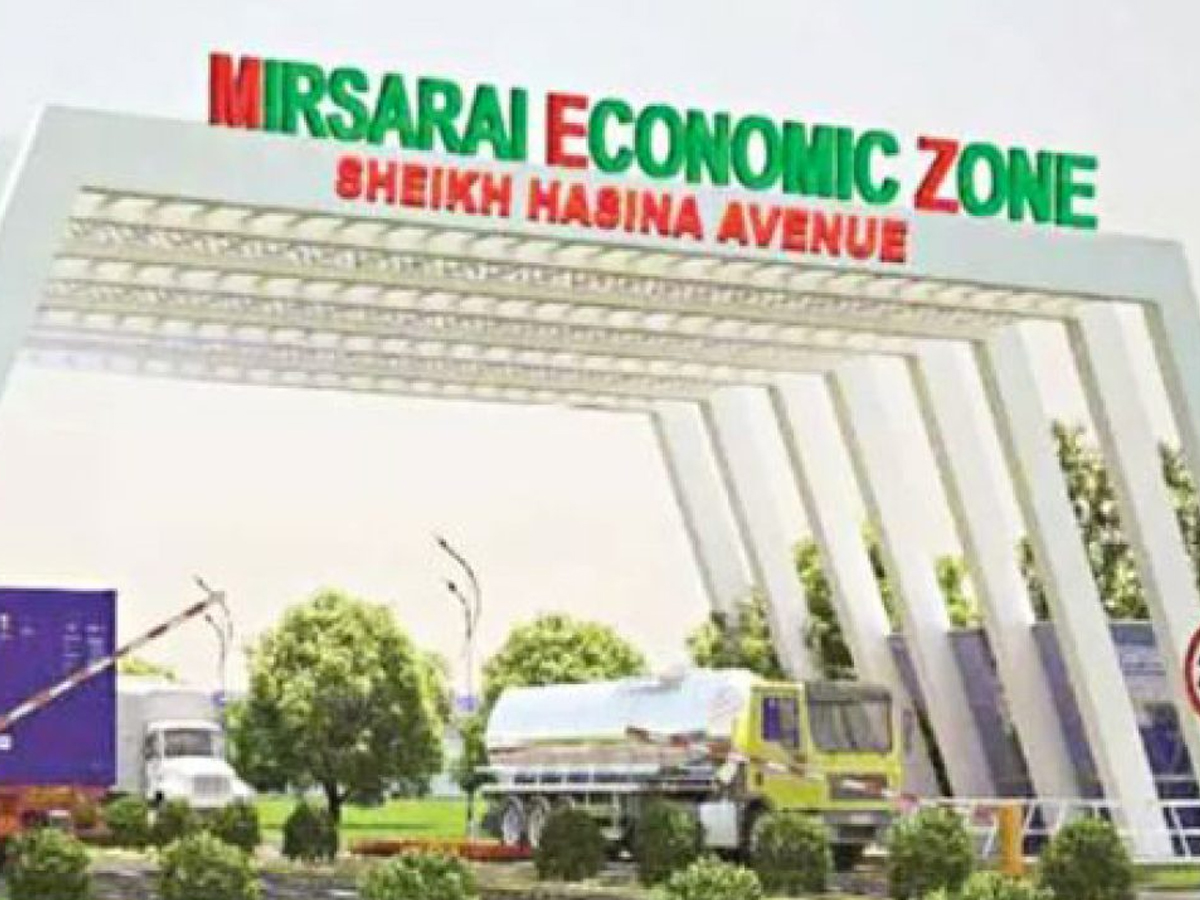
New Delhi: Bangladesh has formally dismantled two long-stalled Indian government-to-government economic zone projects at Mirsarai and Mongla, ending a bilateral industrial initiative launched in 2015 that failed to translate into on-ground investment despite nearly a decade of planning.
At Mirsarai in Chattogram, the Bangladesh Economic Zones Authority (Bangladesh Economic Zones Authority) has withdrawn the Indian Economic Zone allocation covering 323.75 hectares, roughly 800 acres, and repurposed the land for a defence industrial zone. The decision was taken at a BEZA governing board meeting on 26 January, chaired by Chief Adviser Muhammad Yunus, according to official briefings.
A similar decision has been applied to the Indian Economic Zone planned at Mongla in Bagerhat district, where around 110 acres near the port had been earmarked for Indian investors. That allocation has also been scrapped, officials said, citing prolonged inactivity and the failure of the projects to progress beyond preliminary commitments. The two zones were part of a government-to-government framework agreed in 2015, under which Bangladesh offered dedicated industrial land to Indian manufacturers. Mirsarai, located within the Bangabandhu Sheikh Mujib Shilpa Nagar, was envisioned as the flagship zone, expected to host large Indian manufacturing units supported by infrastructure and financing linked to India’s concessional line of credit. Mongla was conceived as a smaller, port-centric zone aimed at logistics and export-oriented industries tied to Mongla Port.
Despite repeated announcements, progress remained limited. At Mirsarai, BEZA signed term sheets and explored developer options over several years, including engagement with an Indian portled conglomerate, but no final developer agreement or financial closure was achieved. At Mongla, land allocation was completed, but construction and investor mobilisation never began. Officials now say both sites remained dormant for years, with little response when deadlines lapsed.
In financial terms, Bangladesh incurred costs primarily on land acquisition and generic site preparation, particularly at Mirsarai. Government approvals in 2019 covered land acquisition and preliminary development costing in the range of Tk 1,200–1,300 crore, according to publicly reported figures. Additional spending on roads, drainage, flood protection and utilities formed part of broader infrastructure development across the industrial corridor. These works were not specific to Indian investors and remain usable under the new land designation. There is no evidence of significant Indian public money being spent on physical assets at either site, and no factory construction linked to the Indian zones ever took place.
Geographically, neither site lies close to the India–Bangladesh border. Mirsarai is approximately 140–180 kilometres from the nearest Indian states in the northeast and less than 30 kilometres from the Bay of Bengal coast. Mongla is roughly 110–120 kilometres from the West Bengal border and is directly linked to Bangladesh’s second seaport. The locations offer strategic depth rather than border proximity.
Announcing the Mirsarai reclassification, BEZA officials said the land would now be used to promote domestic defence manufacturing, including basic military supplies and components, as part of a broader push for self-reliance. No foreign partners have been named for the proposed defence industrial zone, and authorities have emphasised that the new designation is sector-based rather than country-specific. However, non-official sources said that the said land parcel will be now given to Chinese companies who also expertise in drone development.
While the government has framed the cancellations as an administrative response to stalled projects, the withdrawal of two India-specific economic zones within a year represents the most significant rollback of bilateral industrial initiatives between Dhaka and New Delhi since the programme was launched.
Civil-works tenders at Mirsarai are currently limited to roads, drainage and utilities, indicating that the transition to a defence industrial zone remains at the planning and infrastructure stage rather than active production.




