
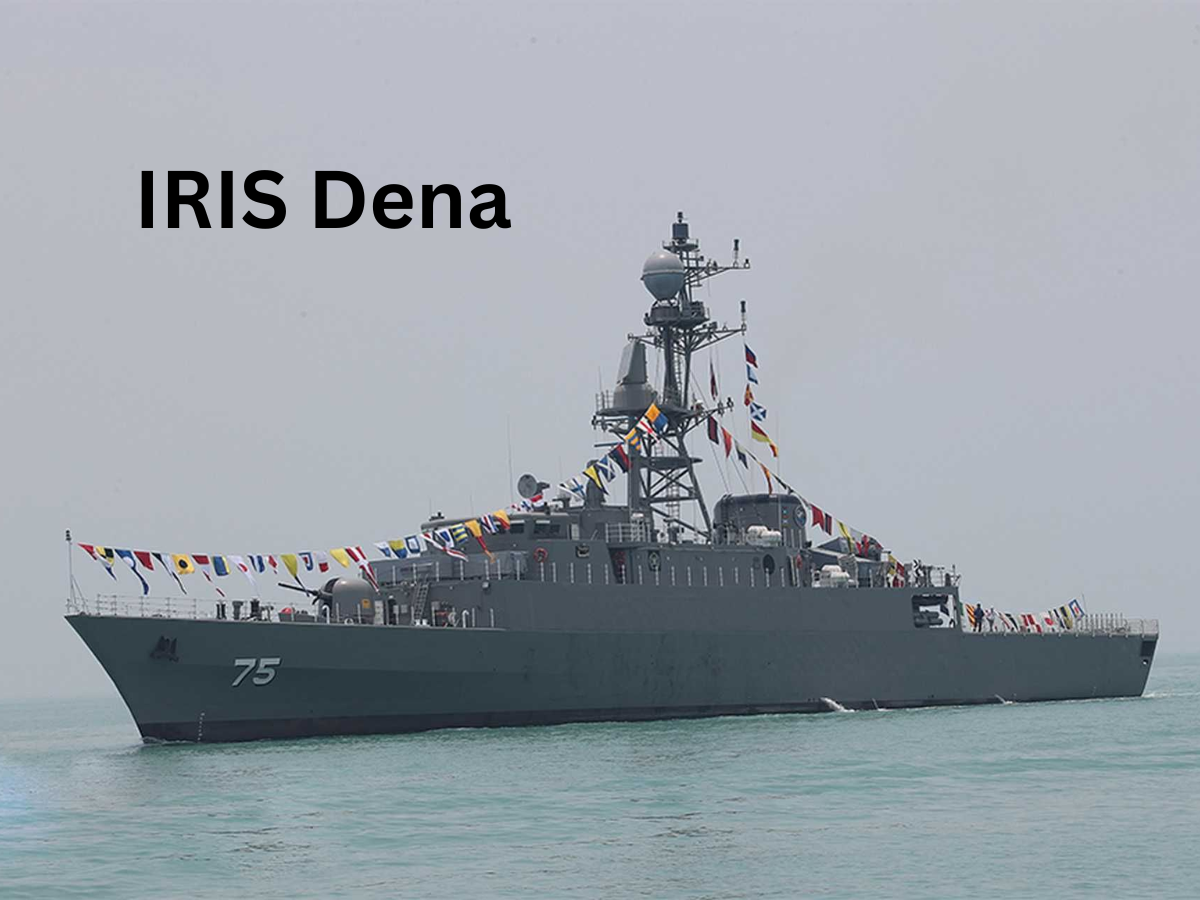
In the early morning hours of March 4, 2026, the Iranian frigate IRIS Dena was torpedoed and sunk by an American submarine approximately 40 nautical miles off the southern coast of Sri Lanka, near the city of Galle. The vessel transmitted a distress call at 0508 hours local time before sinking, prior to Sri Lankan rescue forces reaching the area. There were approximately 180 people on board. At least 87 individuals were killed, and 32 survivors were rescued and transported to the Karapitiya Teaching Hospital in Galle. The U.S. Defense Secretary Pete Hegseth confirmed the strike at a Pentagon briefing, describing it as the first American submarine sinking of an enemy vessel since World War II. The attack was part of the broader Operation Epic Fury — a joint U.S.-Israeli military campaign against Iran that had commenced days earlier.
IRIS Dena had been a participating vessel in India’s multilateral MILAN naval exercise. In the days that followed the attack, a wave of commentary emerged questioning India’s Naval responsibility — commentary that several defence and naval officials have since moved to firmly rebut.
The sea phase of the MILAN exercise had formally concluded on February 24, 2026. From the afternoon of February 25 onwards, participating vessels had departed the Visakhapatnam coast. “The moment a vessel leaves Indian shores, it ceases to be our guest and our responsibility,” a senior retired naval officer noted. “India’s maritime obligations extend to its territorial waters — not to a ship’s entire onward journey home.”
IRIS Dena’s last port of call after departing India was Hambantota, Sri Lanka. Following that, the vessel was observed operating in international waters for over eight days. Three days after the MILAN exercise concluded, the United States and Israel commenced military operations against Iran, with U.S. strikes recorded on the morning of February 28, 2026.
The position of the eventual attack on IRIS Dena fell under the jurisdiction of the Maritime Rescue Coordination Centre (MRCC) Colombo. Sri Lankan authorities responded in accordance with international rules and norms. The Indian Navy, upon learning of the incident, activated its assets to render Search and Rescue support.
“The Indian Navy’s obligation in such a scenario is limited to Search and Rescue, and only when requested,” the veteran added. “That request never came through Indian channels. What happened in international waters, in the middle of an active conflict between other nations, is simply outside our jurisdiction.”
The question of IRIS Dena’s prolonged presence in the region after departing Visakhapatnam has also been raised — specifically, whether the vessel’s eight-day loitering in international waters reflected Iran’s own operational planning in relation to U.S. Naval forces, rather than any connection to the MILAN exercise. The United States, engaged in active hostilities with Iran, could have considered IRIS Dena a belligerent vessel targetable at any location.
History offers no shortage of precedent. In 1915, the British liner RMS Lusitania was struck by a German torpedo in the open Atlantic — not in a war zone, not in contested territorial waters, but in the middle of the sea. Nearly three decades later, in October 1941, the American destroyer USS Reuben James met the same fate, sunk by a German submarine in the North Atlantic months before the United States had even formally entered the war. The ocean, in both cases, offered no immunity. Conflict, once underway, has rarely respected the invisible lines that separate one nation’s waters from the next.
Over twenty Iranian vessels have reportedly been struck by U.S. forces during the ongoing conflict, yet IRIS Dena has attracted disproportionate international commentary.
A pointed counter-narrative has also emerged: had IRIS Dena launched an offensive strike against U.S. assets during that same eight-day window, would the argument have followed that an Indian multilateral exercise had functionally served as the launch platform for an Iranian naval operation?




