
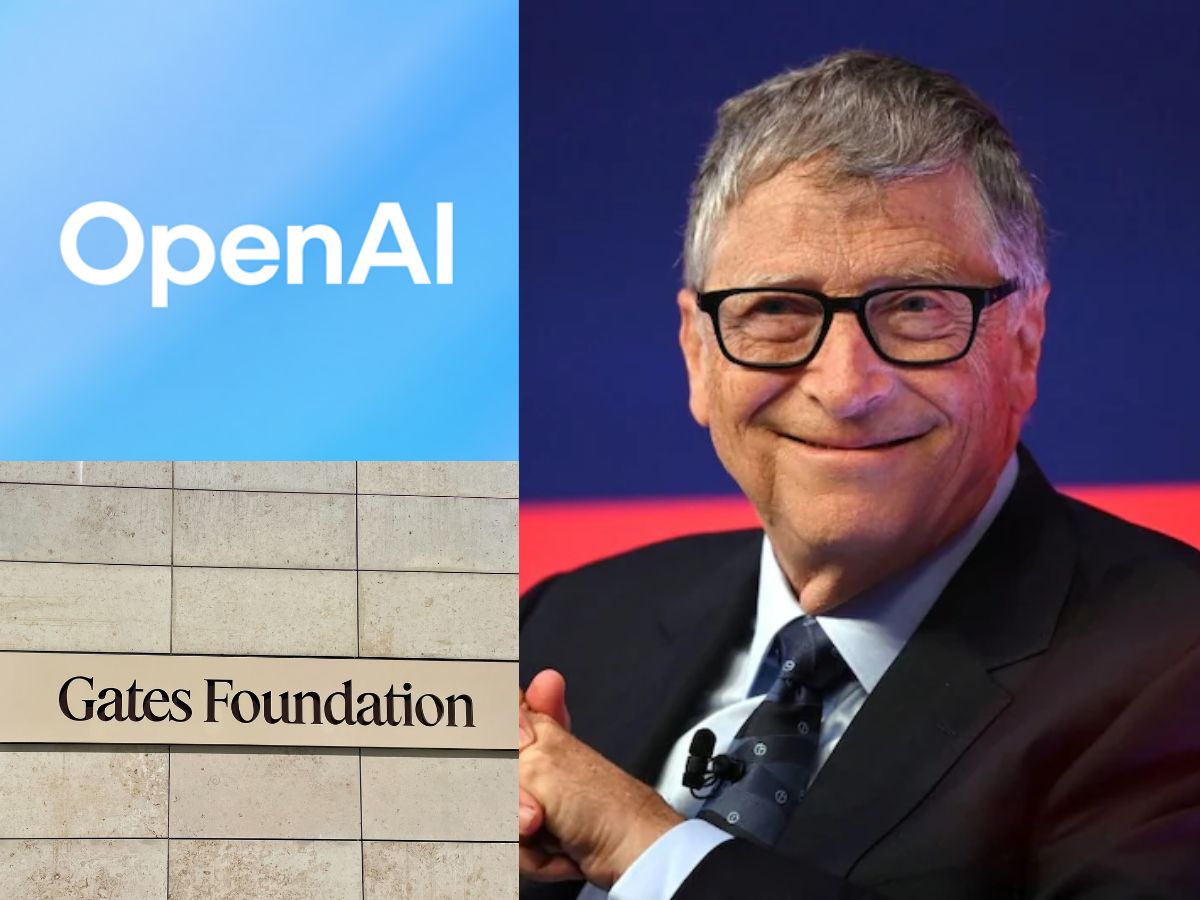
The Gates Foundation and OpenAI have launched a major new health initiative that aims to bring artificial intelligence into primary healthcare systems across Africa. The project, called Horizon1000, will use AI to support frontline health workers and improve care in underserved communities, beginning with Rwanda.
With a combined investment of & 50 million, the initiative seeks to equip 1,000 primary health clinics with advanced technology by 2028, helping nations address severe healthcare workforce shortages and infrastructure gaps.
Bill Gates & OpenAI Team Up to Strengthen African Health Systems
The Gates Foundation and OpenAI have joined hands to push artificial intelligence into frontline healthcare across Africa through the Horizon1000 initiative. Backed by a combined $50 million commitment, the partnership focuses on using AI to support overburdened health workers rather than replacing them.
Bill Gates has repeatedly highlighted AI as a transformative tool for regions struggling with staff shortages and weak health infrastructure.
OpenAI will provide technology and technical expertise, while the Gates Foundation will lead implementation alongside African governments. The collaboration aims to turn AI into a practical solution for everyday healthcare challenges, starting with Rwanda and expanding across the continent by 2028.
What is Horizon1000?
Horizon1000 is a joint effort by the Gates Foundation and OpenAI to harness the power of artificial intelligence for health care delivery in African nations. The partnership was announced as global leaders gather at international forums to explore technological solutions to major development challenges.
At its core, Horizon1000 aims to integrate AI tools into everyday health services so that shortages of trained professionals won’t stand in the way of quality care.
The initiative plans to work closely with African governments, health leaders, and clinics to tailor tools to local needs and clinical guidelines. The focus is on creating systems that assist healthcare workers, not replace them, ensuring AI complements existing staff.
Why Africa Needs AI in Health Systems?
Many African countries face dire shortages of healthcare workers. Sub-Saharan Africa alone has an estimated gap of nearly 6 million healthcare professionals — a deficit that cannot be closed quickly through training alone. This lack of personnel means that clinics are often overstretched and unable to provide consistent care, particularly in rural and hard-to-reach areas.
AI tools could help ease this burden by streamlining routine tasks like patient intake, triage, and record keeping. They can also offer trusted medical information in local languages, helping expand access to quality care even in places where human resources are scarce.
How Horizon1000 Will Work?
The partnership intends to deploy AI-powered tools in 1,000 primary health clinics and their surrounding communities by 2028. The tools will be developed to align with national clinical guidelines and prioritise accuracy, privacy, and security.
Rwanda will serve as the first pilot location, building on existing efforts such as the AI health hub established in Kigali. Beyond clinical applications, AI is also expected to support administrative workflows and help health workers focus on patient engagement rather than paperwork.
Bill Gates on AI’s Role in Health Care
Bill Gates, co-founder of Microsoft and head of the Gates Foundation, emphasised AI’s disruptive potential in global health. “AI can be a game-changer in expanding access to quality care,” Gates wrote in a blog post announcing the initiative.
He highlighted the technology’s potential not only for tackling healthcare worker shortages but also for helping solve long-standing development challenges.
Bill Gates has called AI one of the most transformative technologies ever created and has stressed the need to deploy it responsibly and equitably to benefit underserved populations.
Bill Gates & OpenAI: Perspective & Goals
OpenAI CEO Sam Altman has pointed out that AI must be used in ways that “improve people’s lives”, especially in low-resource environments. Under Horizon1000, AI systems will help healthcare teams with tasks such as patient triage, follow-up planning, referrals, and access to medical information.
These tools aim to augment human clinicians rather than replace them. OpenAI’s health efforts also include products like ChatGPT Health, introduced earlier as part of its expansion into medical and healthcare applications.
Bill Gates & OpenAI Partnership for Sustainable Impact
What sets Horizon1000 apart is its collaborative model. Rather than simply donating technology, the project plans to work with local leaders and health authorities to ensure tools are culturally relevant and contextually appropriate. This approach could serve as a blueprint for future AI-driven development programs.
The involvement of governments, medical professionals, and innovators aims to ensure that AI adoption respects community needs and health priorities, increasing the likelihood of long-term success.




