
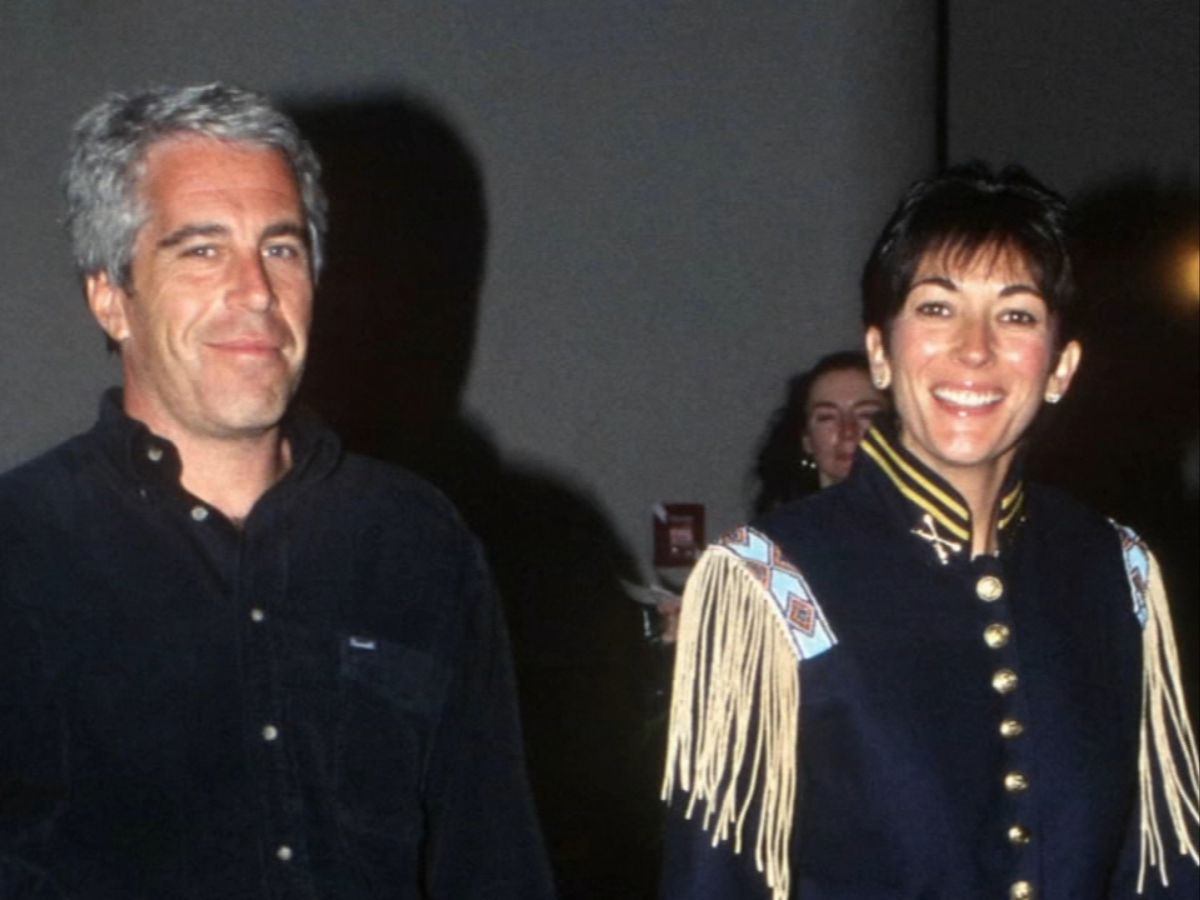
As the United States continues to grapple with the fallout of the Jeffrey Epstein scandal, attention has once again shifted to Ghislaine Maxwell, the woman convicted of helping facilitate Epstein’s abuse network.
With the release of the long-awaited Epstein files still incomplete and public pressure mounting, US lawmakers are pushing to question Maxwell directly. Her expected refusal to testify before Congress has reignited debate over transparency, accountability, and how much of the Epstein story remains untold.
Can Ghislaine Maxwell Invoke the 5th Amendment Before Congress?
Ghislaine Maxwell, the convicted associate of disgraced financier Jeffrey Epstein, is once again at the centre of political and legal scrutiny in the United States. As Congress prepares to depose Maxwell over unanswered questions surrounding Epstein’s network, her legal team has indicated she will refuse to answer substantive questions by invoking her Fifth Amendment right against self-incrimination.
The move sets up a high-stakes confrontation between lawmakers seeking transparency and a convicted offender who remains deeply entangled in one of America’s most controversial abuse scandals. The timing is especially sensitive, coming months after the US government began releasing long-awaited “Epstein Files” under a new transparency law.
What is the Fifth Amendment?
The Fifth Amendment of the US Constitution protects individuals from being forced to testify against themselves in criminal cases. By invoking it, a witness can legally refuse to answer questions that could expose them to further criminal liability.
While the Fifth Amendment is most commonly used during criminal trials, it also applies to congressional depositions. Even convicted individuals — including prisoners — retain this constitutional right if their testimony could lead to new charges, appeals complications, or legal consequences in other jurisdictions.
In Maxwell’s case, her lawyers argue that speaking openly before Congress without immunity could expose her to additional legal risks.
Why is Congress Calling Ghislaine Maxwell Now?
The House Committee on Oversight and Government Reform has summoned Maxwell as part of its broader probe into how Jeffrey Epstein was able to evade accountability for years and whether powerful individuals or institutions helped shield him.
Lawmakers want to clarify unresolved questions about Epstein’s alleged associates, financial networks, and claims of a hidden “client list.” The committee believes Maxwell, as Epstein’s closest associate, may hold crucial information that has never been fully disclosed in court.
However, Congress has refused to grant her legal immunity — a key reason her legal team says she will not cooperate.
What Did Maxwell Say in Her 2025 DOJ Interview?
Maxwell’s stance before Congress contrasts sharply with her cooperation during a 2025 interview with the US Department of Justice. During that meeting, she spoke under limited immunity granted by federal prosecutors.
In that interview, Maxwell denied the existence of any Epstein “client list” and rejected allegations of a blackmail operation. She described former US President Donald Trump as “cordial” and a “gentleman,” and denied seeing him behave inappropriately.
She also dismissed claims involving other high-profile figures, including Bill Clinton, Elon Musk, and Prince Andrew, and questioned whether Epstein’s death in jail was a suicide, suggesting it could have involved inmate violence.
Epstein Files Transparency Act & the DOJ Document Release
In November 2025, President Donald Trump signed the Epstein Files Transparency Act into law, mandating the public release of all Department of Justice records related to the Epstein investigations.
The law required the DOJ to release its files by December 19, 2025. However, by late January 2026, only a small fraction of the estimated two million documents had been made public, fueling criticism from lawmakers and victims’ advocates.
Maxwell’s potential testimony is seen as a key piece in understanding what remains hidden within those unreleased files.
Why Lawmakers Say Maxwell’s Position is ‘Inconsistent’
Democratic lawmaker Ro Khanna has questioned Maxwell’s decision to invoke the Fifth Amendment now, calling it “inconsistent” with her earlier willingness to speak to DOJ officials on similar topics.
Khanna argues that Maxwell cannot selectively cooperate when it suits her and remain silent when questioned by Congress. Her legal team, however, maintains that the political nature of congressional hearings, combined with the lack of immunity, creates unacceptable legal and security risks.
They have described the deposition as “pure political theatre.”
Where is Ghislaine Maxwell Now?
Maxwell is currently serving a 20-year prison sentence at the Federal Prison Camp in Bryan, Texas, a minimum-security facility for women. She was convicted in 2021 on multiple counts related to sex trafficking and conspiracy.
Despite her imprisonment, Maxwell continues to play a central role in public and political debates surrounding Epstein’s crimes, accountability failures, and the influence of powerful elites.
Whether she ultimately testifies or remains silent could shape the next chapter of the Epstein investigation — and determine how much of the truth still remains buried.




