
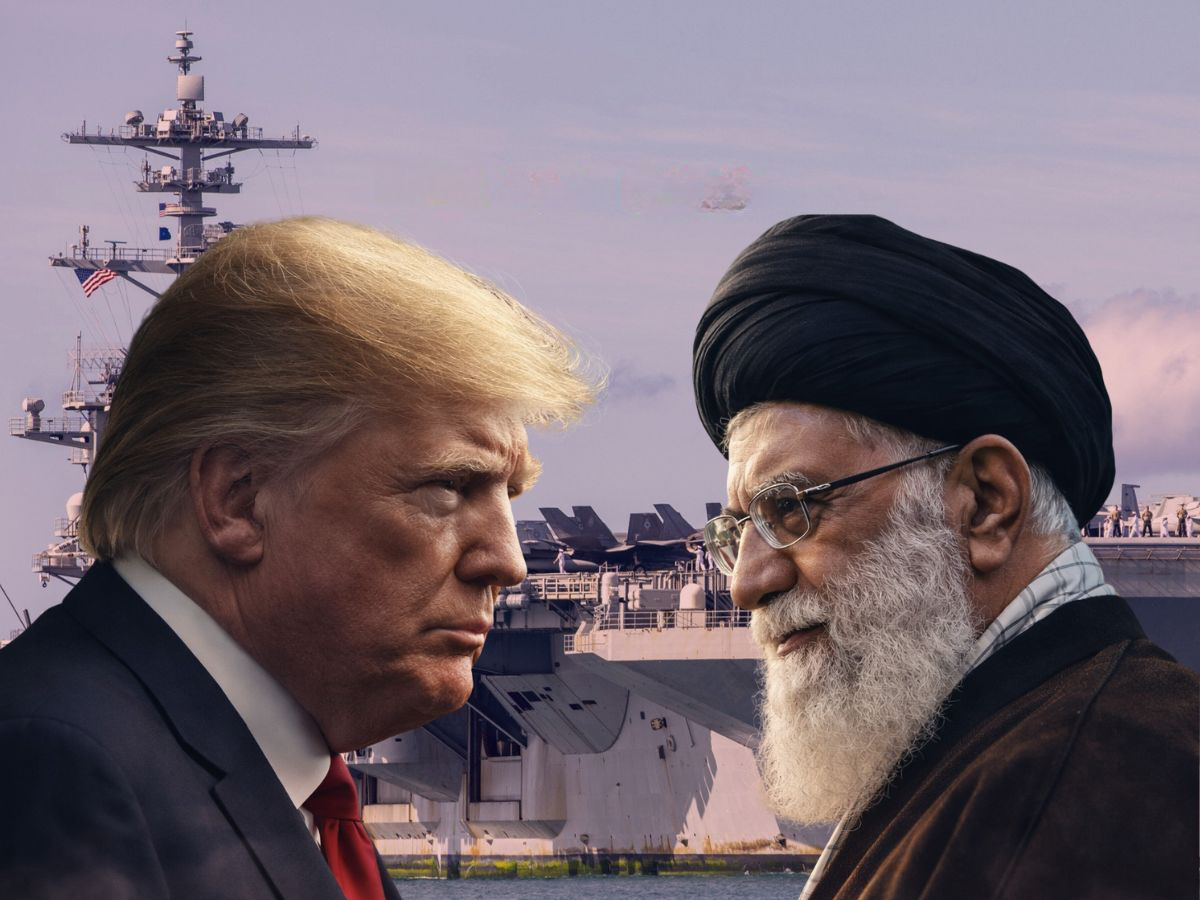
Iran-US Tension: The presence of the US Navy’s USS Abraham Lincoln aircraft carrier strike group in the Arabian Sea has reignited tensions in the region, reigniting questions about the possibility of Iran posing a threat to a US aircraft carrier and the Lincoln is a Nimitz-class nuclear-powered aircraft carrier with the capacity to carry 60 F/A-18 Super Hornets and provide air support for airstrikes in the region. On paper, the US has a clear advantage in terms of naval power, but Iran’s missile capabilities and geography make the situation more complex. Iran’s missile capabilities are estimated to be able to force US assets to use significant defensive resources, although the chances of hitting a moving aircraft carrier are very low.
What Targeting Challenges Does Iran Face Against Abraham Lincoln?
Aircraft carriers are always difficult to target and a Nimitz-class aircraft carrier has the ability to move at speeds of over 25 knots, with frequent changes in direction to avoid any predictable patterns. This, coupled with the fact that the carrier is always escorted by cruisers and destroyers, makes it extremely difficult to target. It has been observed that even hypersonic missiles, which have the ability to fly at speeds above Mach 5, need real-time targeting information to strike a moving target, which Iran does not have.
Iran’s Weak Air Force, Strong Missile Arsenal
Iran’s air force is small and old, intentionally so due to sanctions that have reduced its fighting force to a fraction of what a single US carrier group could project. To compensate, Iran has invested heavily in missiles, developing one of the most diverse missile forces in the world. This includes short-, medium- and intermediate-range ballistic missiles, cruise missiles and more recently, hypersonic missiles such as the Fattah-2 where iran has even repurposed some ballistic missiles for anti-ship attacks, which appeared obliquely in 2024 when Houthi forces attacked ships in the Gulf of Aden with drones and missiles provided by Iran. Overall, the arsenal is deadly, but requires good targeting information to strike true.
The Carrier’s Shield: Layered US Missile Defence
The Abraham Lincoln operates with a sophisticated multi-tiered missile defense system and the carrier strike group is organized around Aegis-armed cruisers and destroyers capable of detecting, tracking and destroying incoming threats well out at sea. The outer belts employ electronic warfare to jam incoming missiles while the inner rings depend on Standard Missile family members such as the RIM-174 SM-6 to attack targets at long range. Certain missiles also possess anti-ballistic capabilities, making this a true multi-tiered defense system against a broad range of threats where experts estimate that a single strike group can destroy dozens of incoming missiles or drones simultaneously, significantly reducing the chances of a successful attack.
How Iran Might Attempt a Strike
If Iran chooses to attack, it will probably rely on saturation attacks rather than precision strikes imagine hundreds of Shahed-136 drones launched in waves, combined with ballistic and cruise missiles to flood and saturate US defenses. Hypersonic missiles will only be used after the initial waves of attacks have weakened the interceptors and the operational environment is also important: the carrier will likely avoid the Persian Gulf, where the waters are too confined and Iranian missiles have the greatest effect. The Arabian Sea, on the other hand, offers more space to operate and partial protection from shore-based radar.
Capability Versus Reality
In theory, Iran possesses weapons capable of threatening even the world’s most powerful naval force. In reality, an attack on a US carrier is very difficult. The Lincoln is more than a ship; it is a “moving fortress,” with its speed, multiple defenses, electronic warfare capabilities, and strict secrecy integrated into a single system. According to experts, while Iranian missiles may cause complications and increase the costs for the US Navy, a real attack is not within Iranian capabilities at this point in time. Deterrence is still based on constant monitoring, immediate targeting, and the advantage of a first strike.
The Critical Weakness: Targeting the Carrier
The actual problem Iran faces is not the missiles but the difficulty of hitting a moving target. Hypersonic missiles are useless without a near-real-time satellite system and command and control structures in place. Experts argue that unless Iran Bridges this intelligence gap, an attack on the Lincoln would be largely symbolic. The irony is clear: brute missile force is not sufficient; in modern naval warfare, sensing and accuracy are much more important.




