
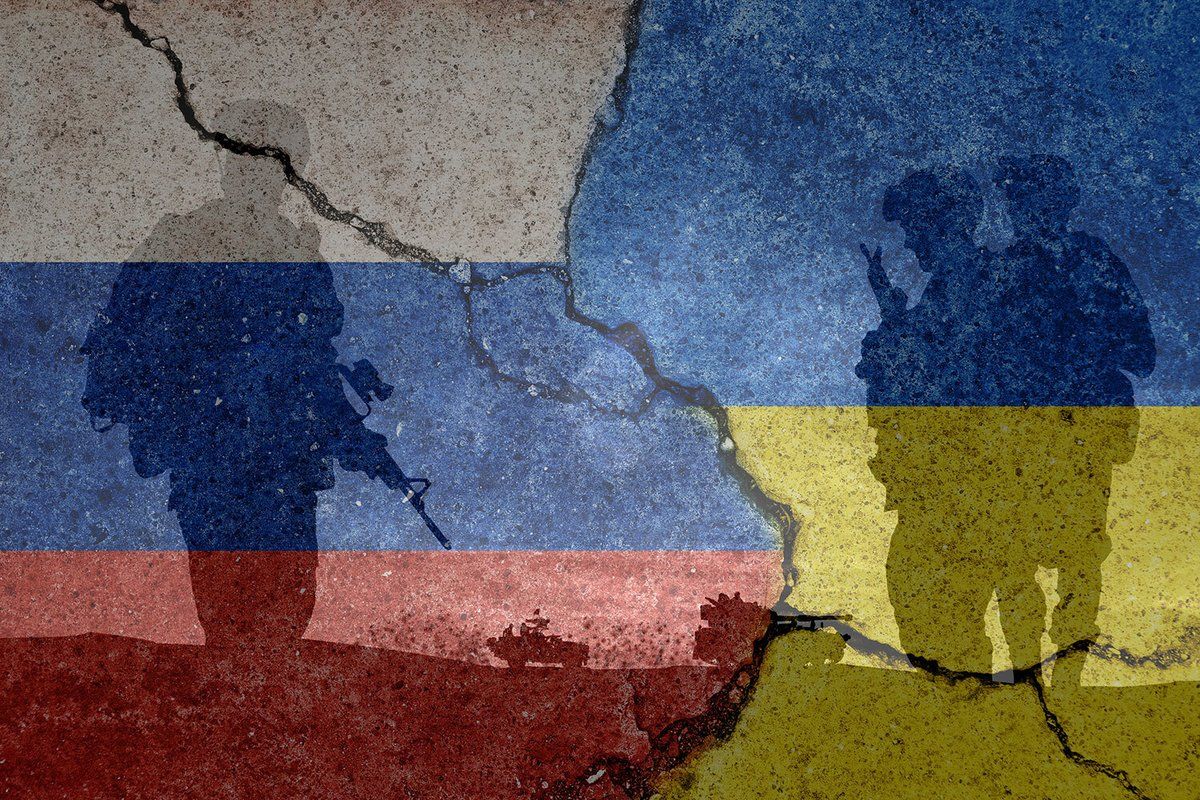
NEW DELHI: The Russia Ukraine war approaches its four-year mark but diplomatic efforts to end it have so far failed to produce any tangible results. The Trump administration has been relentlessly pushing for a settlement. On the campaign trail, Trump had said on dozens of occasions, in an entirely serious tone, manner and context, that he would end the war in Ukraine either within 24 hours of his return to the White House or even sooner than that!.
However, despite Trump’s efforts, ending the Russia Ukraine war is proving to be very difficult, primarily because neither side is willing to end the war on terms acceptable to the other. The conflict has settled into a prolonged war of attrition with complex military, political, and historical factors preventing a resolution. Russia demands that Ukraine give up occupied territories and renounce its aspirations to join NATO, while Ukraine insists on the full restoration of its territorial integrity (including Crimea) and has stated that it will not accept limits on its sovereignty or right to self-defence. Neither side has achieved a decisive military victory, leading to a strategic deadlock.
In November 2025, a 28-Point Plan was drafted by US envoy Steve Witkoff and Kirill Dmitriev, a Russian businessman who was hand-picked by President Putin to be a negotiator with the Donald Trump administration for negotiating an end to the Russia-Ukraine War. Among other things, this plan stipulated that: 1) Ukraine would cede Crimea, Luhansk, and Donetsk (including areas not currently occupied) to Russia. 2) Operations in Kherson and Zaporizhzhia would be frozen at the current “line of contact”. 3) Ukraine would be banned from NATO membership and required to enshrine this in its constitution. NATO would also agree not to expand further East. 4) Ukraine’s active military would be limited to 600,000 personnel. 5) Russia would be readmitted to the G8, and global sanctions would be lifted in stages.
This version was widely criticized by Ukraine and the EU as being overly favourable to Moscow. A Revised 20-Point Plan was unveiled recently by Ukrainian President Zelenskyy on December 24, 2025, after intense negotiations with the US and European allies to address previous concerns. These are some highlights of the revised plan: 1) It does not grant legal recognition of occupied land as Russian. Instead, it proposes demilitarized buffer zones and a “free economic zone” in parts of the Donbas still under Ukrainian control. 2) The explicit ban on NATO membership was removed, leaving the decision to current alliance members. 3) The cap on the Ukrainian army was raised to 800,000 personnel. 4) The United States, NATO, and European signatory states would provide Ukraine with security guarantees that “mirror” NATO’s Article 5 collective defence clause. This framework mandates a coordinated military response and the immediate reinstatement of global sanctions against Russia if it invades Ukraine again. 5) It proposes joint US-Ukraine-Russia management of the Zaporizhzhia Nuclear Power Plant (50/50 electricity distribution) and unrestricted access to the Dnipro River and Black Sea for commerce.
While Russia has not officially rejected the latest 20-point revised draft peace plan, it has expressed strong scepticism. Russian Foreign Minister Sergei Lavrov has indicated that Moscow prefers the original 28-point “Trump plan” and will resist deviations from that version. President Putin maintains that any deal must reflect “realities on the ground” and requires the withdrawal of Ukrainian forces from territories Russia currently claims. It is unlikely that the revised draft will be accepted by Russia because it restores security guarantees for Kyiv and removes several concessions Russia originally sought.
A Christmas truce proposed by several parties including Germany, the US, Ukraine and Pope Leo XIV was rejected by Moscow. President Putin’s press secretary Dmitry Peskov said, “We do not want a truce just to give Ukraine a breather and prepare for continuing the war”. Moscow said that it seeks a “comprehensive peace deal” and a “long term resolution” rather than a temporary ceasefire.
Russian and Ukrainian attacks on each other are continuing even as President Trump is making efforts to bring this war to an end. While diplomatic efforts to reach a peace settlement have intensified, active combat, heavy shelling, and long-range drone strikes persist across the front lines and deep into both countries. Both Kyiv and Moscow have stepped up their drone and missile attacks. On December 23, 2025, Russia reportedly launched 675 aerial attacks, firing over 635 drones and 38 missiles. Ukraine claimed shooting down 621 of them, including almost all the cruise missiles. The strikes primarily targeted the Ukrainian energy grid and port infrastructure, particularly in Odessa, causing emergency power outages for hundreds of thousands of people.
Russian forces reportedly continued attacks on Christmas Day, including heavy shelling of a food market in Kherson and drone strikes on residential buildings in Chernihiv. Russian forces have captured the strategic “fortress” town of Siversk in the Donetsk region after heavy fighting and have maintained a slow but steady advance toward the “fortress belt” cities of Sloviansk and Kramatorsk.
Russia currently occupies approximately 20% of Ukrainian territory. Ukraine, too, continues to target Russian energy and military infrastructure. On December 24, 2025, a Ukrainian drone reportedly hit a petrochemical plant in Stavropol, southern Russia, sparking a large fire. Next day, Ukraine launched British Storm Shadow missiles and its domestically produced long-range drones to strike the Novoshakhtinsk oil refinery in Russia’s Rostov region. The refinery was one of the biggest oil product suppliers in southern Russia and was supplying diesel and jet fuel to the Russian troops fighting in Ukraine. The Ukrainian military authorities also said that Ukrainian troops hit a military airfield in the Russian city of Maikop in the republic of Adygea in the North Caucasus region. Russia also claimed to have downed nearly 200 Ukrainian drones, including some targeting Moscow, in late December.
Thus, both Russia and Ukraine have transitioned to a “war of attrition” strategy, each aggressively attempting to exhaust the other’s financial, industrial, and human resources to force a favourable peace settlement. Russia seeks to bankrupt Ukraine by destroying its capacity to function as a modern state, forcing reliance on increasingly strained Western aid, while Ukraine’s objective is to make the war too expensive for Russia to sustain by targeting its economic lifeblood and technological edge.
Europe’s response to the Russia-Ukraine war has been a multipronged strategy involving unprecedented military aid, massive economic sanctions, and long-term financial commitments. By December 2025, the European Union (EU) and its member states have provided over €193 billion in total assistance. Out of this amount, approximately €103.3 billion is for financial, economic, and humanitarian support, and €69.3 billion for military aid. In December 2025, EU leaders agreed to a €90 billion loan for Ukraine for 2026-2027, backed by the EU budget.
The EU has adopted 19 packages of sanctions against Russia. The latest 19th package (October 2025) includes a ban on Russian liquefied natural gas (LNG) imports by 2027 and targets the “shadow fleet” of oil tankers. Approximately €210 billion in Russian Central Bank assets remain frozen in the EU; profits from these assets are being used to fund Ukraine’s self-defence and reconstruction.
Russian President Vladimir Putin’s authoritarian rule is tied to a perceived victory in the conflict, making retreat or defeat a significant political risk for him personally. Russia has adapted its economy to the war effort, while Ukraine has shown remarkable resilience with Western support. Ceding territory is politically and militarily unacceptable for Ukraine, as it could put Russia in a better position to restart an invasion later.
Summing up, as 2025 draws to a close, diplomatic efforts to end the Russia-Ukraine conflict are at their most intensive stage since the full-scale invasion began, though a final breakthrough remains elusive. The prognosis for a near-term resolution is mixed, characterized by “slow but steady progress” in talks between the US and Russia, but significant deadlock on core territorial and security issues. Going by the current state of play, a decisive outcome on the battlefield, or an escalation in the costs of continuing the fighting for one or both sides, will likely be necessary before a resolution can be found.
Prabhu Dayal is a retired Indian ambassador.




