
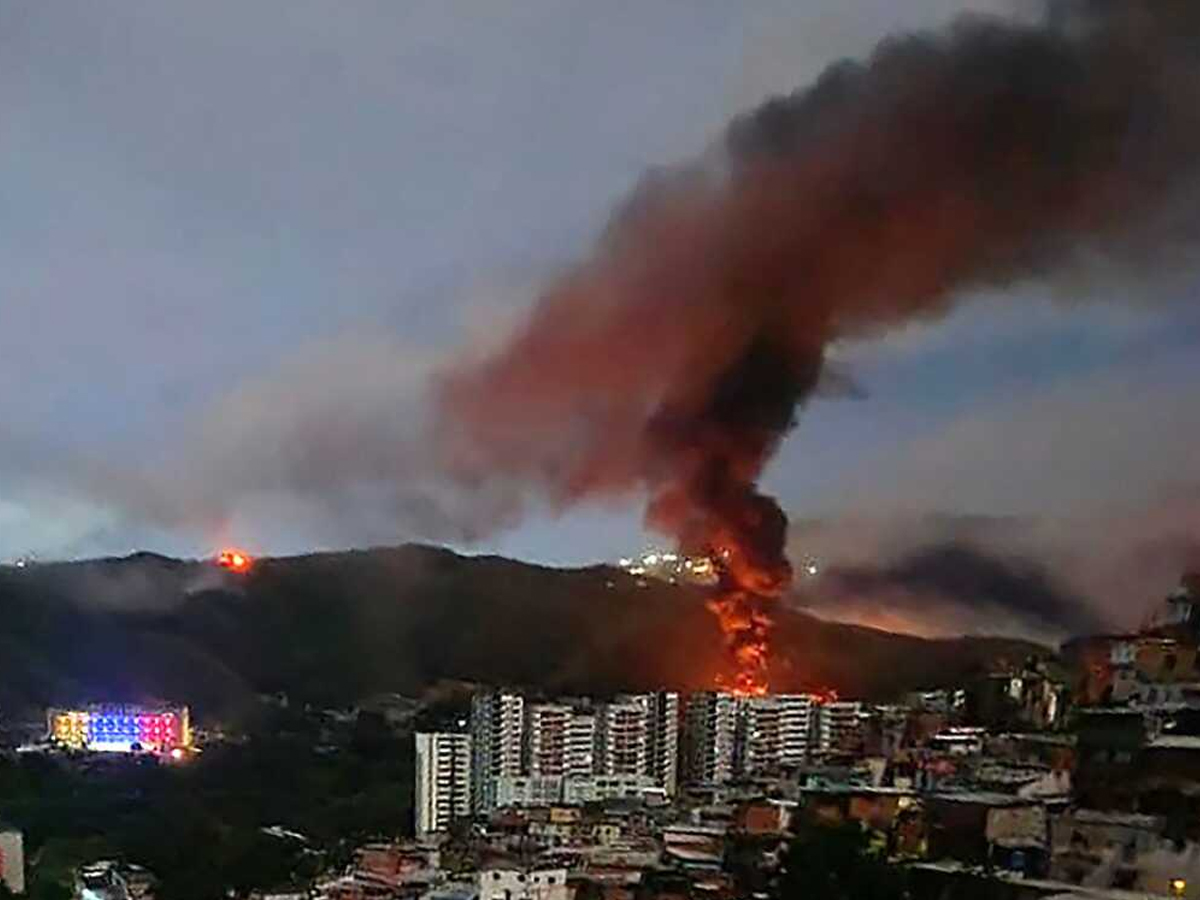
The US President Donald Trump has suggested that American cyber or advanced technical capabilities may have played a role in plunging parts of Caracas into darkness during the high-risk operation that led to the capture of Venezuelan President Nicolás Maduro. The remarks, made publicly, have drawn global attention because the United States rarely acknowledges the use of cyber power against another country.
Speaking at a press conference at Mar-a-Lago, Trump hinted that the blackout was not accidental. “It was dark, the lights of Caracas were largely turned off due to a certain expertise that we have, it was dark, and it was deadly,” he said, while describing how U.S. forces entered the Venezuelan capital during the mission.
Did the US Use Cyberattacks to Cut Power in Caracas?
Trump did not clearly state whether the blackout resulted from a cyberattack or a physical strike on infrastructure. However, his reference to “expertise” immediately fueled speculation about the possible use of offensive cyber tools. Such operations typically remain classified, making public comments like these unusual and controversial.
During the same briefing, Gen. Dan Caine, Chairman of the Joint Chiefs of Staff, said that U.S. Cyber Command, U.S. Space Command, and combatant commands worked together and “began layering different effects” to clear a path for U.S. forces entering Venezuela. He did not explain what those “effects” involved, adding to the uncertainty surrounding the operation.
Caracas Blackout During Military Operation Raises Questions
Internet monitoring groups reported disruptions to internet connectivity in Caracas during the power outages that coincided with the operation. Experts say that if cyber tools were involved, they were likely highly targeted, designed to limit wider civilian impact while disrupting key systems during the mission.
The blackout has revived concerns about the vulnerability of Venezuela’s already fragile power infrastructure. In recent years, the country has faced repeated outages, some blamed on mismanagement and others on alleged foreign interference.
US Cyber Warfare and Venezuela: A Growing Pattern?
The latest incident follows earlier accusations by Venezuela’s state oil company, PDVSA, which previously claimed that cyberattacks disrupted its operations. While the U.S. government has not publicly confirmed involvement in those cases, Trump’s recent comments have added weight to suspicions that cyber operations may be playing a growing role in U.S. strategy toward Venezuela.
If confirmed, this would mark one of the most visible uses of U.S. cyber power in a real-world military operation. Analysts note that cyber tools can disable communications, radar, and power grids without large-scale physical destruction, offering tactical advantages during fast-moving missions.
Global Implications of Admitting Cyber Operations
Trump’s remarks have triggered debate among security experts about whether publicly hinting at cyber involvement sets a risky precedent. Cyber warfare operates in a grey zone of international law, and openly acknowledging such actions could encourage rivals to justify similar tactics.
The operation against Maduro shows how modern conflicts increasingly blend cyber, space, and conventional military capabilities. As nations invest more heavily in digital warfare, the line between cyber operations and traditional combat continues to blur.
For now, U.S. officials have offered no further details. Whether the Caracas blackout came from cyberattacks, physical strikes, or a combination of both remains unclear. What is certain is that Trump’s comments have pushed cyber warfare into the public spotlight, raising fresh questions about how future military operations will unfold in an increasingly connected world.




