
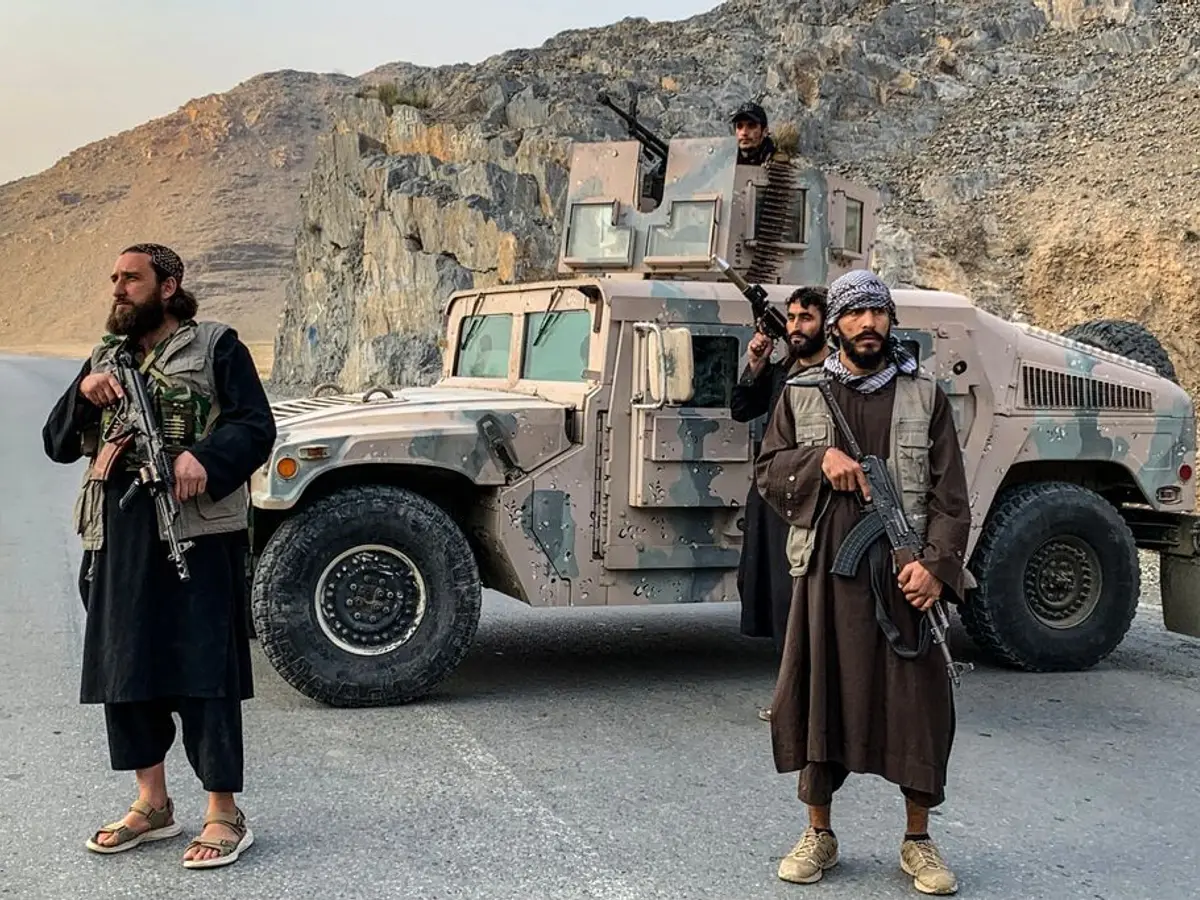
MUMBAI: The borderlands of empire have always been laboratories of human folly, and the Durand Line separating Afghanistan from Pakistan stands as no exception—like scar tissue across geography, marking where empire experiment with boundaries while peoples bear consequences. Drawn by a British civil servant in 1893 with a ruler across terrain he never walked, this frontier was designed to separate what London deemed “governable” from “ungovernable”; it failed then as now because it neglected that Pashtun tribes on both sides share blood, language, faith, and memory of resisting external imposition. When the United States withdrew chaotically from Kabul in August 2021, Islamabad believed decades of Taliban investment would yield strategic depth against India and suppress Tehrik-e-Taliban Pakistan bleeding western regions for years. What followed instead reveals how nations, like individuals, are destroyed not by enemies but by assumptions—by invisible architectures of what we believe true.
Pakistan’s intelligence services spent twenty years nurturing Taliban leadership in Quetta and Peshawar safe houses—providing medical facilities, logistical corridors, and diplomatic cover—transforming disparate warlords into cohesive movement. The calculation was straightforward: yet layered beneath gratitude would translate into compliance, friendly Kabul government would deny India influence, crucially eliminating TTP sanctuary. What strategists failed to appreciate was Taliban transformation: no longer 1990s proxies but superpower-defeating movement with independent revenue streams and diverse international relationships. More fundamentally, Pakistani planners committed mirror-imaging error—assuming rational state-centric actors prioritizing ideology over ideological solidarity, not recognizing TTP as ideological kin in sacred Islamic project.
The first cracks appeared after Taliban capture of Kabul, when Pakistani forces continued Durand Line fencing—considered essential for border management—but Taliban units resisted physically, tearing down barriers and engaging in armed confrontations, transforming practical cooperation into ideological confrontation. This was not merely tactical friction but a statement of principle: like ripples from a stone thrown into water, implications spread far beyond immediate contact points. For the Taliban, the Durand Line represents colonialism’s illegitimate inheritance—a wound upon Pashtun nation that no Afghan government could acknowledge without sacrificing nationalist credentials; for Pakistan, it is internationally recognized border essential to state sovereignty. Here lay foundational contradiction: two governments representing overlapping populations with incompatible understandings of where authority ends and begins—each looking through their own lens, seeing only what they expected.
Security dilemma unfolded with Greek tragedy inevitability: each action taken by one side to increase security decreased the other’s, creating spiral of mutual hostility neither desired but could escape. Pakistan demanded Kabul suppress TTP or permit operations; Taliban refused, viewing TTP as legitimate resistance against apostate Pakistani state. Airstrikes in Khost and Paktika intended to demonstrate resolve instead killed civilians fueling Afghan nationalism—each violation reinforcing Taliban narrative of Pakistan as imperial heir. The relationship reached “open war,” yet this is war without declaration or clear objectives, addressing symptoms while ignoring structural disease—like treating fever without curing infection.
The philosophical dimension of this conflict reveals limitations of instrumental rationality in international relations. Pakistan approached Taliban through utilitarian calculus; support equals influence—market logic applied to identity and faith, fluent to economists but less understood by poets. Yet Taliban operate within deontological framework where duties are absolute—bound by principles transcending advantage calculations. Their TTP bond is categorical, not transactional; when strategists lament Taliban’s failure to “control” TTP, they misunderstand the relationship. Taliban recognize TTP as legitimate jihad against Pakistani governance deemed illegitimate—seeing each operation as step toward sacred horizon. Though not purely ideological, they balance interests and sometimes restrain TTP under pressure—but assuming conversion to conventional security partner was always fantastical, confusing temporary alignment with permanent identity.
Regional implications extend far beyond immediate theatre. China, invested in both states viewing Central Asian stability as essential for Belt and Road, faces uncomfortable position of backing clients now undermining each other—Hoegardeener nurturing intertwining plants competing for sunlight. Beijing’s mediation failed due to some mistaken assumption that economic incentives can override sovereignty disagreements—a belief material progress resolves meaning questions. Iran watches border conflict with wary attention knowing fire in adjoining house threatens all; India observes rival bleeding aware instability spills across Hindu Kush unpredictably. United States maintains over-the-horizon counterterrorism acknowledging twenty-year intervention only displaced Taliban temporarily, creating conditions for more durable conflict.
What makes this tragedy particularly poignant is the mutual destruction it entails. Pakistan, already struggling with economic crisis, political instability, and the lingering trauma of its own internal wars, cannot afford a permanent state of low-intensity conflict along its longest border; the resources diverted to western defence are resources unavailable for development, for education, for addressing the climate crisis that threatens the Indus basin—each rupee spent on bullets is a rupee not spent on building schools. Afghanistan, for all the Taliban’s triumphalist rhetoric, remains one of the world’s poorest states, dependent on humanitarian aid that becomes harder to deliver as conflict escalates, and vulnerable to the Islamic State’s Khorasan branch which thrives in the spaces that open when state-to-state conflict disrupts counterterrorism cooperation—a fragile ecosystem where every disturbance creates opportunities for predators. The Pashtun populations on both sides of the Durand Line, who have suffered every previous iteration of the “Great Game,” find themselves in their homeland, suffer again as the shells fall and the drones hum overhead; they are the ultimate victims of a strategic obstruction, the “strategic depth” that Pakistan sought and the “Islamic emirate” that the Taliban established, both of which require their territory and their sons but offer them only continued dispossession—their lives becoming chess pieces in games played far beyond their understanding.
There is no obvious exit from this labyrinth. The mediators who have attempted intervention, Qatar and Turkey most prominently, have succeeded only in achieving temporary ceasefires that collapse within weeks because they address the manifestations of conflict rather than its roots—like gardeners trimming branches without examining the soil beneath. The root lies in the irreconcilable claims of two states to the same contested space, in the ideological solidarity between movements that Pakistan considered separable but which experience themselves as unified, and in the fundamental error of imagining that gratitude is a reliable currency in international relations—a belief that favours create obligations where none exist. Pakistan’s declaration of “open war” in February 2026 does not represent a solution but an admission of strategic bankruptcy, the recognition that two decades of investment have purchased not influence but enmity; the airstrikes will continue, the border will periodically close and reopen, the TTP will attack and retreat, and the Pashtun villagers will bury their dead and wait for a peace that no one currently in power seems capable of imagining, let alone constructing—their hopes deferred like seeds planted on barren ground.
The lesson, if there is one, concerns the limits of external manipulation in societies whose complexities resist reduction to strategic utility. Pakistan learned what the United States learned before it and what the Soviet Union learned before that: Afghanistan is not a prize to be won but a graveyard of ambitions that assumed the malleability of others—like travellers who mistake maps for territories. The Durand Line, that arbitrary inheritance of empire, continues to generate the violence it was designed to contain and the tribes who live in its shadow continue their historical role as the witnesses and victims of great powers who come with maps and leave with coffins, who speak of friendship and make war, who promise stability and deliver its opposite. The borderlands of empire remain what they have always been: the place where the logic of states meets the reality of peoples, and where the former is invariably humbled by the latter—where empires come to test their theories against human nature itself.
Brijesh Singh is a senior IPS officer and an author (ig: brijeshsingh on X). His latest book on ancient India, “The Cloud Chariot” (Penguin) is out on stands. Views are personal.




