Emirates flight EK35 diverted to Edinburgh after declaring a Squawk 7700 emergency near Newcastle, amid recent Lufthansa emergency landings in Europe.
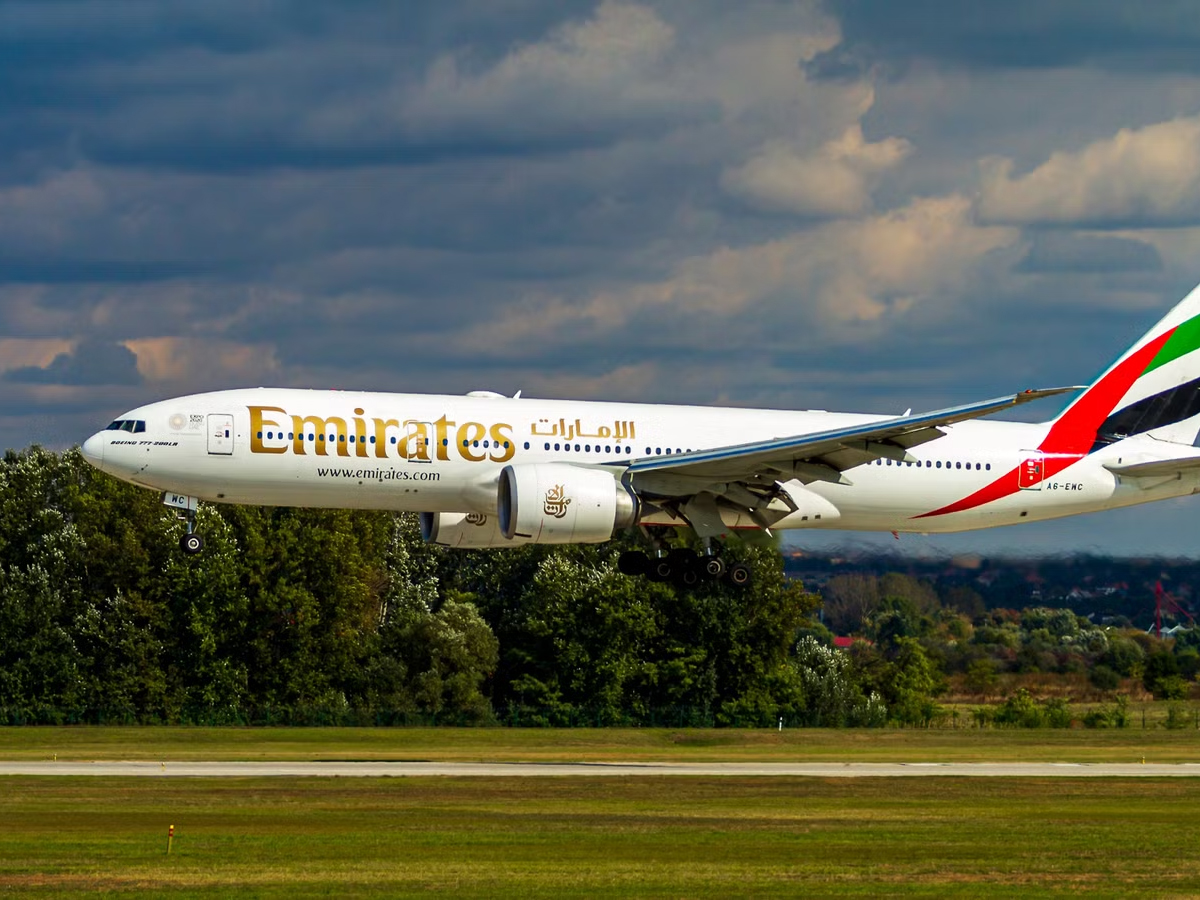
Squawk 7700 is a universal emergency code used by pilots to alert air traffic control that the aircraft requires immediate attention. (File Photo)
An Emirates flight travelling from Dubai to the UK was forced to divert and make an unscheduled landing at Edinburgh Airport on Monday morning after declaring an in-flight emergency. The aircraft, operating as Flight EK35, was originally scheduled to land at Newcastle Airport at 11.20 am on January 27, but did not complete its planned arrival.
Flight tracking data shows that the Boeing 777 spent several minutes circling above Newcastle and Sunderland before the crew triggered an emergency alert. Soon after, the pilot issued a Squawk 7700 signal, an internationally recognised code used by aircraft to declare a general emergency.
According to data from FlightRadar24, the aircraft attempted to land at Newcastle Airport twice. Both attempts ended in a “go-around,” a standard aviation safety procedure in which pilots abort a landing and climb back into the air to reassess conditions.
After the second failed attempt, the flight changed course and headed north, eventually landing safely at Edinburgh Airport. Aviation experts note that go-arounds can occur for several reasons, including technical checks, weather concerns, or runway conditions.
Squawk 7700 is a universal emergency code used by pilots to alert air traffic control that the aircraft requires immediate attention. It does not specify the nature of the problem but allows ground authorities to activate emergency response protocols quickly.
This code can be used for a range of issues, from mechanical faults to medical emergencies on board. In this case, authorities did not disclose the specific reason for the Emirates diversion.
Newcastle Airport declined to comment on the incident. Edinburgh Airport, however, confirmed the safe diversion.
A spokesperson said, "We can confirm that there was a diverted plane that declared an emergency. It landed safely with no issues."
Emirates was also approached for a statement, but no official response had been issued at the time of reporting.
The Emirates diversion comes amid a series of recent emergency alerts involving Lufthansa aircraft across Europe.
Earlier this month, Lufthansa Flight LH2249, travelling from Lyon to Munich, declared a Squawk 7700 shortly after take-off due to a reported landing gear issue. The aircraft initially circled near Lyon before diverting to Geneva, where it landed safely.
Just days before that incident, another Lufthansa flight, LH2473, bound for Munich from London Heathrow, declared an emergency moments after departure. The Airbus A320neo climbed to around 14,000 feet before turning back toward Heathrow.
Lufthansa later confirmed the reason for the return, stating, "The flight had to return to LHR due to technical issues."
Aviation analysts say that while multiple emergency alerts in a short period can raise concern, they also highlight how modern safety systems work as intended. Squawk 7700 alerts allow pilots and air traffic controllers to prioritise safety over schedules.
All aircraft involved in the recent incidents landed safely, with no injuries reported.
Emergency diversions, while stressful for travellers, are a normal part of aviation safety protocols. Airlines train crews extensively to handle such situations, and airports maintain constant readiness for emergency landings.
In the case of Flight EK35, the diversion ensured a safe outcome for everyone on board.
