
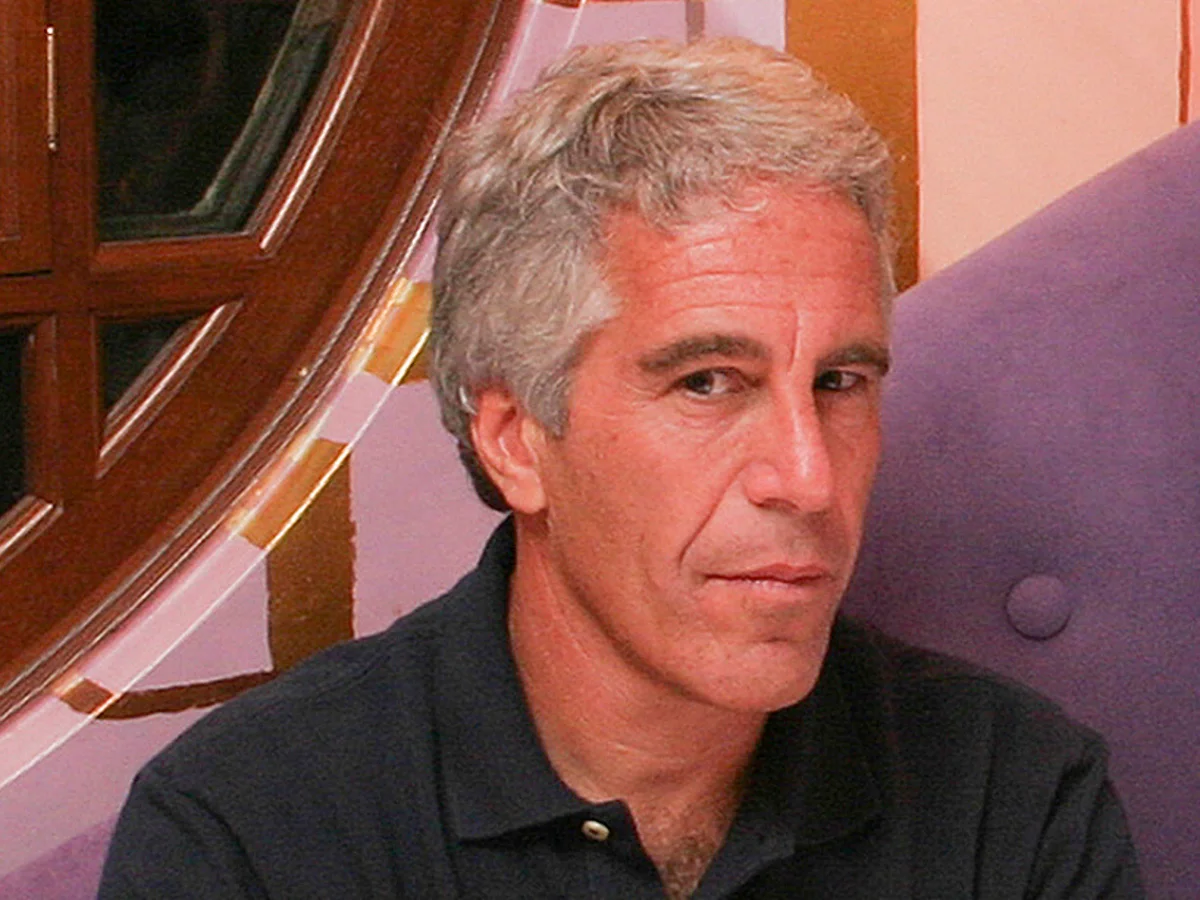
NEW DELHI: More than three million files related to disgraced financier and convicted paedophile Jeffrey Epstein have recently been released by the US Department of Justice (DOJ). The sheer volume of material has drawn global attention, not merely because of the criminality involved but because of the powerful names that surface repeatedly in the disclosures. The files shed light on the intersection of power, money and sex in Western politics and society, exposing how influence and privilege often intersect with moral compromise.
The list of Epstein’s contacts in the United States includes two Presidents, senior politicians, business magnates and intellectuals representing a wide ideological spectrum. The breadth of these connections underscores the extent of Epstein’s social network and the web of relationships that enabled him to operate within elite circles for years. The disclosures suggest that his access was not incidental but deeply embedded in structures of influence. Although some names had surfaced earlier through media investigations and court proceedings, the latest files provide additional detail about a network that extended across the Atlantic.
Top politicians, diplomats, powerful businessmen, billionaires and even members of royal families appear in correspondence, travel logs and associated records. The exchanges between Epstein and several high-profile figures reveal a culture of familiarity and access that reflects poorly on sections of the Western establishment. Beyond documenting specific acts or associations, the files compel a broader examination of the moral architecture of modern Western society. Nations that frequently position themselves as arbiters of global norms and democratic values now face uncomfortable scrutiny over the conduct of individuals within their own elite circles. While the reputations of those named may suffer varying degrees of damage, the larger issue lies in what the scale and spectrum of these revelations signify about power structures and accountability.
THE WHO’S WHO
Jeffrey Epstein, a convicted sex offender who died in a New York prison in 2019 while awaiting trial on sex trafficking charges, reportedly cultivated close associations with President Donald Trump and former President Bill Clinton. The documents indicate that both had interactions with the disgraced financier during different periods of their public lives. Epstein, accused of sexually exploiting underage girls, had publicly described his acquaintance with Trump, and photographs from the 1990s show them together at social gatherings. Trump has stated that he cut ties with Epstein long before the latter’s final arrest. Nevertheless, his name appears in the broader set of disclosures. Epstein also maintained contact with individuals within Trump’s political circle, reflecting his access to influential networks at the highest levels of American power.
Epstein’s association with Bill Clinton dates back to the early 1990s. During Clinton’s presidency, Epstein visited the White House on multiple occasions and maintained contact with individuals within the administration. After leaving office, Clinton travelled on Epstein’s private aircraft for charitable engagements abroad. While such travel was presented as philanthropic in nature, the association has drawn renewed scrutiny in light of the recently released files.
Another disclosure concerns Epstein’s interactions with the renowned left-wing thinker and author Noam Chomsky. Emails show that Chomsky corresponded with Epstein during a period when public allegations against him were intensifying. In one message, Chomsky advised that ignoring the media storm might be the best course of action and referred to what he described as a climate of hysteria surrounding accusations. The exchange took place years after Epstein had pleaded guilty in 2008 to soliciting an underage girl for prostitution, a conviction that had already cast a long shadow over his reputation.
Among other prominent names mentioned in connection with Epstein are US Commerce Secretary Howard Lutnick, who has acknowledged visiting Epstein’s private island in the past, and Bill Gates, who has stated that his interactions with Epstein were limited to meetings and dinners and that he did not visit the island. While such acknowledgments do not necessarily imply wrongdoing, they reinforce the extraordinary range of Epstein’s social reach.
The repercussions of the files have not been confined to the United States. The documents detail Epstein’s association with Prince Andrew of the British royal family, including correspondence that continued after Epstein’s 2008 conviction. References in the records include discussions touching on investment matters and official engagements. Photographs and other materials have kept the controversy alive within British public discourse. Another figure named in connection with Epstein is Lord Peter Mandelson, a former Cabinet Minister and Britain’s Ambassador to Washington. His association with Epstein attracted political criticisms and intensified scrutiny of his professional conduct. The episode has further complicated the public debate within the United Kingdom about the relationship between political authority and elite networks.
The files also contain references to Epstein’s interactions with former Israeli Prime Minister Ehud Barak and to financial links involving Israeli organisations and individuals connected to security and intelligence circles. These disclosures have broadened the geographic and political scope of the controversy. Descriptions of gatherings at Epstein’s various properties portray a rarefied world marked by extraordinary wealth, exclusivity and secrecy. Photographs, correspondence and visitor logs suggest that his residences functioned as hubs where political influence, financial power and personal relationships intersected.
The impact of these revelations has extended across Europe as well. Political figures in several countries have faced questions, investigations or resignations in the wake of renewed scrutiny. Former French Culture Minister Jack Lang stepped down from a leadership role after being named in the documents. Even where no formal charges have followed, the reputational consequences have been significant.
While in some cases the connections may have been limited to social interactions or brief professional contact, the breadth of individuals involved continues to raise concerns about the culture of access and insulation that surrounds elite institutions.
NETWORK OF INFLUENCE
Epstein’s personal trajectory from relatively modest origins to immense wealth underscores his unusual capacity to cultivate relationships with powerful individuals. A university dropout who was dismissed from an early teaching position, he later emerged as a financier handling assets for some of America’s wealthiest clients. His ascent illustrates how proximity to wealth and influence can rapidly transform personal fortunes. After working at Bear Stearns, Epstein established his own financial enterprise and accumulated substantial resources. He acquired prominent properties, including estates in New Mexico, Palm Beach and Manhattan. These residences became venues where celebrities, politicians, business leaders and members of royalty gathered.
Within these exclusive settings, Epstein and his associate Ghislaine Maxwell recruited vulnerable young women and underage girls who were later subjected to exploitation. Despite serious allegations and his 2008 conviction, which resulted in a 13-month jail sentence under a controversial plea agreement, Epstein retained access to influential circles in the United States and abroad. His ability to re-enter elite social networks after conviction raises troubling questions about accountability and the protective barriers surrounding wealth and status.
Arrested again in 2019 on federal sex trafficking charges, Epstein died in prison later that year. Officially ruled a suicide, his death did little to quell public suspicion or diminish the significance of the case. Instead, the continuing release of documents has sustained attention on the broader ecosystem of power within which he operated. The volume and scale of the files do more than chronicle the misconduct of one individual. They illuminate a network of influence that challenges claims of moral leadership frequently advanced by Western democracies. The controversy compels reflection not only on personal failings but also on institutional culture, transparency and the standards by which political and social elites are judged.




