
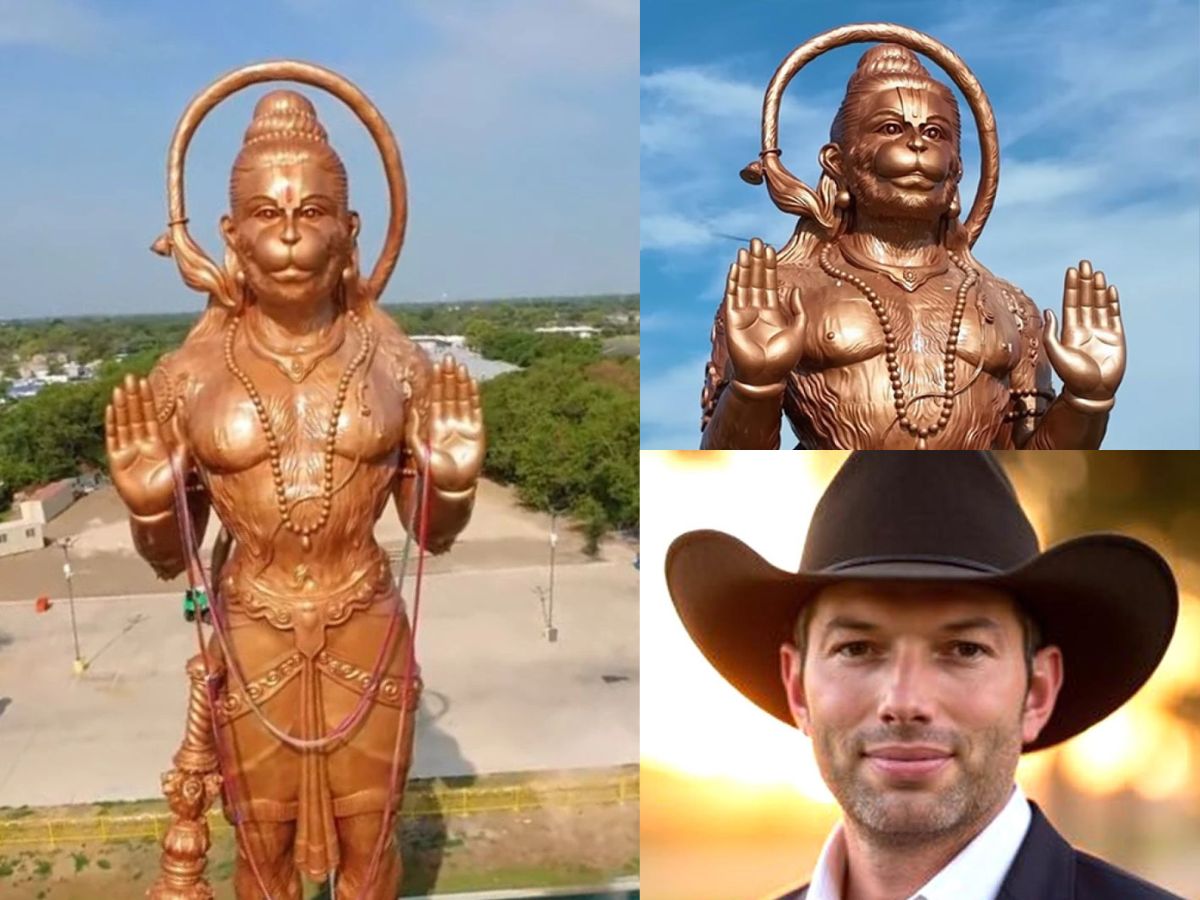
The controversy surrounding the 90-foot Hanuman statue in Texas reflects a larger national debate about religion, immigration, and cultural identity in the United States. What started as a social media post quickly turned into a political flashpoint. The issue highlights how symbols of faith can become part of broader ideological battles.
Many Americans view the debate as a test of religious freedom and constitutional rights. Others see it through the lens of immigration and demographic change. The discussion has spread far beyond Texas. It now represents a clash between cultural anxiety and pluralism. At its core, the debate raises questions about who defines American identity.
US Statue Controversy: 90-Foot Hanuman Statue in Texas
The towering statue stands at the Shri Ashtalakshmi Temple in Sugar Land. Known as the Panchaloha Abhaya Hanuman, it was inaugurated in 2024. Devotees funded and built the monument on privately owned land. Temple authorities describe Lord Hanuman as a symbol of strength, courage, and devotion.
🚨SUGAR LAND, TEXAS🚨This is not Islamabad, Pakistan, or New Delhi, India. This is Sugar Land, Texas. Third World Aliens are slowly taking over Texas and America. Why is the third-largest statue in the US this??!
Stop the INVASION!
Follow:@Carlos__Turcios pic.twitter.com/hzNIunlyQ4
— Carlos Turcios (@Carlos__Turcios) February 16, 2026
The statue attracts worshippers and visitors from across the country. Community leaders call it a spiritual landmark for Indian-Americans. It also serves as a cultural centre for festivals and gatherings. For supporters, the statue represents faith and belonging.
US Statue Controversy: MAGA Influencer Targets Hanuman Monument
The debate intensified after Carlos Turcios posted a video of the statue on X. He questioned why such a large Hindu monument stands in Texas. His remarks framed the statue as a symbol of immigration and cultural change. The post quickly gained attention online.
Critics accused him of promoting divisive rhetoric. Supporters of the temple responded strongly. The controversy spread across political and community circles. What began as a comment soon became a national conversation.
Who is Carlos Turcios?
Carlos Turcios is a conservative activist based in the Dallas–Fort Worth area. He has previously spoken against immigration policies and visa programs. His political messaging often centres on border control and national identity.
Turcios uses social media to express his views on cultural issues. He has drawn attention before for his remarks on demographic shifts in Texas. His comments about the Hanuman statue align with his broader political stance. Supporters see him as defending traditional values. Critics argue that his rhetoric fuels division.
Hanuman Statue as a ‘False God’
Some critics went beyond immigration concerns and questioned the religious legitimacy of the statue. Texas Republican Alexander Duncan previously objected to its construction. He argued that the US is fundamentally a Christian nation. Such statements sparked debate about the separation of church and state.
Legal experts note that the Constitution guarantees freedom of religion. Religious leaders counter that America protects all faiths equally. The discussion revived long-standing tensions over religious pluralism. It also exposed differing views on national identity.
Indian-Americans Respond to the Criticism
Indian-Americans strongly defended the temple and the statue. Many emphasized that the monument stands on private property funded by the Hindu community. They highlighted constitutional protections for religious freedom. Several users pointed to data suggesting high levels of assimilation among Indian-Americans.
Others stressed that Hinduism does not promote conversion or political dominance. Community members described the statue as peaceful and symbolic. Prominent voices online rejected the “invasion” narrative. The response showed how deeply personal the issue feels for the community.
What Critics Say and the Pattern of Remarks?
Critics argue that large religious monuments reflect rapid cultural change in parts of Texas. They link the statue to broader concerns about immigration policy. Some claim that such developments signal a shift away from traditional American values.
However, supporters argue that these remarks follow a pattern of targeting minority communities. Civil rights advocates warn that rhetoric like this can deepen social divides. Political observers say cultural debates often intensify during election cycles. The controversy fits into a wider national conversation. It highlights how symbolism can become politicized.
Symbol of Faith Amid Social Debate
Spiritual leader Sri Chinnajeeyar Swamiji envisioned the statue as a message of peace and unity. For many Hindu families, it represents heritage and devotion. The temple continues to welcome visitors despite online criticism. Community members say the monument strengthens cultural pride.
They also stress their identity as Americans who practice their faith freely. The statue has become more than a religious structure. It now stands at the centre of a national dialogue. Ultimately, it reflects the ongoing balance between diversity and unity in the United States.




