A bomb‑carrying drone boat struck a Marshall Islands‑flagged oil tanker in the Gulf of Oman, killing an Indian crew member amid rising tensions after US‑Israel strikes on Iran.
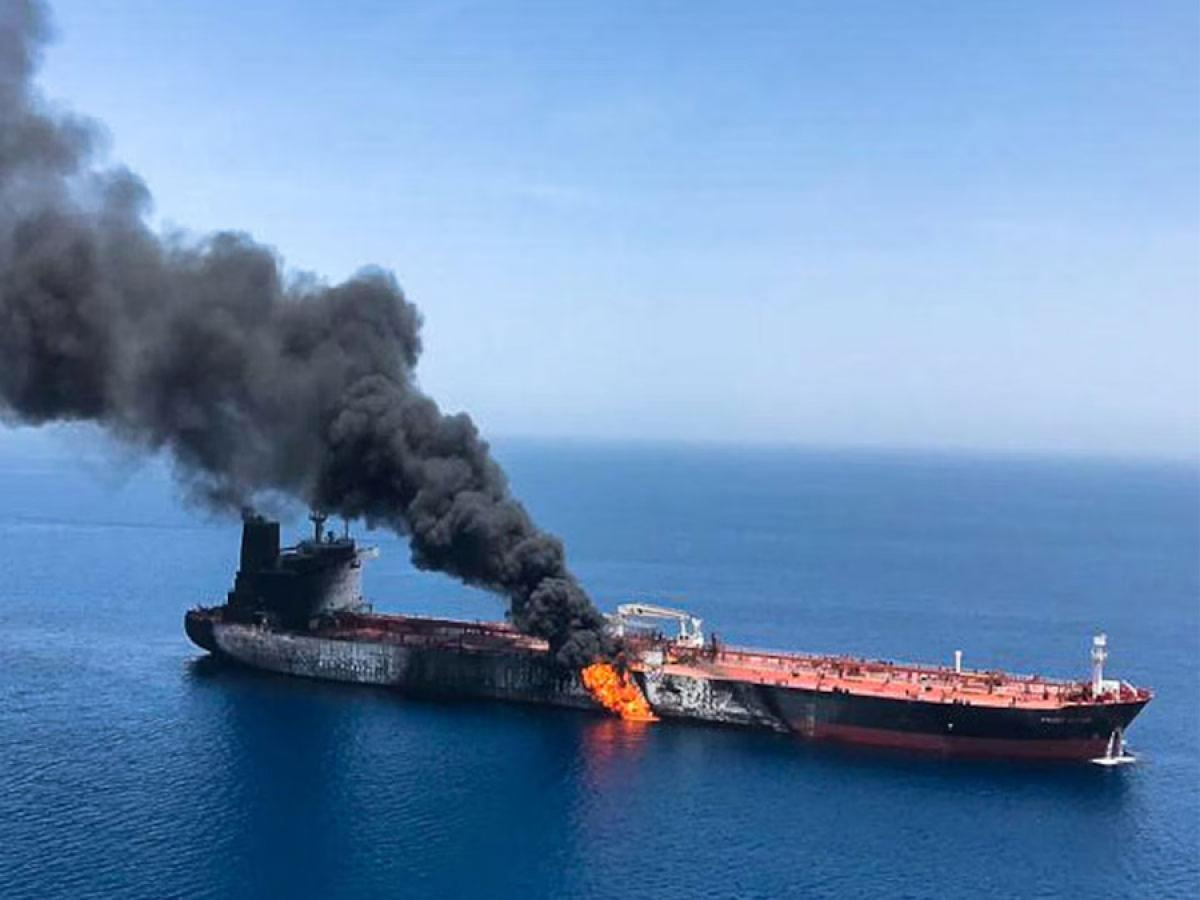
This is the first confirmed Indian fatality linked directly to the Gulf conflicts after multiple recent maritime attacks. (Photo: Reddit)
A bomb‑equipped drone boat struck a large oil tanker, MKD VYOM, off the coast of Oman in the Gulf of Oman on March 1, killing one mariner from India and thrusting maritime security into the spotlight. The explosion and fire on board occurred as regional tensions soared following US and Israeli military strikes on Iran and Tehran’s subsequent retaliation across the Middle East.
The explosion happened while the Marshall Islands‑flagged vessel was sailing off Oman’s coast, Oman’s state news agency confirmed. The incident underscores how the ongoing conflict is spilling over into global shipping routes.
According to maritime data and reports, the tanker was struck by a projectile, likely from a bomb‑carrying drone boat, triggering an explosion and fire that led to one crew member’s death. Omani authorities and international monitoring services have not yet said who launched the attack, but it occurred amid heavy military exchanges in the region.
The ship was reported to be around 44.4 nautical miles northwest of Muscat, Oman’s capital, when the blast hit. Shipping analysts have warned that such attacks risk major disruption to global oil transport.
This is the first confirmed Indian fatality linked directly to the Gulf conflicts after multiple recent maritime attacks. The Indian national was killed in the engine room of the tanker, company statements confirmed.
In a separate but linked incident on the same day, another oil tanker, Skylight, carrying 20 crew members, including 15 Indians and five Iranians, was struck near Musandam’s Khasab Port. Four crew members were injured, and all were evacuated safely, the Oman Maritime Security Centre reported.
These attacks mark some of the first direct hits on vessels near Oman since the regional conflict intensified, particularly around the strategic Strait of Hormuz, a critical route for global oil shipments.
The Strait of Hormuz sees around a fifth of the world’s oil and liquefied gas flow through it daily. Attacks on tankers and warnings from Iranian forces have disrupted shipping and prompted vessels to alter routes.
The attack on the MKD VYOM and other tankers has raised alarms in the shipping industry, with insurers warning of increased premiums and carriers avoiding the region. More than 200 vessels, including oil and LNG tankers, have been reported anchoring outside the strait amid the heightened danger.
The maritime incidents are unfolding against a backdrop of deepening conflict. Joint US and Israeli military actions against Iranian targets sparked Iranian retaliation, with missile and drone strikes reported across several Gulf states.
Iran’s Revolutionary Guards have issued warnings and conducted strikes on facilities in the region, ratcheting up hostilities that now extend to key shipping lanes. While Tehran has not officially claimed responsibility for the tanker attacks, its threats to vessels moving near the Strait of Hormuz have disrupted maritime traffic and heightened geopolitical risk.
The attacks on the MKD VYOM and other shipping vessels illustrate how the Middle East conflict is affecting commercial maritime routes and global energy security. If hostilities continue, analysts expect further disruptions to tanker movements and increased volatility in oil markets.
Maritime organisations and governments are closely monitoring developments, urging caution for all vessels in the region as tensions remain high.
