
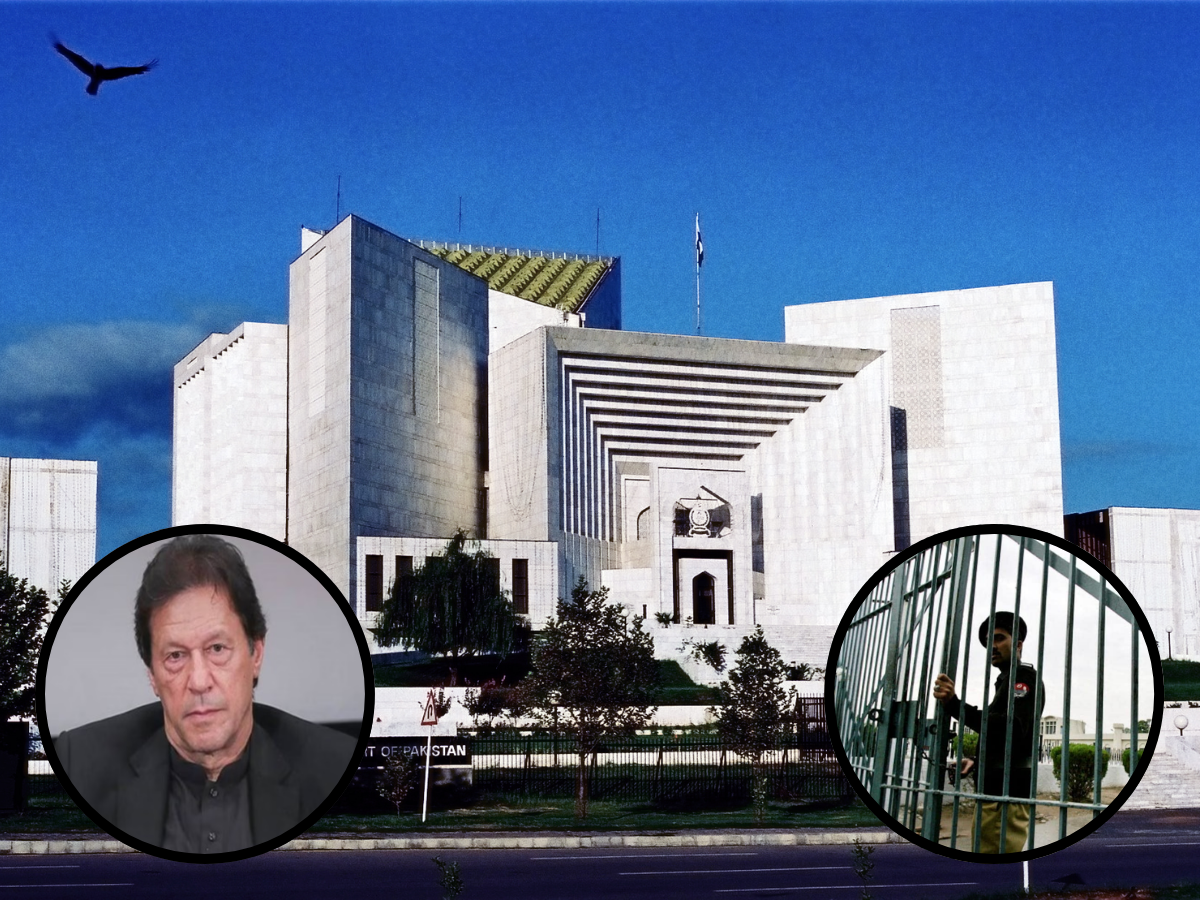
A report submitted to the Supreme Court has cast serious doubt on how former Prime Minister Imran Ahmed Khan Niazi’s health and detention have been managed at Adiala Jail, Rawalpindi.
Prepared by Barrister Salman Safdar on the Court’s instructions, the document points to alleged delays in medical treatment, years of solitary confinement and limits on legal and family access — matters that are now before the Court for consideration.
Vision Loss After Alleged Inaction
At the heart of the report is Khan’s severe loss of eyesight. Doctors at the Pakistan Institute of Medical Sciences (PIMS) diagnosed him with Right Central Retinal Vein Occlusion (CRVO), caused by a blood clot in the eye. Despite treatment, his vision in the right eye has been reduced to around 15 percent.
According to the report, Khan said he had normal eyesight until October 2025, when he began experiencing blurred vision. He claims he repeatedly informed jail authorities, but no meaningful action was taken. It was only after he reportedly suffered a sudden and complete loss of sight in his right eye that a specialist was called.
The Amicus noted that Khan appeared visibly distressed during the meeting, prompting questions about whether earlier medical attention might have prevented the extent of the damage.
The report calls for an independent medical review — a recommendation that underscores the seriousness of the lapse alleged.
Reports on Imran Khan’s Medical Condition
Years of Isolation
The document also notes that Khan has spent approximately four years and four months in solitary confinement. He remains confined for extended hours in a secured compound.
The report says that long periods of isolation, along with intense summer heat, humidity and insects, have taken a physical and mental toll. It also notes that without a refrigerator, food has spoiled in hot weather, and he has reported suffering from food poisoning during the summer months.
Restricted Legal and Family Contact
The report also raises concerns about restricted access to legal counsel. Khan said he has not been permitted to meet his lead lawyer or legal team in recent months, which may have affected his ability to prepare his defence.
Family contact has also been curtailed. While weekly meetings with his spouse are permitted, other relatives have reportedly been denied access, and telephone contact with his sons overseas has been limited.
Accountability Before the Court
Although Khan said he feels physically safe within the jail premises, the Amicus made clear that several aspects of his detention require urgent attention. These include an independent medical examination, better sanitation in the cell, full access to legal counsel and greater contact with family members.
The issue is now before the Supreme Court, which is expected to look into how his custody has been handled and whether proper standards have been followed.




